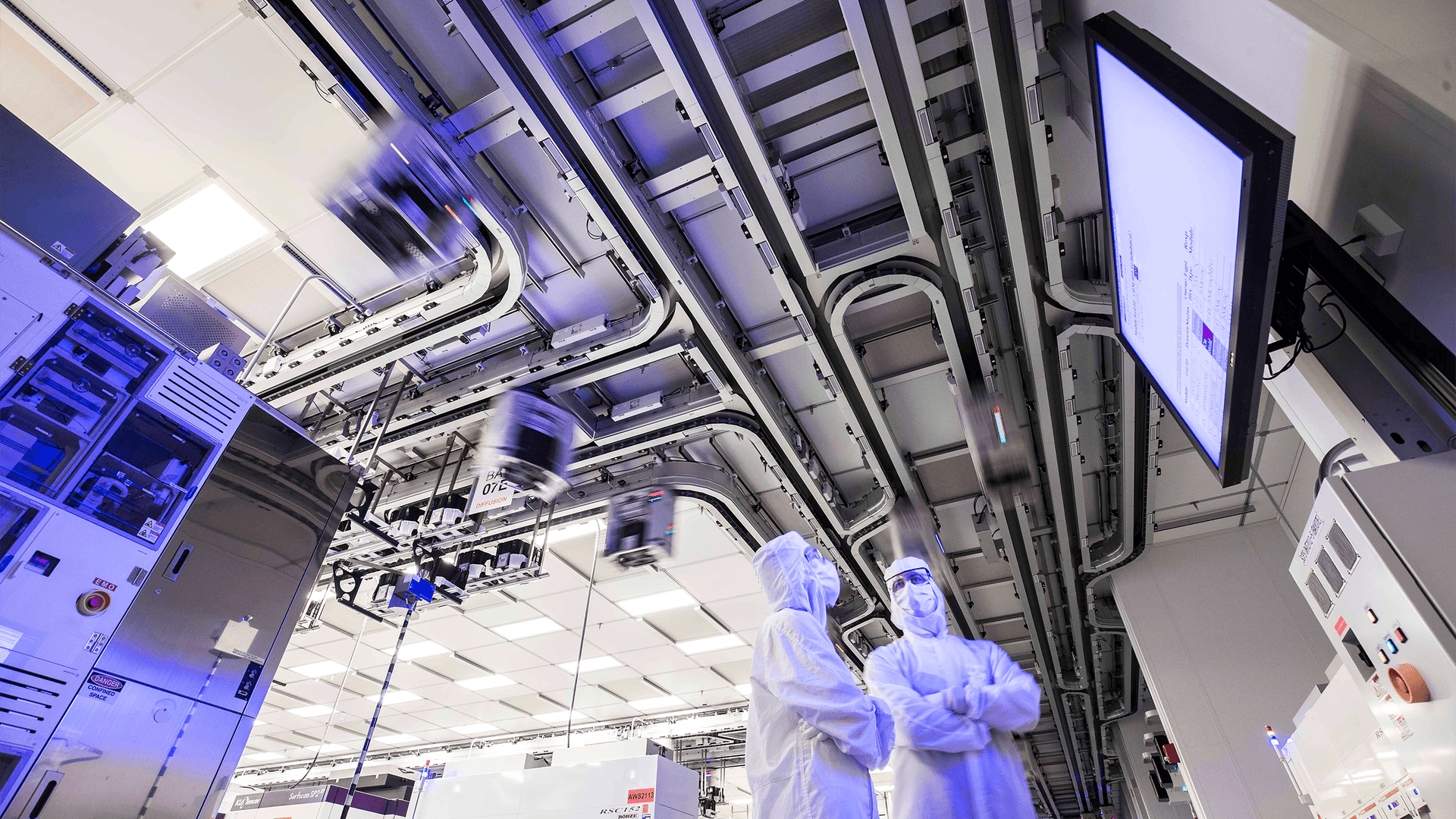
STMicroelectronics, a global semiconductor leader, has announced the commencement of mass production for its groundbreaking PIC100 silicon photonics platform. This development marks a significant milestone in the evolution of data center infrastructure, specifically engineered to support the explosive data demands of artificial intelligence systems requiring 800G and 1.6T data rates.
The Core Technology: From Electrons to Photons
At its heart, the PIC100 platform represents a fundamental shift from traditional electrical interconnects to optical communication. Silicon photonics integrates optical components, like modulators and photodetectors, directly onto a silicon chip. This allows data to be transmitted using light pulses through optical fibers instead of electrical signals through copper wires. For AI workloads, where massive datasets must be shuttled between GPUs, CPUs, and memory banks at unprecedented speeds, this transition is not merely an upgrade but a necessity. The physical limitations of copper—signal degradation, heat generation, and bandwidth constraints—have become critical bottlenecks. Light-based transmission solves these issues, offering vastly higher bandwidth, lower latency, and significantly reduced power consumption over distance.
Why This Matters for AI and Data Centers
The move to mass production signals that this technology is now commercially viable and ready for deployment at scale. AI model training, particularly for large language models (LLMs) and advanced neural networks, involves computations distributed across thousands of specialized accelerators (like NVIDIA's GPUs). The efficiency of this entire cluster is governed by how quickly these chips can communicate. Slow interconnects lead to idle processors waiting for data, drastically reducing overall system performance and increasing cost. The PIC100 platform, by enabling 800G and soon 1.6T optical links, directly addresses this "interconnect bottleneck." It ensures that data can flow between AI accelerators and through data center networks at speeds that match their immense processing capabilities, unlocking more efficient and powerful AI training and inference infrastructures.
Implications for the Broader Tech Ecosystem
STMicroelectronics' production ramp has ripple effects beyond immediate data center hardware. First, it validates silicon photonics as a mainstream manufacturing technology, which could accelerate its adoption in other high-bandwidth applications like telecommunications, high-performance computing (HPC), and even future consumer electronics. Second, it creates a reliable supply chain for a critical component, allowing system integrators (like server manufacturers) and cloud providers (like Amazon AWS, Google Cloud, and Microsoft Azure) to design and deploy next-generation AI-optimized hardware with confidence. Finally, it intensifies competition in the optical components market, potentially driving further innovation and cost reductions, which benefits the entire AI industry by lowering the barrier to entry for advanced computing.
The Road Ahead: 1.6T and Beyond
The mention of 1.6T data rates points to the future trajectory. As AI models grow exponentially in size and complexity, their hunger for data bandwidth will only increase. The PIC100 platform is positioned not just for today's 800G standards but for the next leap. Mass production now allows for iterative refinement, volume scaling, and integration into broader system-on-chip (SoC) designs. The long-term vision is a seamless co-packaged optics, where optical engines are integrated directly with compute silicon, eliminating the need for discrete pluggable optical modules and further improving performance and energy efficiency.
Source: Based on reporting from @rohanpaul_ai on X regarding STMicroelectronics' announcement.