What Happened
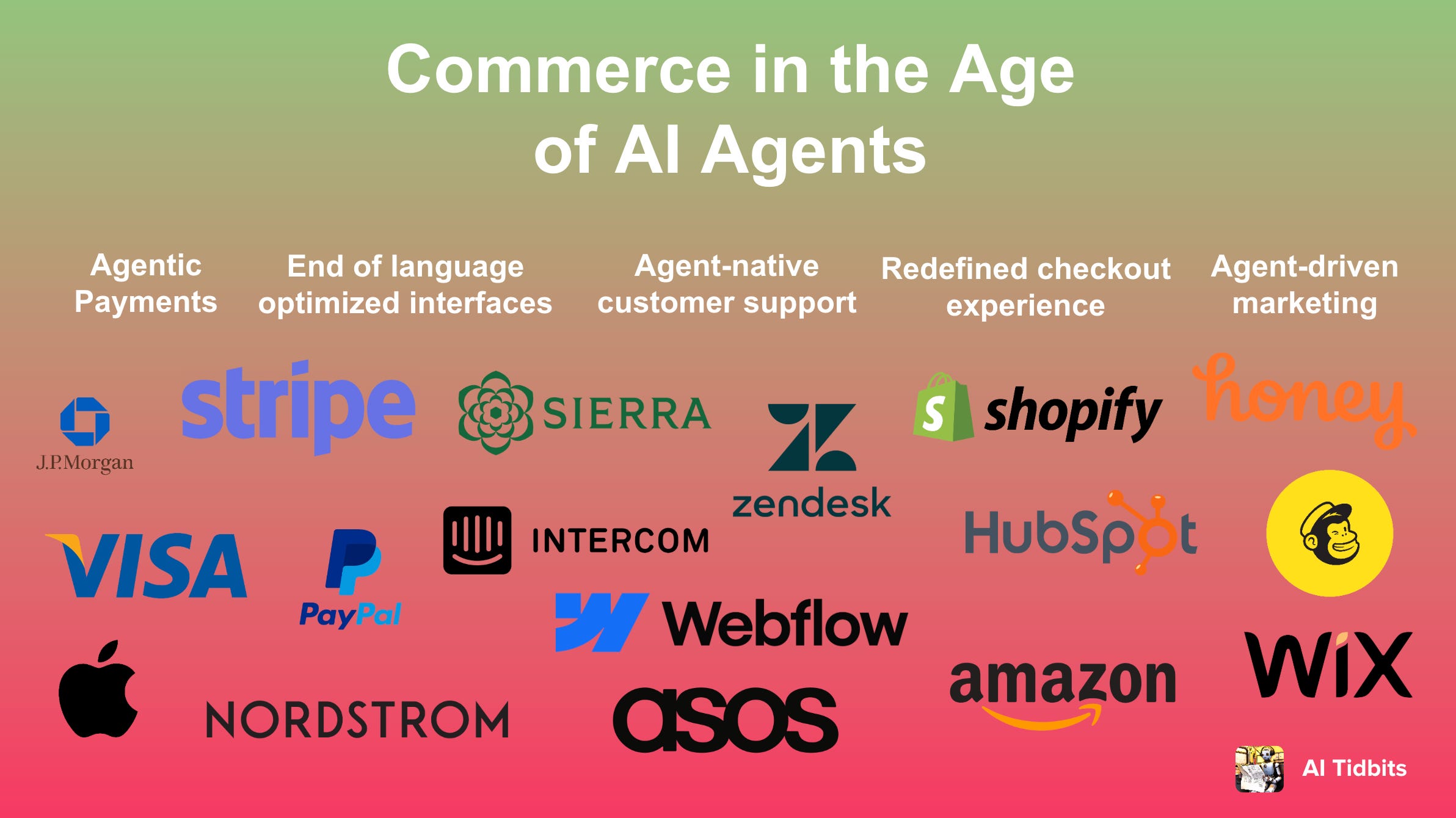
Three separate but related developments this week signal that the payments industry is moving aggressively to build infrastructure for agentic commerce — transactions initiated and executed by AI agents on behalf of humans.
Square announced integrations with OpenAI's ChatGPT and Anthropic's Claude. The integrations include an app for ChatGPT and a plugin for Claude. Square said they help sellers to "get discovered and transact at the exact moment customers are making purchasing decisions through AI-powered conversations."
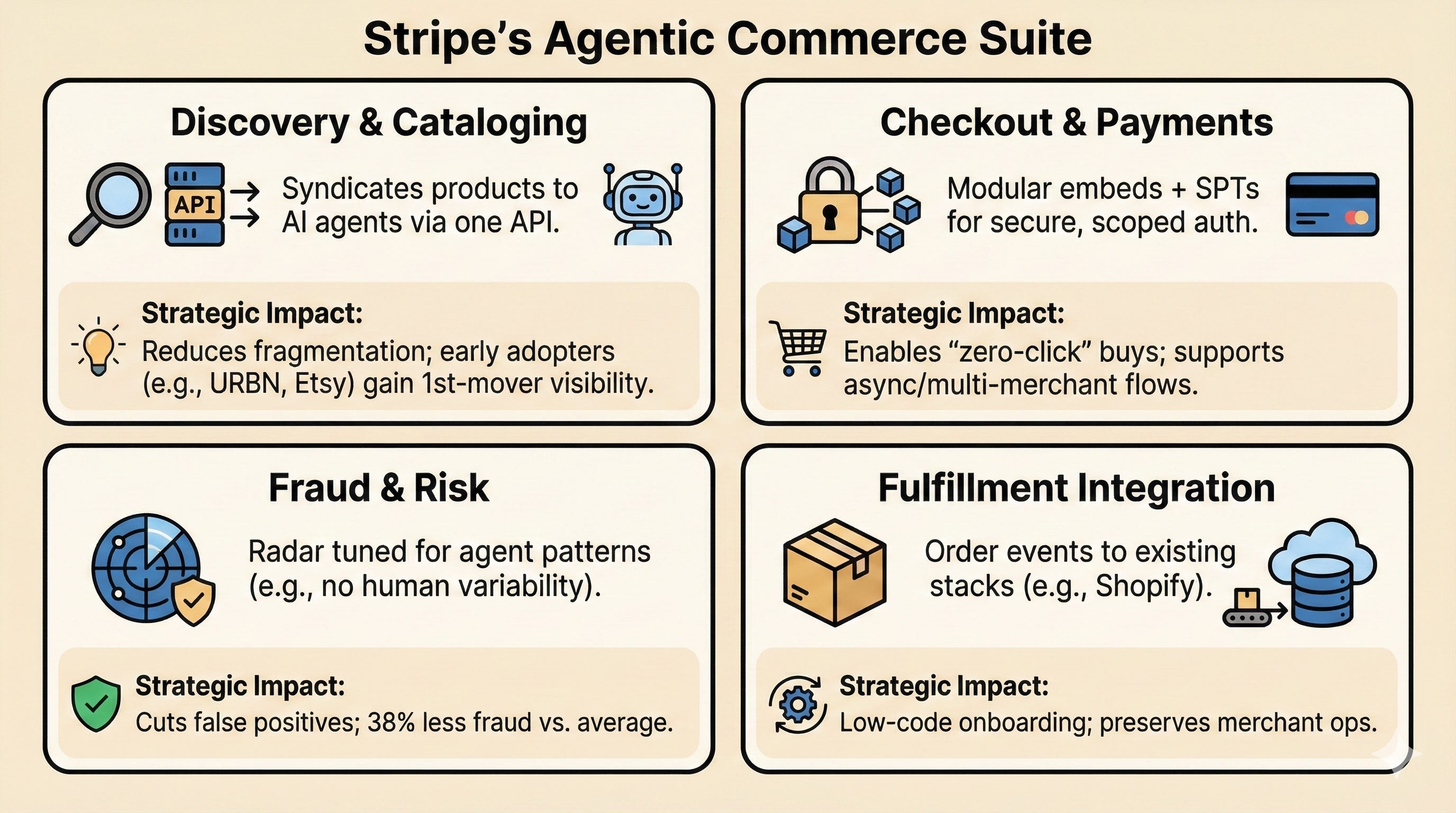
Cross River Bank expanded its existing partnership with Stripe specifically to power agentic commerce. The expanded partnership aims to provide the underlying payment rails that AI agents need to complete transactions autonomously.
American Banker published an analysis arguing that agentic commerce "is going to require rethinking consumer payments" — from authentication and authorization to settlement and dispute resolution.
Technical Details
Agentic commerce differs fundamentally from traditional e-commerce in three ways:
Discovery is conversational: Instead of browsing a website or app, a user asks an AI agent (e.g., "Find me a black leather jacket under $500"). The agent searches, compares, and presents options.
Transactions are delegated: The user authorizes the agent to complete the purchase, which means the agent must have its own payment credentials or access to the user's payment instruments.
Authentication is continuous: Traditional one-time card entry or biometric checkout doesn't work when the agent is acting over hours or days. New authentication models are needed.
Square's approach uses an app for ChatGPT and a plugin for Claude — meaning the AI platforms become discovery and checkout channels. A user can browse, select, and purchase entirely within the chat interface, with Square handling the payment processing on the back end.
Cross River Bank and Stripe's expanded partnership addresses the banking and settlement layer. Cross River provides banking-as-a-service infrastructure; Stripe provides payment processing. Together, they can issue virtual cards, handle settlements, and manage the regulatory compliance that agent-initiated transactions require.
Retail & Luxury Implications
For luxury and retail companies, agentic commerce represents both an opportunity and a threat.
Opportunity: Brands that integrate with AI platforms early can capture intent at the moment of discovery. A customer asking Claude or ChatGPT for "a sustainable silk dress for a summer wedding" could be directed to a brand's inventory if that brand has a plugin or API integration. This is analogous to the early days of SEO — the brands that optimized for Google search won. The brands that optimize for AI agent discovery may win the next decade.
Threat: Agentic commerce could commoditize the retail experience. If an AI agent compares five brands and selects based on price and availability, brand loyalty and storytelling become less relevant. Luxury brands, which depend on emotional connection and brand narrative, face a particular risk. A Claude plugin that treats a $5,000 handbag as a line item in a comparison table undermines the brand's value proposition.
Payments complexity: For luxury retailers, agentic commerce raises specific challenges:
- Authentication: How does a brand verify that an agent-initiated purchase is legitimate, especially for high-value items?
- Returns and disputes: If an agent buys the wrong size, who handles the return — the human or the agent?
- Payment limits: Agents need pre-authorized spending limits. For luxury purchases (often $1,000+), this requires new banking infrastructure.
Business Impact
The business impact is difficult to quantify at this stage because agentic commerce is nascent. However, three data points suggest momentum:
Square's existing merchant base — millions of small and mid-size businesses — now have a path to being discovered through ChatGPT and Claude. This creates an immediate incentive for merchants to claim their presence on these platforms.
Cross River Bank and Stripe are two of the most significant infrastructure players in payments. Their investment signals that they expect agentic commerce to be material within 2-3 years.
American Banker's analysis — a trade publication for the banking industry — treating agentic commerce as a serious topic suggests that financial institutions are starting to allocate resources to it.
Implementation Approach
For retail and luxury brands considering agentic commerce, the implementation approach has three phases:
Phase 1: Discovery readiness (0-6 months)
- Ensure product catalogs are structured and machine-readable (schema.org markup, APIs)
- Claim brand presence on ChatGPT and Claude platforms
- Set up monitoring for agent-driven traffic and conversions
Phase 2: Transaction enablement (6-18 months)
- Integrate with payment providers that support agent-initiated transactions (Stripe, Square, Cross River)
- Implement authentication protocols for agent-originated orders
- Define return and dispute policies for agent-mediated purchases
Phase 3: Strategic positioning (18+ months)
- Build custom AI agents or integrations that differentiate the brand experience
- Develop pricing and inventory strategies optimized for agent comparison
- Create brand-specific training data or plugins that influence agent recommendations
Governance & Risk Assessment
Fraud from unauthorized agent transactions High Implement agent-specific authentication tokens with spending limits Brand commoditization Medium Invest in brand-specific agent plugins that tell the brand story Return/refund complexity Medium Define clear policies for agent-initiated purchases Data privacy (agent tracking user behavior) High Comply with GDPR/CCPA; obtain explicit consent for agent data sharing Regulatory uncertainty Medium Monitor regulatory developments; work with partners like Stripe on complianceMaturity level: Early. Agentic commerce is in the pilot/experimentation phase. No major retailer has publicly reported significant revenue from agent-driven transactions. The infrastructure is being built now, but widespread adoption is likely 2-4 years away.
Source: news.google.com