What Happened
Starling Bank, a prominent UK-based digital bank, has publicly launched an "agentic AI assistant." While the source article from Let's Data Science is brief, the announcement itself is a significant market signal. The term "agentic" is the key differentiator, implying the assistant is designed to perform multi-step tasks autonomously, using tools and making decisions within a defined scope, rather than functioning as a simple conversational chatbot or retrieval-augmented generation (RAG) system.
This launch places Starling Bank among the early adopters in the financial services sector deploying this class of AI. It follows a clear industry trend, as noted in our Knowledge Graph, where entities like Northeast Grocery and supply chain software leader Blue Yonder have also begun implementing Agentic AI systems.
Technical Details: What "Agentic" Means
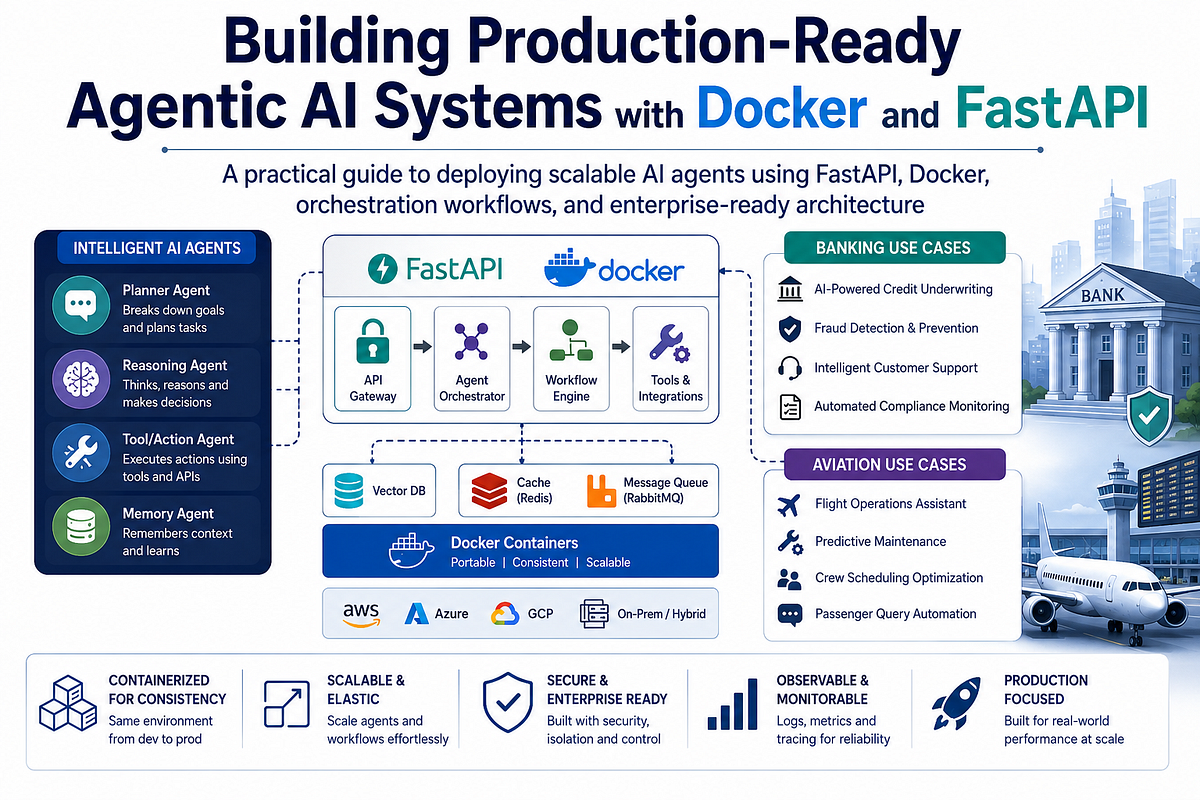
An "agentic AI assistant" typically refers to a system built on a large language model (LLM) that is equipped with a framework for planning, tool use, and iterative execution. Unlike a standard chatbot that provides an answer based on a single prompt, an agent can:
- Plan: Break down a user's high-level request (e.g., "Analyze my spending habits from last quarter and suggest a new budget") into a sequence of sub-tasks.
- Use Tools: Programmatically call APIs, query databases, run calculations, or interact with other software systems to gather information and execute actions.
- Act Autonomously: Execute the plan with minimal human intervention, though likely within strict guardrails for financial operations.
- Iterate: Evaluate the outcome of its actions and adjust its approach if the goal isn't met.
This architecture often involves Agentic RAG, where the agent can decide when and how to retrieve information from a knowledge base as part of its task execution, rather than retrieval being the sole function.
Retail & Luxury Implications
While Starling Bank is in financial services, its public deployment of an agentic system is a directly applicable case study for retail and luxury leaders. The core technology stack—LLMs, tool-use frameworks, and secure APIs—is domain-agnostic.
Concrete scenarios for retail include:
- Personal Stylist Agents: An agent that doesn't just recommend items but can autonomously check inventory across channels, reserve items in-store, schedule a fitting room appointment, and initiate a personalized lookbook email—all from a prompt like "Prepare a head-to-toe outfit for my gala next Saturday."
- Supply Chain & Inventory Agents: An agent that monitors real-time sales data, supplier lead times, and warehouse stock to autonomously generate and place purchase orders for best-selling SKUs, flagging only exceptions for human review.
- Clienteling & CRM Agents: An agent that analyzes a client's purchase history, recent online browsing, and CRM notes to autonomously draft a personalized outreach email, select three relevant products, and schedule a reminder for the sales associate to follow up.
- Post-Purchase Support Agents: An agent that can handle a complex return or damage claim by accessing order history, initiating a warehouse lookup for a replacement item, generating a return label, and updating the customer via SMS—all in a single, seamless interaction.
The gap between this research and production is closing rapidly. Starling's launch demonstrates that regulated industries are now confident enough in the control frameworks to deploy agents for customer-facing and operational tasks.