Key Takeaways
- The Agency is an open source repository with 147 specialized AI agents across 12 divisions (engineering, design, marketing, etc.) that hit 50K GitHub stars in under two weeks.
- It provides one-command install for tools like Claude Code and Cursor, with full modding support.
What Happened
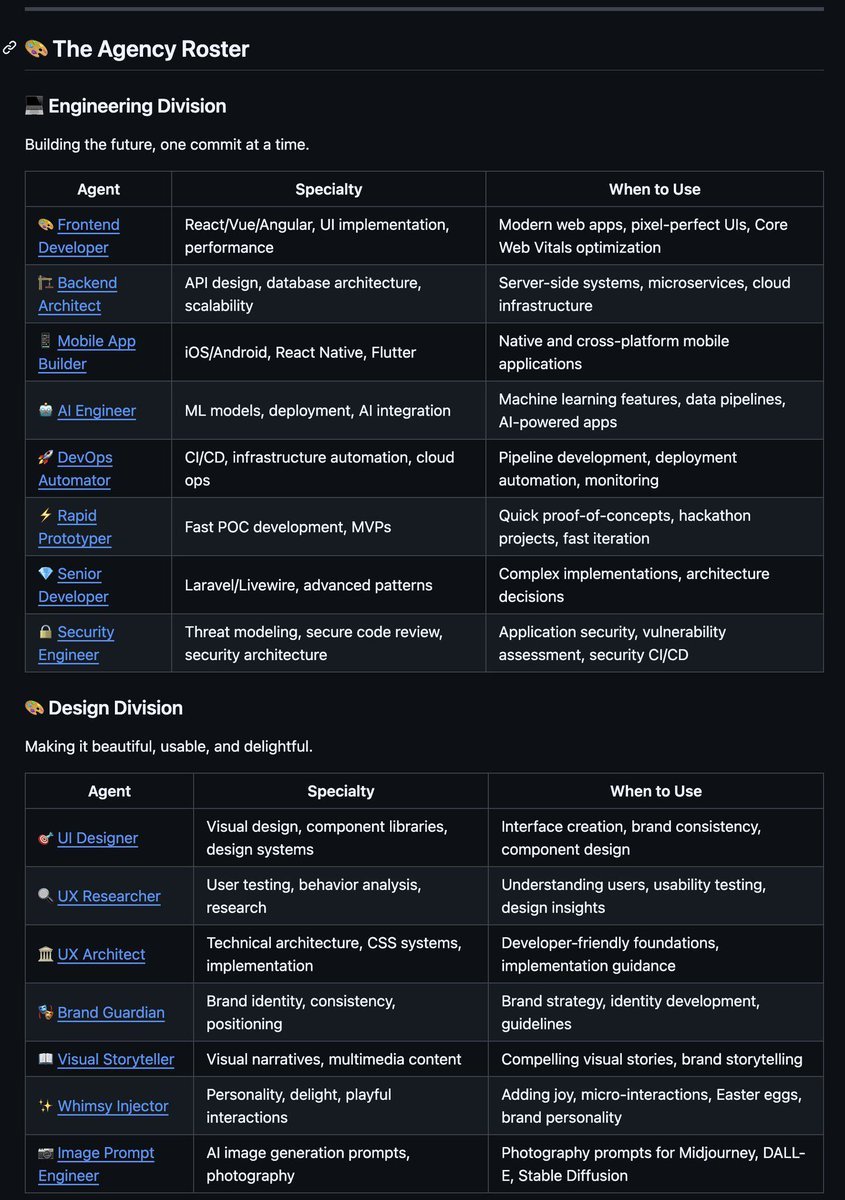
A GitHub repository called "The Agency" has gone viral, accumulating 50,000 stars in under two weeks. The project, which started as a Reddit thread, packages 147 specialized AI agents across 12 divisions — engineering, design, marketing, product, QA, support, and spatial computing — each with its own personality, workflow, and deliverables.
The repo has already racked up 7,500 forks and contributions from developers worldwide. Greg Isenberg publicly called it out. It hit 10K stars in 7 days, then accelerated to 50K.
What You Actually Get
This is not a prompt template. The Agency provides:
- 147 agents across 12 divisions, each with a unique voice and expertise
- Native support for Claude Code, GitHub Copilot, Gemini CLI, Cursor, OpenCode, and more
- One-command install for any supported tool
- Defined missions, success metrics, and production-ready code examples for each agent
- Full modding support — build and contribute your own agents
- Interactive installer that auto-detects your dev environment
- Conversion scripts for every major agentic coding tool
- Lua-style Markdown templates with YAML frontmatter
The structure mirrors an actual company: specialized roles with clear responsibilities and defined workflows between agents. Most AI coding tools treat the model as a generalist intern doing everything from writing copy to debugging code. This repo organizes AI into an org chart.
Technical Details
The project is licensed under MIT — 100% open source. The interactive installer auto-detects your development environment and configures the agents accordingly. Conversion scripts let you move between agentic coding tools (Claude Code, Cursor, OpenCode, Gemini CLI, GitHub Copilot) without rebuilding.
The agents use Lua-style Markdown templates with YAML frontmatter for configuration. This means each agent's instructions, personality, and workflow are defined in a structured, human-readable format that's easy to modify.
How It Compares
What to Watch
The project is less than two weeks old. While the star count is impressive, real-world adoption will depend on:
- Quality of agent outputs — 147 agents means 147 configurations to maintain and validate
- Integration depth — how well agents coordinate on complex tasks
- Community contributions — the modding system could drive rapid improvement or fragmentation
- Tool compatibility — conversion scripts help, but each tool has different capabilities and constraints
The viral growth suggests strong demand for structured AI workflows, but the project needs to prove it can deliver consistent results at scale.
gentic.news Analysis
The Agency's rapid rise reflects a growing frustration among developers with generic AI assistants. The "org chart" approach — specialized agents with defined roles — directly addresses the problem of a single model trying to do everything. This is the same pattern we saw with the rise of agentic coding tools in 2024-2025: Claude Code, Cursor, and GitHub Copilot all moved from simple autocomplete to multi-step agentic workflows.
What's notable here is the scale. 147 agents is an order of magnitude more than any previous open source attempt. The closest comparison is probably the AutoGPT ecosystem from early 2024, which peaked at around 150K stars but had far fewer specialized agents. The Agency is more disciplined — each agent has a defined mission and success metrics, not just a vague goal.
The MIT license is also strategic. By making it fully open source, the project avoids the fragmentation that killed earlier attempts like BabyAGI (which was also MIT but lacked the structured agent definitions). The modding system and conversion scripts lower the barrier for contributors.
One risk: maintaining 147 agents as the project scales. Each agent needs updates as tools evolve. The conversion scripts help, but the maintenance burden is real. The project will need strong community governance or automated testing to avoid rot.
Frequently Asked Questions
What is The Agency?
The Agency is an open source GitHub repository that provides 147 specialized AI agents organized into 12 divisions (engineering, design, marketing, product, QA, support, spatial computing). Each agent has a unique personality, workflow, and deliverables. It works with Claude Code, Cursor, GitHub Copilot, Gemini CLI, and other tools.
How do I install The Agency?
The project offers a one-command install that auto-detects your development environment and configures the agents for your preferred tool. Conversion scripts are included for switching between Claude Code, Cursor, OpenCode, Gemini CLI, and GitHub Copilot.
Is The Agency free?
Yes, The Agency is 100% open source under the MIT License. You can use, modify, and distribute it freely. The repository has over 50K GitHub stars and 7.5K forks.
How is The Agency different from prompt templates?
The Agency provides structured agents with defined missions, success metrics, and production-ready code examples — not just prompt templates. It includes an interactive installer, conversion scripts for multiple tools, and full modding support for building custom agents.