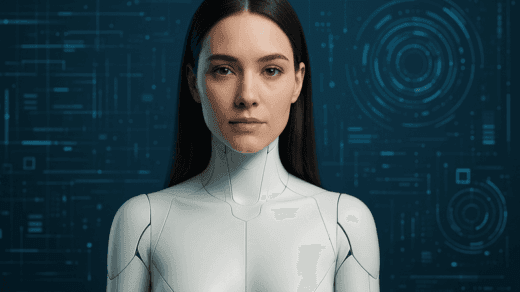
A recent breakthrough in artificial intelligence has captured the imagination of both developers and users alike: emotionally responsive human avatars that can engage in natural conversation. This development, highlighted by social media reactions like "Ngl this is exactly what I was waiting for. Human avatars, with emotions and facial expressions, that you can talk to," represents a significant leap forward in human-computer interaction.
The Technology Behind Emotional Avatars
These AI avatars represent a convergence of several advanced technologies. At their core are sophisticated large language models capable of understanding and generating human-like conversation. Layered on top of this foundation are computer vision systems that analyze and synthesize facial expressions in real-time, synchronized with the emotional content of the conversation.
The avatars utilize generative adversarial networks (GANs) and diffusion models to create photorealistic human faces that can display nuanced emotional states—from subtle smiles to expressions of concern or excitement. What sets this generation apart from previous attempts is the seamless integration between language processing and visual expression, creating a cohesive, believable digital persona.
From Static Bots to Dynamic Companions
Traditional chatbots and virtual assistants have long suffered from what researchers call the "uncanny valley" of emotional disconnect. While they could process language effectively, their lack of emotional expression made interactions feel transactional and artificial. This new generation of avatars bridges that gap by incorporating:
- Micro-expressions: Subtle facial movements that convey authentic emotional states
- Voice modulation: Tone and pitch changes that match emotional content
- Gestural language: Head movements, eye contact, and other non-verbal cues
- Contextual awareness: Appropriate emotional responses based on conversation history
Practical Applications Across Industries
Customer Service Revolution
The most immediate application appears in customer service, where emotionally intelligent avatars could provide more satisfying support experiences. Unlike current chatbots that often frustrate users with their limitations, these avatars could detect customer frustration through both verbal cues and (if camera-enabled) facial expressions, then adjust their approach accordingly.
Mental Health Support
Preliminary research suggests emotionally responsive avatars could serve as accessible mental health companions, providing judgment-free conversation with appropriate emotional feedback. While not replacing human therapists, they could offer preliminary support and emotional validation to those who might otherwise go without.
Education and Training
In educational settings, emotionally responsive tutors could adapt their teaching style based on a student's visible engagement or confusion. Medical students could practice difficult conversations with avatar patients that display authentic emotional responses to diagnoses or treatment plans.
Entertainment and Social Connection
The technology opens new possibilities for interactive storytelling, gaming, and social platforms where users can engage with emotionally complex digital characters. For those experiencing loneliness or social anxiety, these avatars might provide low-pressure social interaction.
Ethical Considerations and Challenges
As with any transformative technology, emotional AI avatars raise significant ethical questions:
Authenticity and Manipulation
There's a fine line between responsive emotion and emotional manipulation. These systems could potentially be designed to exploit human psychological vulnerabilities, particularly in commercial or political contexts. Transparency about interacting with an AI versus a human becomes increasingly important.
Privacy Implications
To detect and respond to human emotions, these systems typically require access to camera feeds and voice recordings, raising substantial privacy concerns. The data collected—including users' emotional states and reactions—represents particularly sensitive personal information.
Emotional Labor and Dependency
As these avatars become more convincing, researchers warn about potential emotional dependency, particularly among vulnerable populations. The technology might also normalize the expectation of constant emotional responsiveness from both humans and machines.
Representation and Bias
The training data for these systems inevitably carries cultural biases about emotional expression. What constitutes an "appropriate" emotional response varies significantly across cultures, raising questions about whose emotional norms get encoded into these systems.
The Technical Frontier
Current implementations still face technical limitations. Real-time processing of emotional cues while generating appropriate facial expressions requires significant computational resources. Latency remains a challenge—even slight delays between speech and corresponding facial expressions can break the illusion of authenticity.
Researchers are working on more efficient emotion recognition algorithms and lightweight models that can run on consumer devices. The next frontier includes full-body emotional expression and more sophisticated understanding of complex emotional states beyond basic happiness, sadness, anger, and surprise.
The Human Connection Paradox
This technology presents a paradox: as machines become better at simulating human emotion, they may change our expectations of actual human interaction. Some experts worry about emotional deskilling—the potential for people to become less adept at reading and responding to genuine human emotion after extensive interaction with emotionally predictable avatars.
Conversely, proponents argue that these avatars could serve as emotional training tools, helping people practice social interactions in low-stakes environments before applying those skills in human relationships.
Looking Forward
The development of emotionally responsive avatars represents more than just a technical achievement—it marks a fundamental shift in how we conceptualize human-machine relationships. As one social media user expressed, this is technology that people have been "waiting for," suggesting a latent demand for more emotionally intelligent digital interactions.
The coming years will likely see rapid refinement of this technology, with improvements in emotional nuance, cultural adaptability, and accessibility. Regulatory frameworks will need to evolve alongside these developments to address the unique challenges posed by emotionally intelligent AI.
What's clear is that we're moving beyond the era of purely transactional AI toward systems that engage with us as emotional beings. Whether this represents progress toward more humane technology or a step into ethically fraught territory depends largely on how we choose to develop and deploy these emotionally responsive avatars.
Source: Twitter reaction to emerging AI avatar technology (@kimmonismus)