For years, artificial intelligence has largely lived in the cloud—powerful models hosted on remote servers, accessible only through APIs and monthly subscriptions. This paradigm is rapidly changing. A new generation of specialized AI models has emerged that can run entirely locally on consumer laptops, offering capabilities ranging from expert coding assistance to multimodal vision and image editing—all without sending data anywhere or requiring internet connectivity.
According to AI researcher and developer Hasan Tohid (@hasantoxr), seven standout models now represent the cutting edge of this local AI movement. His curated list, shared on social media platform X, highlights tools that cover "every LLM use case you have" while operating under a simple mantra: "No API. No subscription. No data sent anywhere."
Specialized Tools for Every Task
The most striking aspect of this new ecosystem is its specialization. Unlike general-purpose cloud models that attempt to handle everything moderately well, these local models excel at specific functions.
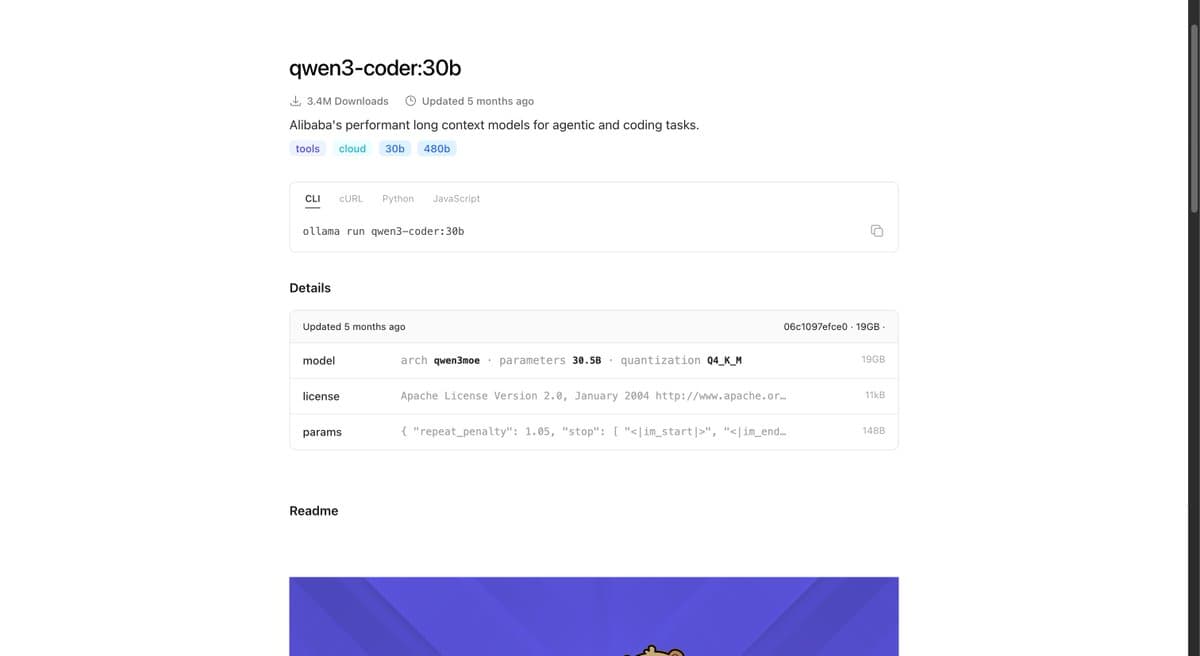
Leading the list is Qwen3 Coder 30B, which Tohid describes as "the best local coding model, period." With 30 billion parameters, this model represents a significant achievement in local AI—providing professional-grade coding assistance without cloud dependencies. Developers can now get sophisticated code generation, debugging, and explanation capabilities directly on their machines, potentially transforming how they work in offline environments or with proprietary codebases.
At the opposite end of the size spectrum sits Gemma 3n E4B, remarkable for being "so small it runs offline on your phone." This demonstrates how far model optimization has come, with capable AI now fitting into mobile devices. Meanwhile, Magistral Small 1.2 offers multimodal capabilities, combining "vision + solid coding in one" package—a particularly valuable combination for developers working with visual data or documentation.
Privacy and Uncensored Capabilities
Perhaps the most provocative entry is Hermes 4 14B, which offers "completely uncensored answers to what every other LLM refuses." This highlights a fundamental tension in the AI landscape: while major providers implement content filters for safety and compliance, local models can offer unfiltered exploration of topics. This has implications for researchers, writers, and anyone needing to explore controversial or sensitive subjects without algorithmic restrictions.
The privacy implications extend beyond content filtering. By keeping all processing local, these models ensure that sensitive documents, proprietary code, personal writing, or confidential business information never leaves the user's device. This addresses growing concerns about data sovereignty, corporate surveillance, and the privacy risks associated with cloud-based AI services.
Practical Automation and Vision
Beyond coding and text generation, the list includes specialized tools for automation and visual tasks. Jan-Nano is highlighted as "the best agentic model for tool use and automation," suggesting capabilities for automating workflows, controlling applications, or performing multi-step tasks autonomously.
For visual applications, LFM2-VL 1.6B offers a compelling proposition: "tiny, stupid fast, and sees images." This combination of small size, speed, and vision capabilities makes it particularly suitable for real-time applications or resource-constrained environments. Meanwhile, Qwen Image Edit serves as a "local alternative to image editing AI," though Tohid notes it "needs good RAM"—a reminder that even local AI has hardware requirements.
The Hardware Revolution
What makes this moment particularly significant is the hardware context. Modern laptops, especially those with dedicated GPUs or Apple's neural engine-equipped MacBooks, now possess sufficient computational power to run these models at usable speeds. The democratization of capable hardware, combined with model optimization techniques like quantization and distillation, has created a perfect storm for local AI adoption.
This shift mirrors historical computing transitions where capabilities moved from centralized mainframes to personal computers. Just as spreadsheet software transformed business by moving calculation from IT departments to individual desktops, local AI could democratize artificial intelligence capabilities in similar ways.
Implications for Developers and Businesses
For software developers, the availability of high-quality local coding assistants represents a paradigm shift. Beyond privacy benefits, local models offer predictable performance without API rate limits, consistent availability without service outages, and the ability to work completely offline—valuable for travel, remote work, or secure environments.
Businesses, particularly those in regulated industries like healthcare, finance, or legal services, may find local AI solutions essential for compliance with data protection regulations. The ability to process sensitive documents through AI without ever exposing them to third-party servers could accelerate AI adoption in sectors previously hesitant due to privacy concerns.
Challenges and Considerations
Despite the excitement, local AI isn't without challenges. Model updates require manual downloads rather than automatic cloud updates. Hardware requirements, while decreasing, still matter—particularly for larger models or image processing tasks. Users must also take responsibility for model outputs without the safety nets often built into commercial cloud services.
There's also the question of model provenance and security. While major cloud providers vet their models extensively, local models come from various sources, requiring users to exercise caution about what they download and run on their systems.
The Future of Personal AI
This collection of seven models represents more than just technical achievements—it signals a philosophical shift toward user-controlled, decentralized artificial intelligence. As these tools improve and hardware continues advancing, we may see a future where most AI interactions happen locally, with cloud services reserved only for the most demanding tasks or largest models.
The implications extend beyond practical utility to questions of digital autonomy and sovereignty. In an era of increasing platform control and data extraction, local AI offers a path toward technological self-determination—where users own their tools completely, control their data absolutely, and customize their AI experiences without corporate intermediation.
As Tohid's list demonstrates, that future isn't distant speculation—it's available for download today, running on laptops around the world, quietly revolutionizing how we interact with artificial intelligence on our own terms.