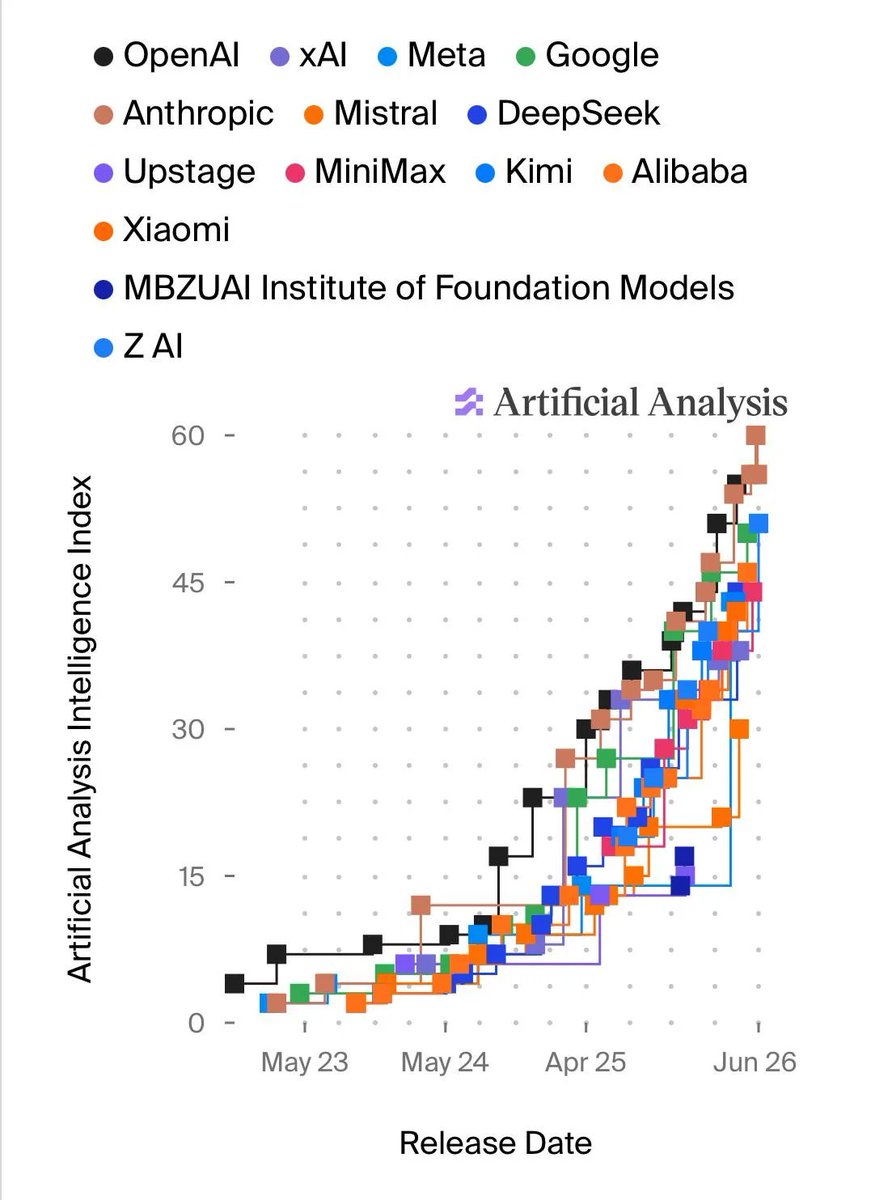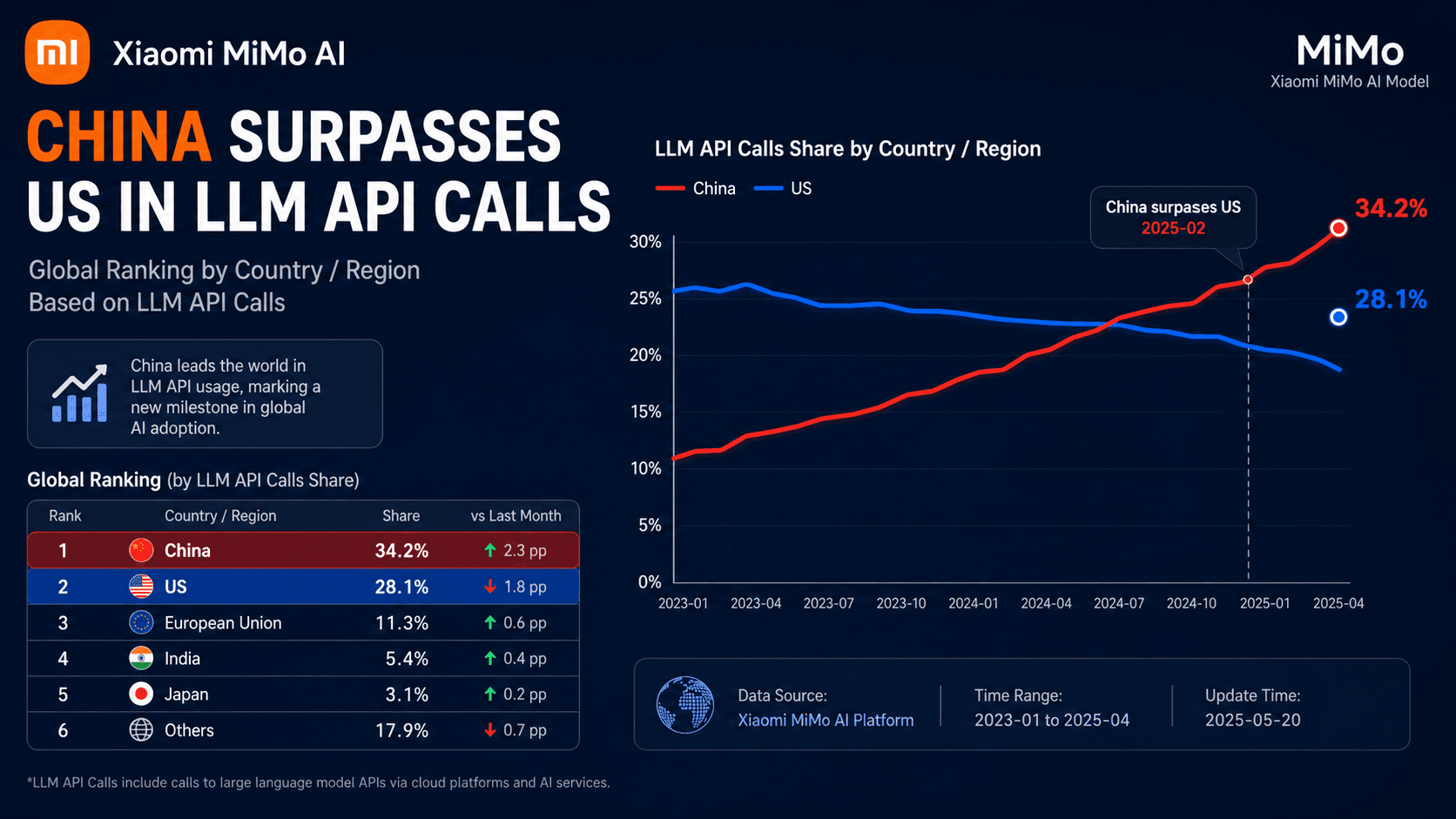
A cryptic social media post from AI observer @kimmonismus has sparked intense speculation within the artificial intelligence community: "Let's see if China really is just 5 months behind. DeepSeek v4 is eagerly awaited. The whale is coming."
This brief message references what could be one of the most significant developments in global AI competition this year—the impending release of DeepSeek v4, the next-generation model from Beijing-based AI company DeepSeek. The "whale" metaphor suggests something massive, powerful, and potentially disruptive is about to surface in China's AI ecosystem.
The Five-Month Gap: Measuring China's AI Progress
The reference to "5 months behind" points to an ongoing debate about China's position in the global AI race. For years, analysts have tracked the performance gap between Chinese AI models and their Western counterparts, particularly those from OpenAI, Anthropic, and Google. Recent benchmarks have suggested Chinese models like DeepSeek's previous versions, Qwen from Alibaba, and Baidu's Ernie have been closing this gap steadily.
DeepSeek, founded by former executives from major Chinese tech companies, has emerged as one of China's most promising AI research organizations. Their previous model, DeepSeek v2, demonstrated competitive performance across multiple benchmarks while maintaining relatively modest computational requirements compared to Western counterparts.
What We Know About DeepSeek v4
While official details remain scarce, industry insiders suggest DeepSeek v4 represents a significant architectural advancement. Based on the company's trajectory and China's broader AI development patterns, several characteristics are anticipated:
Scale and Architecture: DeepSeek v4 is expected to employ a mixture-of-experts (MoE) architecture similar to that used in models like GPT-4 and Claude 3.5. This approach allows for massive parameter counts while maintaining reasonable inference costs.
Multimodal Capabilities: Unlike DeepSeek's previous text-focused models, v4 is rumored to incorporate robust multimodal understanding, potentially rivaling GPT-4V and Gemini's ability to process images, documents, and other non-text inputs.
Reasoning Improvements: Chinese AI researchers have been particularly focused on enhancing logical reasoning and mathematical capabilities—areas where previous models have shown competitive performance but room for improvement compared to top Western models.
Efficiency Focus: DeepSeek has consistently emphasized computational efficiency, and v4 is expected to continue this trend, potentially offering competitive performance with lower operational costs than comparable Western models.
The Strategic Context: China's AI Ambitions
DeepSeek v4's development occurs against a backdrop of intense national focus on AI sovereignty. The Chinese government has identified artificial intelligence as a critical technology for economic competitiveness and national security. Recent policy documents emphasize the need for "self-reliance" in core technologies, including AI infrastructure and foundational models.
China's AI strategy involves parallel tracks: developing domestic alternatives to Western technologies while simultaneously advancing fundamental research. Companies like DeepSeek operate within this ecosystem, benefiting from government support, academic collaboration, and access to China's vast data resources while navigating export controls on advanced computing hardware.
Technical and Geopolitical Implications
The potential narrowing of the AI gap to five months carries significant implications:
Commercial Competition: If DeepSeek v4 achieves parity with leading Western models, it could accelerate the bifurcation of global AI markets. Chinese companies might increasingly adopt domestic models for sensitive applications, while international markets could see more competition between Chinese and Western AI providers.
Research Collaboration and Competition: A competitive Chinese model could stimulate increased research competition while potentially complicating international collaboration in AI safety and alignment research.
Hardware Constraints: China's AI development continues to face challenges from U.S. export controls on advanced semiconductors. DeepSeek's efficiency focus may represent strategic adaptation to these constraints, potentially yielding architectural innovations that benefit the global AI community.
Benchmarking Challenges: As Chinese models advance, questions about benchmark reliability and cross-cultural evaluation become increasingly important. Performance comparisons will need to account for linguistic, cultural, and application differences between Western and Chinese AI ecosystems.
The Broader AI Ecosystem Impact
DeepSeek's progress reflects broader trends in China's AI landscape:
Specialization: Chinese AI companies are increasingly specializing rather than attempting to replicate the full scope of Western AI giants. DeepSeek has focused on efficient, capable language models rather than building comprehensive platform ecosystems.
Open Source Contributions: DeepSeek has been relatively open with previous model releases, contributing to China's growing influence in open-source AI development. The approach to v4's release—whether open, partially open, or closed—will be closely watched.
Application Focus: Chinese AI development often emphasizes practical applications and integration with existing digital ecosystems, including e-commerce, social platforms, and industrial applications.
Looking Ahead: The Global AI Balance
As the AI community awaits DeepSeek v4's official unveiling, several questions loom:
- Will the model demonstrate true parity with leading Western models across comprehensive evaluations?
- How will DeepSeek approach international availability given geopolitical tensions?
- What architectural innovations might v4 introduce that could influence global AI development?
- How will Western AI companies respond to increasingly competitive Chinese models?
The "whale" metaphor suggests something substantial is approaching. In marine ecosystems, whales reshape their environments simply through their movement and presence. Similarly, a genuinely competitive Chinese AI model could reshape the global AI landscape, altering competitive dynamics, research priorities, and international collaboration patterns.
DeepSeek v4's performance will provide crucial data points in assessing China's AI trajectory. Whether the gap has narrowed to five months, or perhaps even less, will have implications for technology companies, policymakers, and researchers worldwide. What's certain is that the global AI race continues to accelerate, with multiple competitors now running at increasingly comparable paces.
Source: Analysis based on social media discussion from @kimmonismus and industry context regarding DeepSeek's development trajectory and China's AI progress.