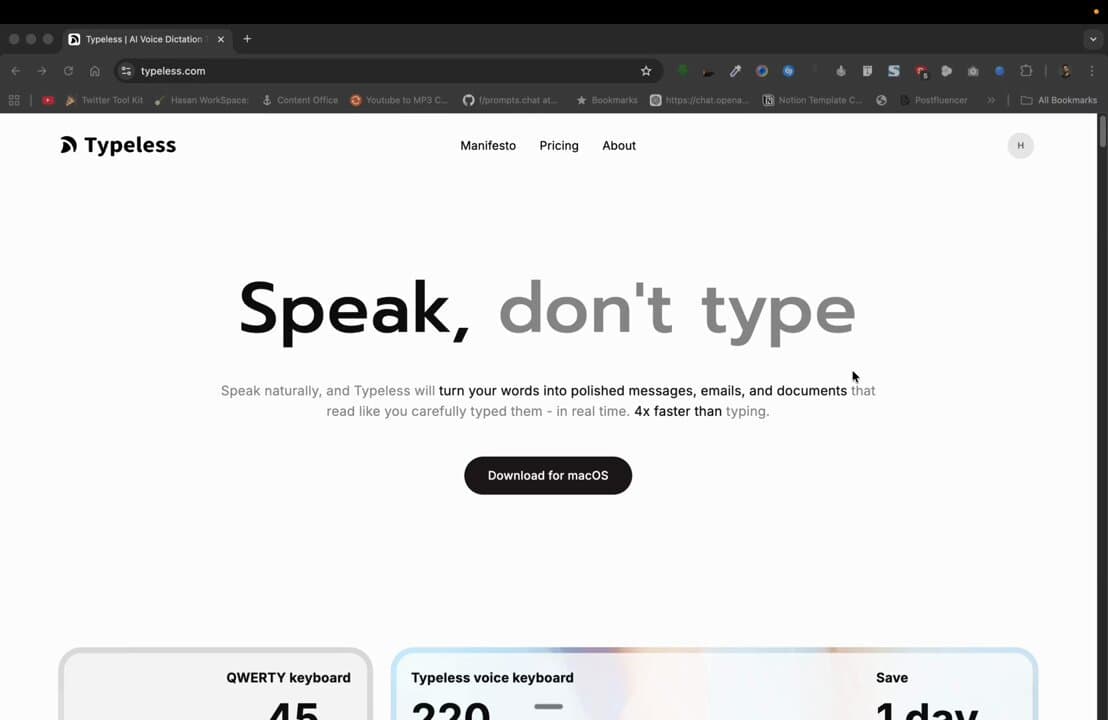
In an era where AI tools promise to streamline our workflows, a new application called Typeless has emerged with a capability that many experts considered impossible just six months ago. According to early adopter and tech enthusiast Hasan Toor (@hasantoxr), this tool represents a fundamental leap beyond conventional voice transcription technology. Rather than simply converting speech to text, Typeless analyzes what users mean to say and rewrites it with the fluency and nuance of a native speaker.
Beyond Transcription: The Native Speaker Algorithm
Traditional voice-to-text tools have long struggled with accuracy, context, and natural language flow. While services like Google's voice typing or Apple's Dictation have improved significantly, they remain essentially transcription engines—capturing words as spoken, complete with grammatical errors, awkward phrasing, and conversational filler.
Typeless takes a radically different approach. The system employs advanced natural language processing (NLP) models that don't just recognize words but interpret intent, context, and communicative purpose. When a user speaks in any language, the AI analyzes the semantic content, identifies the core message, and reconstructs it using appropriate grammar, syntax, and vocabulary for the target language or context.
Translation Mode: A New Standard for Cross-Language Communication
The platform's newly launched Translation Mode represents perhaps its most impressive capability. Unlike conventional translation tools that often produce stilted, literal translations, Typeless performs what developers call "meaning-first translation." The process involves multiple AI layers working in concert:
- Grammar Correction: Errors are fixed before the text appears
- Tone Adjustment: The system automatically adapts formality, politeness, and emotional tone
- Human Phrasing: Output reads as if composed by a fluent native speaker
- Ready-to-Send Formatting: No post-processing cleanup required
This approach addresses the longstanding "uncanny valley" of machine translation—where text is technically correct but clearly artificial. By prioritizing natural human expression over literal accuracy, Typeless appears to have bridged a gap that has challenged computational linguists for decades.
Practical Applications: From Email to Multilingual Work
Early users report transformative impacts on their daily workflows. Toor claims he "stopped touching [his] keyboard 3 weeks ago," handling emails, blog content, and multilingual client work entirely through voice. The implications for accessibility, productivity, and cross-cultural communication are substantial:
- Business Communication: Professionals can dictate emails that automatically adopt appropriate business tone
- Content Creation: Writers and bloggers can speak their ideas and receive polished, publication-ready text
- Multilingual Operations: Companies can communicate across language barriers without specialized translation staff
- Accessibility: Individuals with typing difficulties or disabilities gain more natural communication tools
Technical Architecture and Availability
Typeless operates across platforms (Mac, iOS, and Android), suggesting cloud-based processing with device-specific optimization. The "works everywhere your voice does" positioning indicates robust integration with existing voice input systems while adding its proprietary rewriting layer.
The free trial model follows standard SaaS patterns, though the long-term pricing strategy for such advanced technology remains unclear. Given the computational resources required for real-time, multi-language semantic analysis and rewriting, subscription models seem likely for sustained access.
The Future of Human-Computer Interaction
Typeless represents more than just another productivity tool—it signals a shift in how humans might interact with computers. If voice input can reliably produce text superior to what many people type manually, we may be approaching a tipping point where keyboards become secondary interfaces for many tasks.
This development also raises questions about authenticity and voice in written communication. When AI rewrites our spoken words to be "better" than we might write ourselves, whose voice is it really? These philosophical questions will become increasingly practical as such technologies proliferate.
Source: @hasantoxr on X/Twitter
Competitive Landscape and Market Position
Typeless enters a crowded field of AI writing assistants, transcription services, and translation tools. However, its unique positioning—combining all these functions with a focus on native-level output—creates a distinct niche. Competitors like Otter.ai excel at transcription, Grammarly at correction, and DeepL at translation, but no single tool currently integrates all these capabilities with Typeless's particular approach to semantic rewriting.
Success will likely depend on accuracy consistency across diverse accents, speaking styles, and specialized vocabularies. Early enthusiasm suggests promising initial performance, but enterprise adoption will require proven reliability in high-stakes professional contexts.
Conclusion: A Paradigm Shift in Digital Communication
Typeless AI appears to have achieved what many considered near-term impossible: real-time voice-to-text that improves rather than merely transcribes human speech. By focusing on meaning, context, and natural expression, the tool addresses fundamental limitations that have persisted since the earliest speech recognition systems.
As with all transformative technologies, Typeless will likely evolve through user feedback, technical refinement, and expanding feature sets. But its core innovation—treating spoken input as raw material for crafted written communication—may well redefine expectations for how we "write" in the digital age.
For professionals, creators, and global communicators, the promise is substantial: expressing ideas through natural speech while receiving text that reflects our best possible written selves. In a world where communication quality increasingly determines opportunity, tools that enhance our expressive capabilities merit close attention and thoughtful integration into our digital lives.