China's Unitree Robotics has formally filed for an initial public offering (IPO) on Shanghai's Star Market, seeking to raise approximately 4.2 billion yuan (US$607.8 million). The listing, if approved by regulators, is widely viewed as a landmark event and a bellwether for China's emerging humanoid robotics and embodied AI industry, testing investor confidence in a sector where most players are still burning cash.
The Deal: A $608 Million Test for Embodied AI
The core fact of the filing is the target raise: 4.2 billion yuan (US$607.8 million). The chosen venue, Shanghai's Star Market, is China's equivalent of the Nasdaq, designed for technology and innovative companies. A successful listing here would provide Unitree with significant capital for R&D, manufacturing scale-up, and global expansion, while offering a public valuation benchmark for the entire humanoid robotics sector.
What Unitree Robotics Does
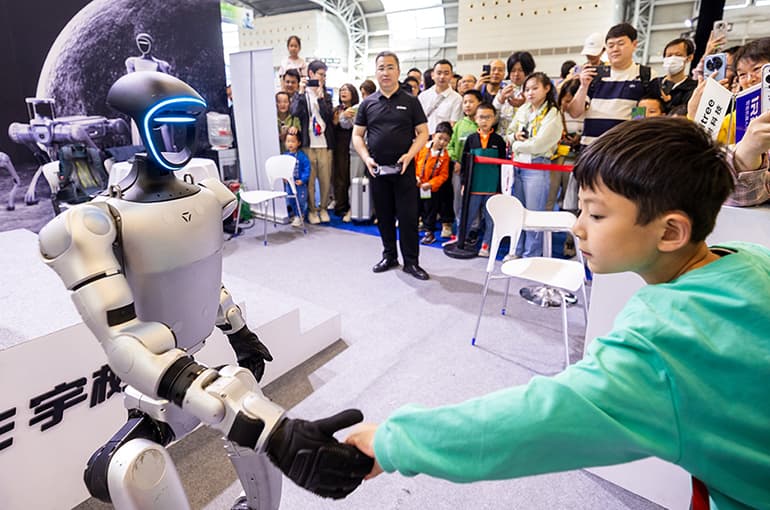
Unitree Robotics is a leading Chinese developer and manufacturer of legged robots, best known for its consumer and commercial quadruped robots like the Go1 and B2. The company has recently expanded into the humanoid form factor, a competitive space globally. Notably, the source highlights that Unitree "makes a profit while peers are still burning cash," a rare and significant distinction in the capital-intensive robotics field. This suggests a business model that may balance research ambition with commercial pragmatism, potentially through sales of its established quadruped platforms.
Investor Backing: A Who's Who of Chinese Tech and Capital
The IPO filing reveals a formidable roster of pre-IPO investors, underscoring the strategic importance placed on Unitree. External shareholders include:
- Meituan: Holding roughly 9.6%. The food delivery and services giant has a clear use case for last-mile delivery and warehouse automation.
- HongShan China (formerly Sequoia China): Holding 7.1%. One of China's most prominent venture capital firms.
- Matrix Partners China: Holding 5.5%. Another major venture capital player.
The investor list extends far beyond these core financial backers. The filing notes that Chinese tech giants including Tencent, Alibaba, Ant Group, Xiaomi, and ByteDance have invested, either directly or indirectly. Furthermore, industrial automotive players BYD and Geely are shareholders, pointing to potential integration of robotics in automotive manufacturing. The presence of state-backed funds from cities like Shanghai and Beijing indicates governmental support for Unitree as a national champion in advanced robotics.
Market Context: Humanoid Robotics Heats Up
Unitree's IPO filing arrives during a global surge of interest and investment in humanoid robotics, often framed as the frontier of "embodied AI." In the United States, companies like Tesla (Optimus), Figure AI (recently partnered with BMW and backed by OpenAI and Microsoft), and Boston Dynamics (owned by Hyundai) are making headlines. In China, Unitree competes with other well-funded entities like Fourier Intelligence and Xiaomi's CyberOne project.
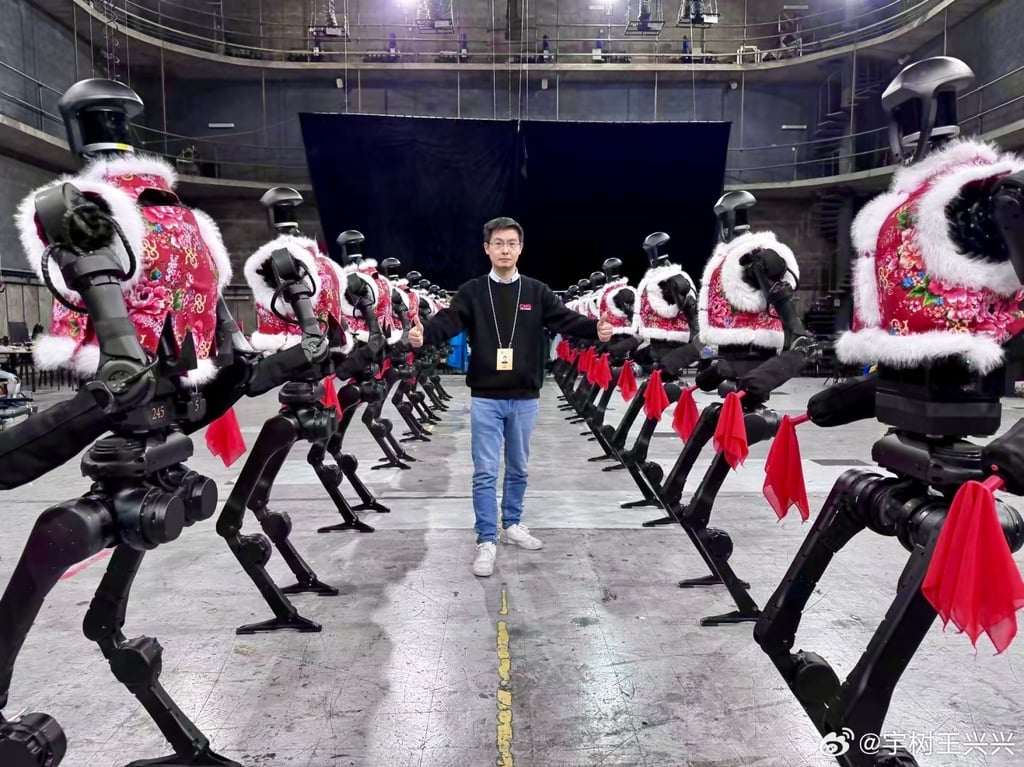
The listing is positioned as a test of whether public market investors share the conviction of private tech giants and VCs in the near-term commercial viability of humanoid robots. Success could unlock capital for the entire sector; a tepid response could signal a need for more concrete, near-term revenue roadmaps beyond long-term vision.
gentic.news Analysis
Unitree's IPO is less about a single company and more about the maturation of an entire technological thesis: embodied AI. The staggering list of investors—spanning top-tier VCs, consumer tech giants, automotive manufacturers, and state funds—is a map of where powerful Chinese institutions believe the next platform shift will occur. This isn't a speculative bet by one fund; it's a coordinated strategic positioning across multiple industries, suggesting a consensus that general-purpose robots will be integral to future manufacturing, logistics, and services.
The fact that Unitree is reportedly profitable is its most powerful differentiator and likely the key to securing this IPO. In a sector rife with moonshot projects burning hundreds of millions on R&D, Unitree appears to have built a viable business with its quadruped robots, creating a revenue-generating foundation to fund its humanoid ambitions. This "crawl, walk, run" approach de-risks the narrative for public markets. It provides a tangible, existing product line (quadrupeds) while offering equity in the speculative, high-upside future (humanoids).
For the global robotics landscape, a successful Unitree IPO would create a new, well-capitalized competitor with strong domestic supply chain advantages. It would also establish a Chinese benchmark for valuation, potentially accelerating IPO plans for other robotics firms worldwide. The ultimate question for investors will be whether to value Unitree as a profitable maker of niche robotic platforms today, or as a potential winner in the race for a general-purpose humanoid robot tomorrow. The $608 million ask suggests the market is being asked to pay for the latter vision.
Frequently Asked Questions
What is Unitree Robotics known for?
Unitree Robotics is best known as a leading Chinese manufacturer of agile, quadruped (four-legged) robots like the Go1 and B2, which are used for research, education, entertainment, and commercial applications. The company has more recently entered the competitive humanoid robotics space.
How much is Unitree Robotics trying to raise in its IPO?
Unitree Robotics is seeking to raise approximately 4.2 billion Chinese yuan, which is equivalent to about US$607.8 million, through its initial public offering on Shanghai's Star Market.
Why is Unitree's IPO considered so important for the robotics industry?
The IPO is seen as a critical bellwether because Unitree is one of the first major humanoid/embodied AI companies to test public market appetite. Its reported profitability contrasts with cash-burning peers, and its success or failure will signal investor confidence in the commercial timeline for advanced, general-purpose robotics, influencing funding and valuation for the entire sector.
Who are the major investors in Unitree Robotics?
Major investors include leading Chinese venture firms HongShan China and Matrix Partners China, tech and logistics giant Meituan, and a broad array of strategic backers like Tencent, Alibaba, Xiaomi, ByteDance, BYD, Geely, and several Chinese state-backed investment funds.