A recent analysis of the frontier AI model landscape concludes the race has effectively narrowed to two countries, with a small cluster of US-based labs maintaining a consistent advantage.
Key Takeaways
- An analysis of frontier AI models indicates the competitive landscape is a US-China duopoly.
- Within that, a small group of US labs holds a persistent, though narrow, lead.
What the Analysis Shows

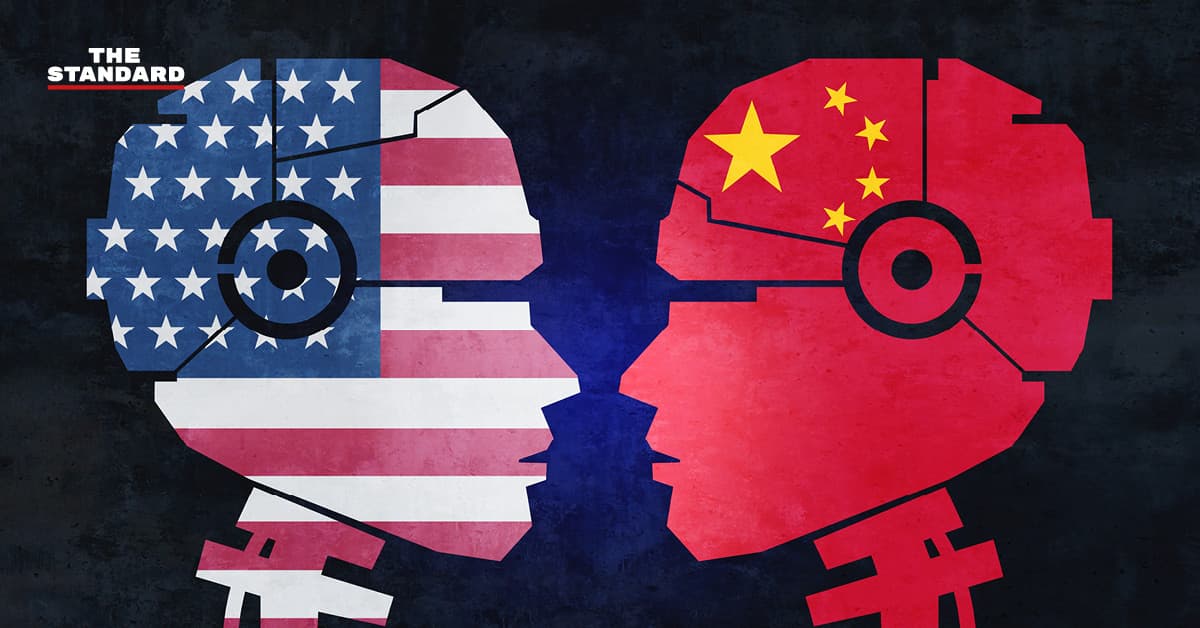
The assessment, highlighted by researcher Ethan Mollick, states that only the United States and China are currently fielding "notable" frontier models—the most advanced and capable AI systems. This frames the global competition as a direct duopoly.
More significantly, the analysis notes that within this US-China contest, "the Big Three US labs really do seem to be holding a durable lead." This lead is characterized as measurable but precarious, lasting "months, not years," suggesting a fast-paced environment where advantages are temporary and must be constantly defended through rapid iteration.
While the specific "Big Three" are not named in the source, the term commonly refers to OpenAI, Anthropic, and Google DeepMind—the organizations responsible for models like GPT-4, Claude 3, and Gemini.
The Competitive Context
This observation cuts through frequent rhetoric about a crowded, global AI race. It suggests that despite significant investments and research publications worldwide, the actual development of the most capable, cutting-edge models remains concentrated in a handful of entities within two nations.
The characterization of the US lead as "durable" yet measured in months reflects the current state of AI progress: breakthroughs are incremental and rapidly disseminated or reverse-engineered. A lab's advantage comes from sustained R&D investment, compute scale, and talent density, allowing it to string together successive model releases before competitors can catch up to the previous benchmark.
gentic.news Analysis

This analysis aligns with the competitive dynamics we've tracked throughout 2025 and into 2026. Our coverage of model releases from OpenAI (o1), Anthropic (Claude 3.5 Sonnet), and Google (Gemini 2.0) has consistently shown these labs trading positions on narrow margins across different benchmarks like MMLU, GPQA, and agentic coding evaluations. The lead is not a static gap but a moving target.
The mention of China as the sole competitor tracks with the rise of models like DeepSeek-V3, Qwen2.5, and the sustained output from Baidu and Alibaba. However, as we noted in our analysis of the 'Q2 2025 Frontier Model Scorecard,' while Chinese models frequently match or exceed US counterparts on standardized knowledge and reasoning tests, they often lag in perceived usability, safety fine-tuning, and integration into global developer ecosystems—factors that contribute to the "durable lead" described.
This duopoly context raises immediate questions about geopolitical fragmentation in AI standards, safety protocols, and compute supply chains. If the frontier is defined by two national spheres, the risk of divergent technological trajectories increases. For practitioners outside the US and China, the analysis underscores a strategic dependency: building state-of-the-art applications will likely require API access or partnerships with one of these few leading labs.
Frequently Asked Questions
Which US labs are considered the "Big Three" in AI?
While the source does not specify, the term "Big Three" in frontier AI almost universally refers to OpenAI (creator of GPT-4 and o1), Anthropic (creator of the Claude series), and Google DeepMind (creator of Gemini). These organizations have consistently released the models that define the state-of-the-art in large language and multimodal AI over the past three years.
What is a "frontier model" in AI?
A frontier model is a term for the most advanced generation of AI systems at a given time, typically pushing the boundaries of capabilities in reasoning, coding, complex instruction following, and multimodal understanding. They are distinguished from smaller, fine-tuned, or domain-specific models by their scale, general capabilities, and the significant compute resources required for their training.
How is China competitive in frontier AI development?
Chinese tech giants like Baidu, Alibaba, Tencent, and specialized AI firms like DeepSeek and 01.ai have invested heavily in foundational model research. They have produced models such as Ernie, Qwen, and DeepSeek-V3 that score competitively with top US models on academic benchmarks. Their competitiveness is driven by strong government support, vast domestic data, and a large pool of AI engineering talent.
Why is the US lead measured in "months, not years"?
The pace of AI progress is extremely rapid. A novel architecture or training technique developed by one lab can be analyzed, replicated, or improved upon by competitors within a few quarters. A lead is therefore maintained not by a single secret, but by a continuous cycle of innovation, scaling, and deployment that keeps a lab one major release ahead of its rivals—a gap that typically translates to a few months.