XPeng Motors Unveils 'Land Aircraft Carrier' Flying Car Prototype with Detachable eVTOL Module

XPeng Motors Unveils 'Land Aircraft Carrier' Flying Car Prototype with Detachable eVTOL Module

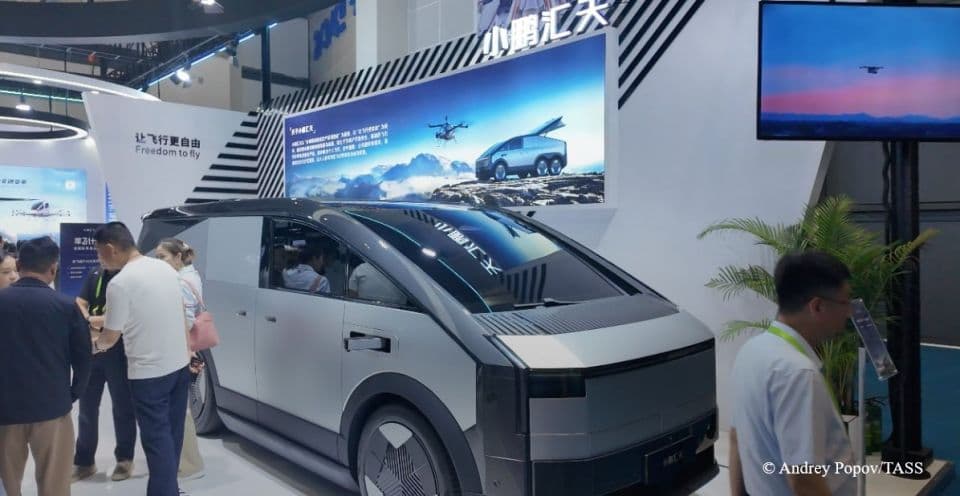
Chinese automaker XPeng Motors has revealed a flying car prototype: a 6x6 ground vehicle that carries a two-seat electric vertical takeoff and landing (eVTOL) aircraft on its back. The system is designed for modular transport where the aircraft detaches for flight.

9h ago·2 min read·10 views·via @rohanpaul_ai·via @rohanpaul_ai
Share:

What Happened

Chinese electric vehicle manufacturer XPeng Motors has unveiled a prototype "flying car" system called the "Land Aircraft Carrier." The system consists of two main components:

  1. A large ground vehicle: Described as a "big 6x6 all-wheel-drive" module, it functions as a carrier and transport platform.
  2. A detachable air module: A two-seat electric vertical takeoff and landing (eVTOL) aircraft that rides on the back of the ground vehicle.

The core concept is a modular transportation system. The ground vehicle transports the aircraft module to a suitable location, after which the aircraft can detach and operate independently for flight. The vehicle then presumably serves as a ground-based transport or retrieval unit.

Context

XPeng Motors, known primarily for its electric passenger cars and advanced driver-assistance systems, operates an urban air mobility subsidiary called XPeng AeroHT. This division has been developing eVTOL technology for several years.

This "Land Aircraft Carrier" concept represents a different approach to the "flying car" problem compared to other industry players. Instead of developing a single vehicle that drives and flies (a "roadable aircraft"), XPeng is pursuing a modular system that separates the ground and air functions into specialized components. This could potentially sidestep significant engineering and regulatory challenges associated with making a single vehicle meet both roadworthiness and airworthiness standards.

The prototype was showcased in China, though specific details on its development stage, technical specifications (e.g., range, battery capacity, flight endurance), or regulatory pathway were not provided in the initial announcement.

AI Analysis

The technical significance of XPeng's prototype lies in its system-level architecture rather than a breakthrough in core eVTOL propulsion. By decoupling the ground transport and air mobility functions, the company is attempting to simplify the certification and operational hurdles for each module. The ground vehicle only needs to meet automotive standards, while the air module is a pure eVTOL aircraft. This is a pragmatic, if less futuristic-looking, approach compared to integrated flying car designs from companies like Alef Aeronautics or ASKA. For the AI and autonomy community, the relevant thread is how this system might eventually be integrated. XPeng's core strength is in smart EV technology, including navigation and perception systems. The logical progression for a system like this would be the implementation of autonomous capabilities for both the ground vehicle (potentially as a robotic carrier/retriever) and the aircraft module. However, the current announcement is purely a hardware prototype reveal; any AI/autonomy features remain speculative and are not mentioned in the source material. Practitioners should view this as a notable data point in the evolving landscape of urban air mobility, highlighting a divergent design philosophy. The success of such a system will depend heavily on cost, the convenience of the docking/undocking process, and the development of vertiport infrastructure that can accommodate the ground carrier component.
Original sourcex.com

Trending Now

More in Products & Launches

Browse more AI articles