A viral social media critique is resonating with a segment of the AI community, arguing that the industry's three-year obsession with large generative models may be a technological dead end. The post asserts that Meta's Chief AI Scientist, Yann LeCun, has been "right the entire time" in his persistent criticism of the autoregressive, next-token-prediction foundation of models like GPT-4, Claude, and Gemini.
The core argument is that the current path of scaling generative models, while producing impressive conversational abilities, is fundamentally flawed for achieving human-level or "true" machine intelligence. These models are criticized as inherently unstable, prone to confabulation (hallucination), and lacking a robust, internal understanding of how the world works. They are seen as brilliant statistical parrots, not reasoning entities.
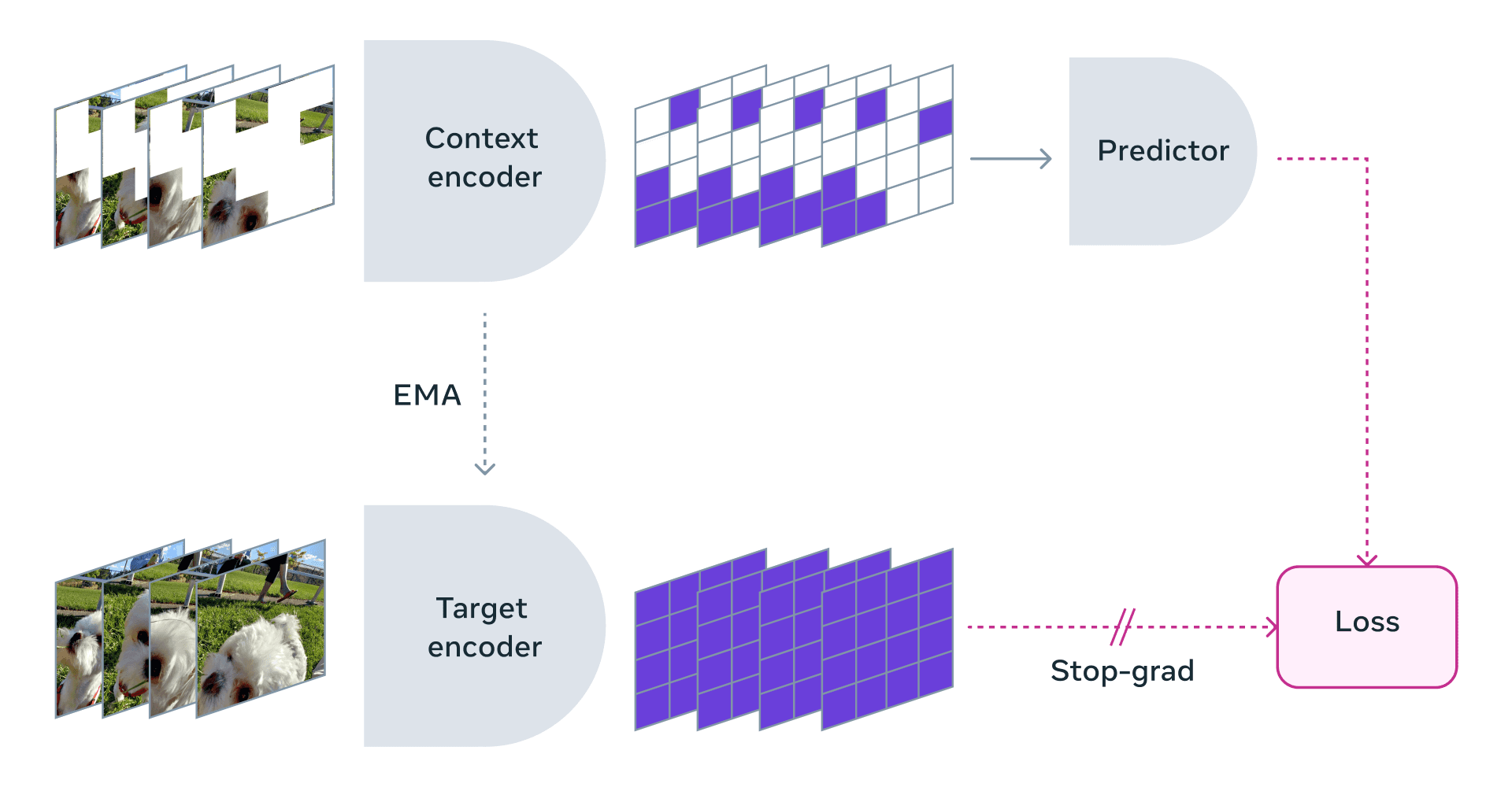
This perspective directly champions LeCun's proposed alternative: the Joint Embedding Predictive Architecture (JEPA) and its evolution into a broader world model approach. Unlike generative models that predict pixels or tokens directly, JEPA-based systems learn by predicting representations of the world in an abstract latent space. The goal is to build an AI that can learn an internal model of how the world operates—understanding physics, cause and effect, and persistence—enabling it to plan and reason with common sense, a capability current LLMs notoriously lack.
What Happened

The critique gained traction on X (formerly Twitter), distilled into the blunt statement: "generative AI might be a dead end." It reflects a growing undercurrent of skepticism from researchers who believe the field has over-invested in one architectural paradigm. The post's alignment with LeCun positions him not as a contrarian, but as a prescient voice who outlined a different roadmap years ago.
Context: LeCun's Long-Standing Position
Yann LeCun, a Turing Award winner and one of the fathers of modern deep learning (convolutional neural networks), has been a vocal critic of pure generative/autoregressive models since the rise of large language models. At Meta's Fundamental AI Research (FAIR) lab, he has pushed the development of JEPA and the Hierarchical JEPA (H-JEPA) as core components for autonomous machine intelligence.
His key argument is that intelligence is primarily about learning world models to predict outcomes and plan actions, not about generating plausible text. He has often stated that LLMs are "doomed" to remain unreliable because of their inherent architecture, needing a fundamental shift toward systems that learn like animals and humans—through observation and interaction.
gentic.news Analysis

This viral moment is less about a new technical breakthrough and more about a shifting narrative within the AI research community. For years, LeCun's views were often sidelined by the staggering success and commercial deployment of GPT-style models. However, as the limitations of these models become more apparent—their opacity, high operational costs, and inability to perform reliable, deterministic reasoning—his architectural critiques are being re-evaluated.
This aligns with a broader trend we've covered, including the rise of "reasoning models" and research into alternative neural architectures that move beyond next-token prediction. For instance, our coverage of Google's Pathways vision and various neuro-symbolic approaches points to the same industry-wide search for a post-transformer, post-generative paradigm. The recent focus on AI agents also exposes the weaknesses of pure LLMs; agents require planning and persistent world understanding, tasks for which JEPA-style models are theoretically better suited.
Meta is betting heavily on this direction. LeCun's vision is the north star for FAIR, and the company's open-source releases, like the H-JEPA model for video understanding, are tangible steps in this research program. If the generative AI plateau is real, the first major lab to successfully operationalize a scalable world-model architecture could leapfrog the current state of the art.
Frequently Asked Questions
What is JEPA (Joint Embedding Predictive Architecture)?
JEPA is a neural architecture proposed by Yann LeCun where the model learns to predict the representation of an input in a latent space, rather than predicting the input itself (like pixels or words). It's designed to learn stable, abstract representations of the world that capture its underlying structure, making it more sample-efficient and better suited for learning world models and planning.
Is generative AI really a 'dead end'?
The claim is controversial. Generative AI, in the form of LLMs and diffusion models, has produced immensely useful tools and services. The "dead end" argument pertains to the goal of achieving human-like, reliable, and reasoning general intelligence. Critics argue the autoregressive core of these models is fundamentally misaligned with that goal, necessitating a different architectural foundation. However, generative models will likely remain commercially dominant for specific applications for years.
What are the main limitations of current LLMs that JEPA aims to address?
Key limitations include hallucination/confabulation (making up facts), lack of persistent world models (inability to maintain a consistent understanding of state), poor planning capabilities, and inefficient learning (requiring massive amounts of data versus learning from observation like a human child). JEPA-based systems are theorized to inherently improve on these fronts by learning how the world works, not just the statistics of text.
Is anyone building practical systems using LeCun's architecture?
Yes, primarily at Meta's FAIR lab. They have released research models like H-JEPA for video and continue to publish on this framework. It remains a active research frontier rather than a deployed product. The viability of scaling JEPA to compete with trillion-parameter LLMs on broad tasks is still an open question being explored.