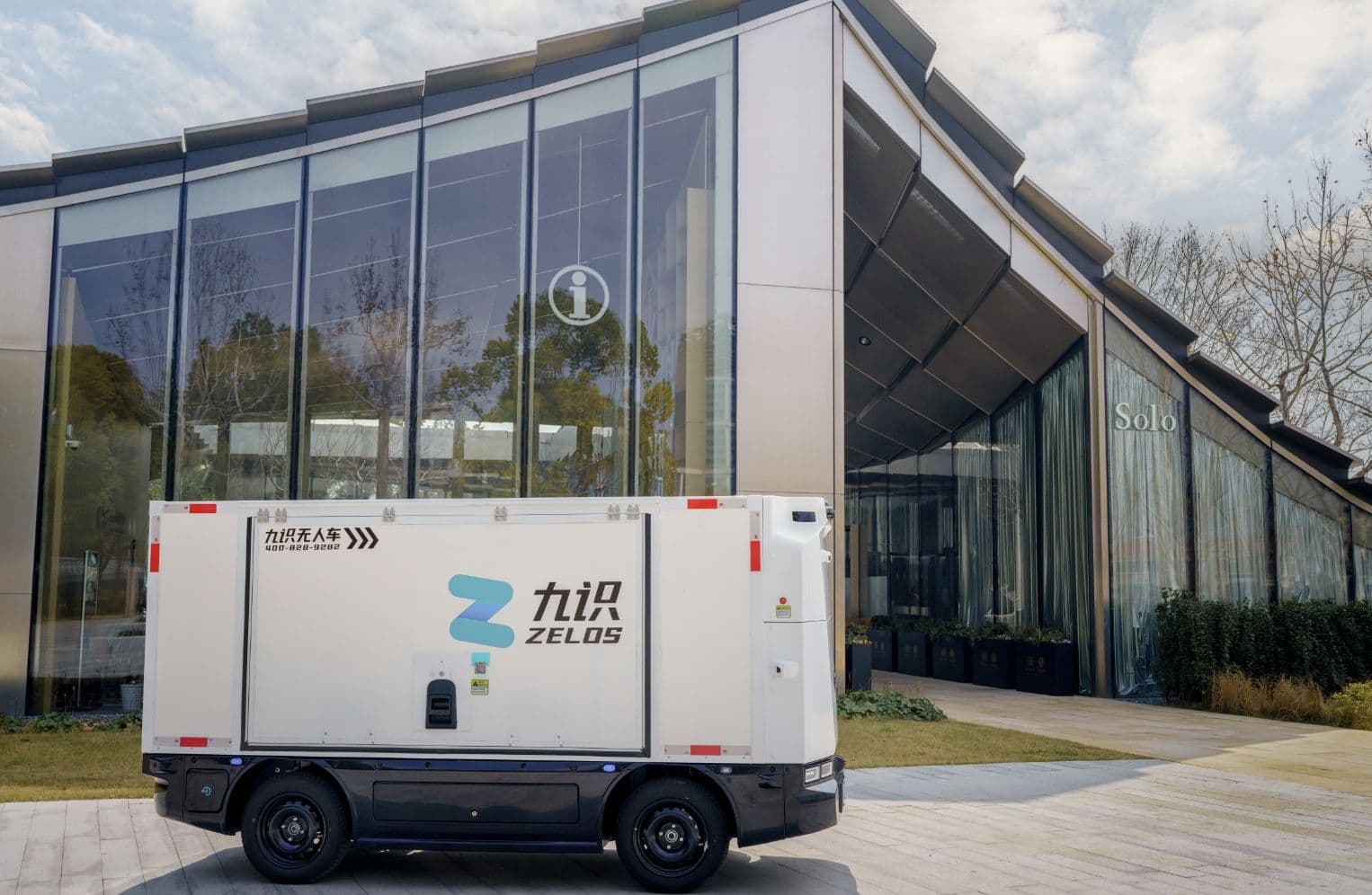
Autonomous vehicle startup Zelos has achieved a significant milestone in the emerging RoboVan sector, securing over $300 million in new funding that pushes its valuation beyond $1 billion. According to reporting from Pandaily, this makes Zelos the first unicorn company specifically focused on autonomous logistics and delivery vehicles, signaling a major acceleration in the commercial deployment of self-driving technology beyond passenger transportation.
The Funding Breakthrough
The substantial funding round, reportedly led by a consortium of venture capital firms and strategic investors from the logistics and automotive sectors, represents one of the largest single investments in autonomous logistics to date. While specific investor names weren't disclosed in the initial report, the scale of investment suggests strong confidence from institutional backers in Zelos' technology and business model.
This capital infusion comes at a critical juncture for the autonomous vehicle industry, which has seen mixed progress across different applications. While robotaxi services have faced regulatory hurdles and technical challenges, autonomous logistics has emerged as a potentially more viable near-term application due to more controlled operating environments and clearer economic benefits.
Zelos' Technological Approach
Zelos has focused specifically on developing autonomous delivery vehicles, or "RoboVans," designed for last-mile and middle-mile logistics. The company's technology stack reportedly combines advanced sensor systems (including LiDAR, radar, and cameras) with sophisticated AI algorithms for perception, planning, and control.
Unlike some competitors pursuing fully driverless solutions immediately, Zelos has reportedly adopted a phased approach to autonomy. Their vehicles initially operate with safety drivers during testing and early deployment, gradually transitioning to fully autonomous operation as the technology matures and regulatory frameworks evolve.
The Autonomous Logistics Landscape
The RoboVan sector represents a distinct segment within the broader autonomous vehicle ecosystem. While companies like Waymo and Cruise have focused primarily on passenger transportation, and others like TuSimple have targeted long-haul trucking, the middle-mile and last-mile delivery market presents unique opportunities and challenges.
Key advantages of autonomous delivery vehicles include:
- Predictable routes: Delivery vehicles typically follow established, repetitive routes
- Lower speed operations: Urban and suburban delivery often occurs at lower speeds than highway driving
- Controlled environments: Many logistics operations occur within industrial parks, warehouses, and distribution centers
- Strong economic case: Labor represents a significant portion of delivery costs, creating clear ROI potential
Market Drivers and Timing
Several converging factors have created favorable conditions for autonomous logistics:
E-commerce Growth: The pandemic accelerated e-commerce adoption, increasing demand for efficient delivery solutions. Last-mile delivery costs have become a critical competitive factor for retailers.
Labor Challenges: The logistics industry faces persistent driver shortages and rising labor costs, creating strong incentives for automation.
Regulatory Progress: While autonomous passenger vehicles face complex safety and liability questions, commercial delivery applications have seen more regulatory flexibility in many jurisdictions.
Technology Maturation: Sensor costs have decreased while AI capabilities have improved, making autonomous systems more economically viable.
Competitive Implications
Zelos' unicorn status and substantial funding give it significant advantages in the emerging RoboVan space. The capital will likely be deployed across several strategic areas:
- Technology development: Accelerating R&D on autonomy systems and vehicle platforms
- Fleet expansion: Scaling the number of vehicles in operation
- Geographic expansion: Entering new markets and regions
- Partnership development: Building relationships with logistics companies, retailers, and manufacturers
Challenges and Considerations
Despite the promising developments, significant challenges remain for Zelos and the broader autonomous logistics sector:
Technical Hurdles: While controlled environments are simpler than general urban driving, autonomous systems must still handle complex scenarios including weather conditions, construction zones, and unpredictable human behavior.
Regulatory Uncertainty: The regulatory landscape for autonomous commercial vehicles continues to evolve, with different approaches across states and countries.
Public Acceptance: While delivery vehicles may face less public scrutiny than passenger vehicles, safety incidents could still significantly impact adoption.
Economic Viability: The business case must account for not just vehicle costs but also maintenance, software updates, and remote monitoring operations.
Industry Impact and Future Outlook
Zelos' funding milestone represents more than just one company's success—it signals growing investor confidence in autonomous logistics as a whole. The sector appears to be reaching an inflection point where technology, market demand, and investment are aligning to enable meaningful commercial deployment.
Looking forward, several developments are likely:
- Increased competition: Other autonomous vehicle companies may shift focus toward logistics applications
- Consolidation: Smaller players may be acquired as the market matures
- New business models: Autonomous delivery could enable services like overnight restocking or dynamic routing
- Infrastructure evolution: Cities and businesses may adapt facilities to accommodate autonomous vehicles
The Broader Autonomous Vehicle Ecosystem
Zelos' emergence as a RoboVan unicorn reflects a broader trend in the autonomous vehicle industry: the segmentation of applications based on technical feasibility and market readiness. While fully autonomous passenger vehicles remain a longer-term prospect, commercial applications in controlled environments are progressing more rapidly.
This specialization allows companies to focus on specific use cases where the technology can deliver value sooner, potentially creating sustainable businesses that can then expand into adjacent applications.
Source: Pandaily