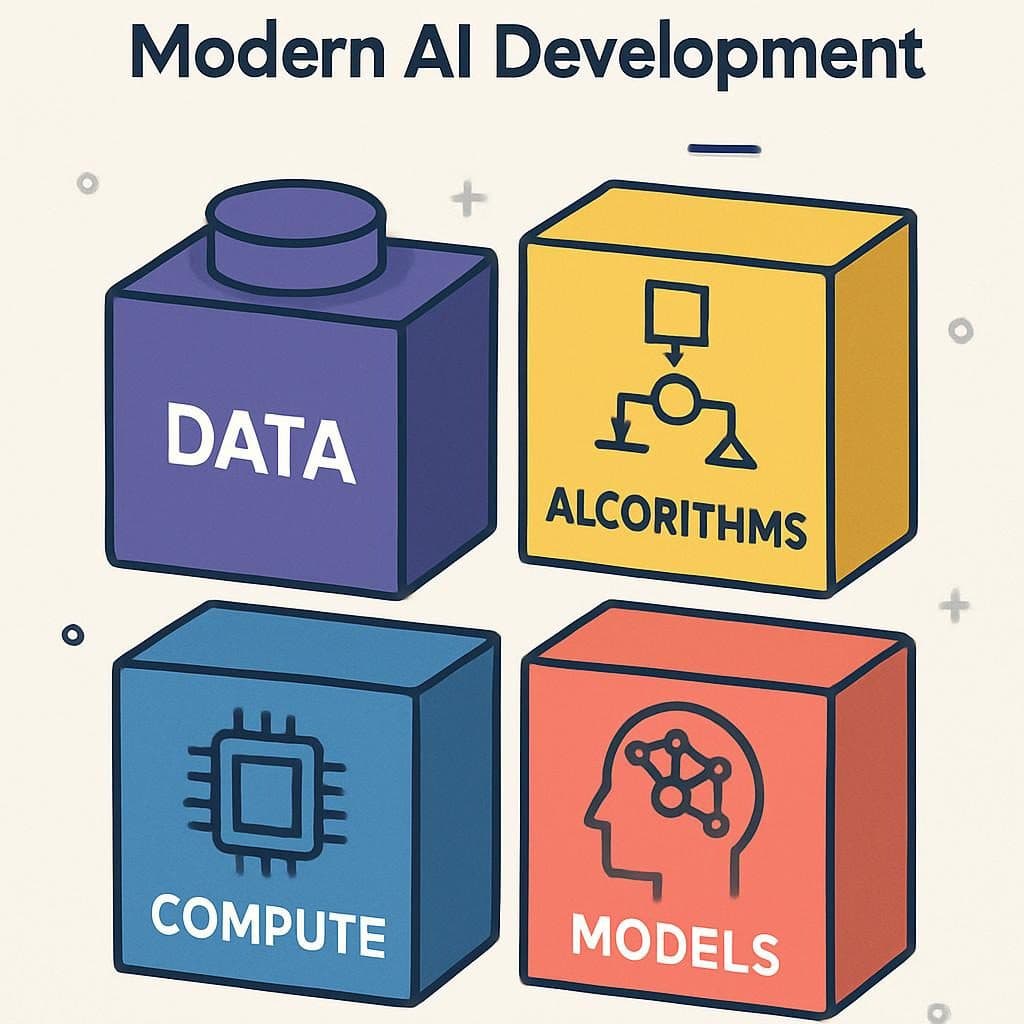
One year after its open-source release, the AI Engineering Hub has reached a significant milestone with 30,000 stars on GitHub, signaling strong community adoption and highlighting the growing demand for practical, hands-on AI implementation resources. Created by developer Akshay Pachaar, the repository has evolved into a comprehensive collection of 90+ projects covering essential AI engineering domains including Retrieval-Augmented Generation (RAG), Model Context Protocol (MCP), AI agents, fine-tuning, memory systems, evaluation frameworks, and LLMOps optimizations.
From Open-Source Project to Community Phenomenon
The rapid growth of the AI Engineering Hub reflects several key trends in the AI development landscape. First, it demonstrates the increasing maturity of AI engineering as a distinct discipline separate from theoretical research. While foundational models continue to advance, there's growing recognition that implementing these technologies in production requires specialized knowledge and tools that aren't always covered in academic papers or high-level tutorials.
Second, the repository's popularity underscores the democratization of AI development. With comprehensive projects spanning multiple difficulty levels and use cases, the hub lowers barriers for developers transitioning from traditional software engineering to AI engineering. The "no excuses, just start building" philosophy resonates with practitioners who want to move beyond conceptual understanding to actual implementation.
Comprehensive Coverage of Modern AI Stack
What makes the AI Engineering Hub particularly valuable is its breadth and depth across critical AI engineering domains:
Retrieval-Augmented Generation (RAG)
The repository includes multiple RAG implementations demonstrating different architectural patterns, retrieval strategies, and optimization techniques. These projects address one of the most common production use cases for large language models—enhancing them with external knowledge while controlling hallucinations and improving accuracy.
AI Agents and Memory Systems
With the growing interest in autonomous AI systems, the hub provides practical examples of agent architectures, including those with both short-term and long-term memory capabilities. These implementations help developers understand how to create persistent, context-aware AI applications that can maintain state across interactions.
Fine-Tuning and Optimization
Beyond basic implementation, the repository covers advanced topics like model fine-tuning for specific domains, parameter-efficient fine-tuning techniques, and optimization strategies for production deployment. This addresses a critical gap between using pre-trained models and customizing them for specific business needs.
LLMOps and Observability
Perhaps most importantly for production teams, the hub includes projects focused on the operational aspects of AI systems—monitoring, evaluation, deployment pipelines, and performance optimization. These resources help bridge the gap between experimental AI prototypes and reliable production systems.
Impact on the AI Development Ecosystem
The success of the AI Engineering Hub represents more than just another popular GitHub repository. It signals several important shifts in how AI technology is being adopted and implemented:
Standardization of Best Practices: By providing concrete examples of implementation patterns, the hub helps establish de facto standards for AI engineering approaches. This is particularly valuable in a field where best practices are still evolving rapidly.
Community-Driven Knowledge Sharing: The 30,000 stars represent not just passive appreciation but active engagement from a community of practitioners who are learning from, contributing to, and building upon these resources. This creates a virtuous cycle where practical knowledge spreads more rapidly than through traditional academic or corporate channels.
Lowering Barriers to Entry: For organizations and individual developers without access to large AI research teams, resources like the AI Engineering Hub provide a crucial on-ramp to implementing advanced AI capabilities. This democratization effect could accelerate AI adoption across industries and geographies.
Future Implications and Development Trajectory
Looking forward, the continued growth of the AI Engineering Hub suggests several likely developments:
Integration with Commercial Platforms: As the repository matures, we may see increased integration between these open-source patterns and commercial AI platforms, creating hybrid ecosystems where open knowledge complements proprietary tools.
Specialization and Verticalization: The current broad coverage may evolve into more specialized collections focused on specific industries or application domains, such as healthcare AI engineering, financial AI systems, or creative AI implementations.
Educational Integration: The hands-on, project-based approach makes the hub ideal for integration into formal and informal AI education programs, potentially influencing how AI engineering is taught at universities and coding bootcamps.
Conclusion: A New Era of Practical AI Implementation
The 30,000-star milestone for the AI Engineering Hub marks more than just popularity—it represents a fundamental shift in how AI technology moves from research to reality. By providing comprehensive, practical resources across the entire AI engineering stack, the repository addresses a critical need in the ecosystem: turning theoretical capabilities into reliable, production-ready systems.
As AI continues to evolve from experimental technology to core business infrastructure, resources like the AI Engineering Hub will play an increasingly important role in ensuring that development keeps pace with innovation. The repository's success demonstrates that the AI community values not just what's possible theoretically, but what's implementable practically—a sign of the field's growing maturity and real-world impact.