What Happened
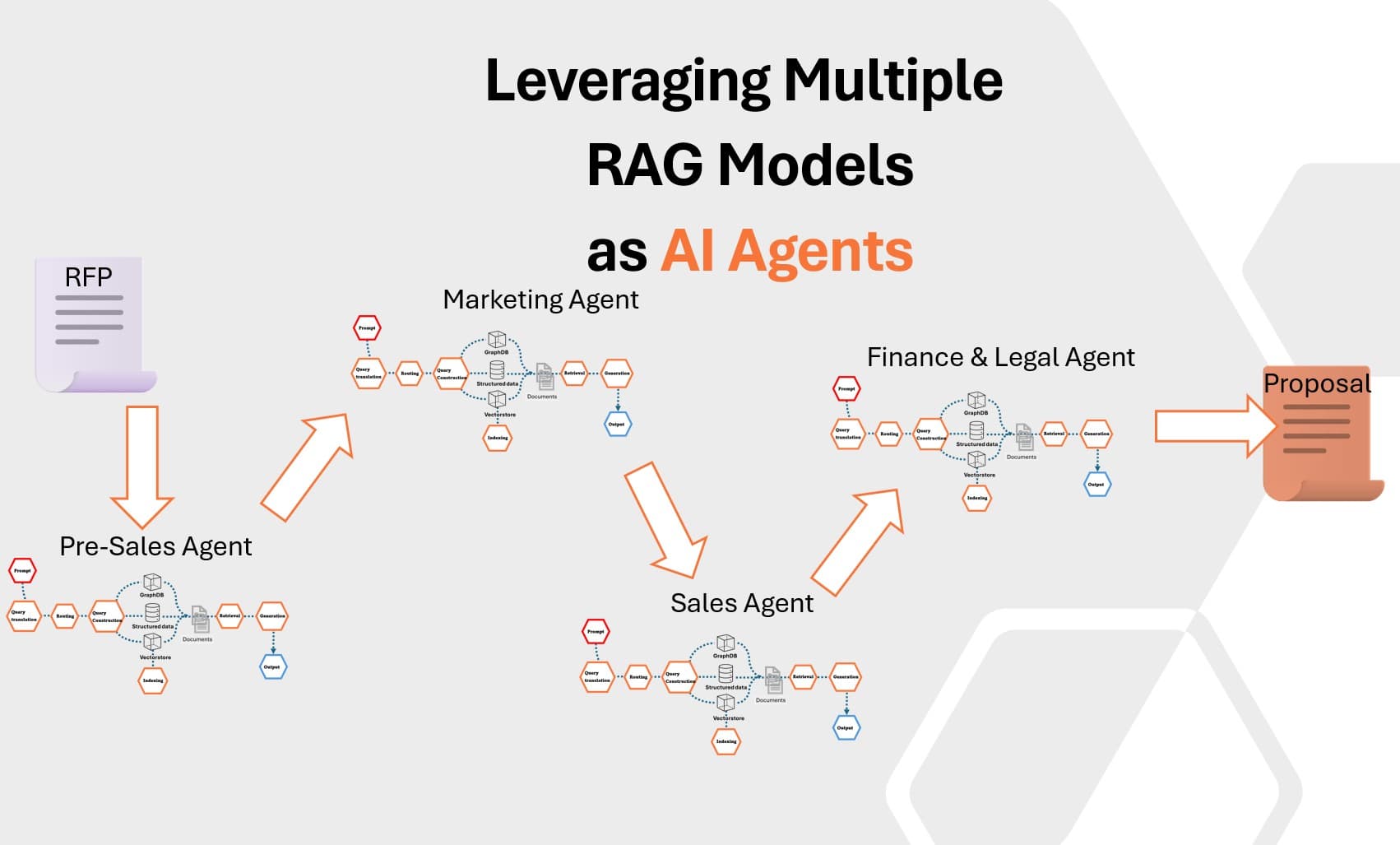
A new technical article on Medium proposes a blueprint for building what it calls the "next generation" of recommendation systems. The core thesis is that future systems must move beyond simply predicting what a user might want based on historical patterns. Instead, they should actively understand context, reason about nuanced preferences, and generate personalized suggestions through a synthesis of three core technologies: AI Agents, Retrieval-Augmented Generation (RAG), and traditional Machine Learning (ML).
While the full article is behind Medium's subscription paywall, the provided snippet frames this as a significant architectural shift. The proposed system would leverage AI agents to orchestrate tasks and make decisions, RAG to ground recommendations in relevant, up-to-date external knowledge (like product catalogs, style guides, or inventory data), and ML models to provide the foundational predictive power.
Technical Details: A Hybrid Architectural Vision
Based on the description and current industry trends, we can infer the proposed architecture likely involves several interconnected components:
AI Agents as the Orchestrator: An agentic framework would act as the system's "brain." It would be responsible for breaking down a user's implicit or explicit request (e.g., "I need an outfit for a garden wedding") into sub-tasks. These could include querying a user profile, retrieving relevant style rules or current trends via RAG, and calling upon specialized ML models.
RAG as the Context Engine: This is where the system moves beyond static user-item matrices. A RAG pipeline would retrieve specific, contextual information from a knowledge base. For a retail application, this knowledge base could contain:
- Detailed product attributes (materials, cut, color theory).
- Styling rules and fashion guidelines.
- Real-time inventory and availability data.
- Editorial content like lookbooks or trend reports.
The LLM would then synthesize this retrieved information to reason about appropriateness and generate a narrative for the recommendation.
Machine Learning as the Foundation Layer: Traditional ML models (e.g., matrix factorization, gradient boosting trees, or deep learning models) would not be replaced but integrated. They would provide the initial, high-probability candidate set—the "what you might like based on your history." The agent and RAG layers would then refine, contextualize, and explain these candidates, turning a list of products into a curated, context-aware suggestion.
This approach directly addresses the limitations of "basic RAG," which, as noted in our Knowledge Graph, gained prominence between 2020-2023 but is now seen as limited. The evolution toward agent memory systems and more dynamic architectures is a clear industry trend.
Retail & Luxury Implications
For luxury and retail AI leaders, this hybrid blueprint is highly relevant, though it represents a sophisticated, forward-looking implementation rather than an off-the-shelf solution.
Potential Applications:
- Hyper-Personalized Styling: Moving from "customers who bought this also bought..." to a virtual stylist that understands a client's body type, past purchases, stated preferences, and the specific occasion to recommend a complete, coherent look.
- Dynamic Editorial & Campaign Integration: An agent could retrieve the narrative and key pieces from a brand's latest campaign (via RAG) and intelligently surface those items to customers whose profiles and current browsing behavior align with the campaign's aesthetic.
- Complex Query Resolution: Handling ambiguous searches like "office-to-evening wear" by reasoning about dress codes, retrieving appropriate product categories, and applying ML-based personal taste filters.
- Inventory-Aware Recommendations: Seamlessly incorporating real-time stock levels, store location data, and supplier lead times into the recommendation logic to only suggest items that are feasibly accessible to the customer.
The Implementation Gap:
The vision is compelling, but the path to production is complex. It requires robust integration of disparate systems (ML serving, vector databases, agent frameworks), careful design to manage latency and cost, and rigorous evaluation to ensure the agentic reasoning is reliable and brand-appropriate. As highlighted in our recent coverage ("I Built a RAG Dream — Then It Crashed at Scale"), scaling these sophisticated architectures presents significant operational challenges. This is not a weekend proof-of-concept but a strategic engineering initiative.