A new analysis of online content has identified a historic inflection point: for the first time, the volume of newly published AI-generated material appears to have surpassed human-generated content. The finding, highlighted by AI researcher Rohan Paul, suggests a fundamental shift in the composition of the public internet, with profound implications for search, content moderation, and digital trust.
Key Takeaways
- For the first time, the volume of newly published AI-generated content online has surpassed human-generated content, according to a study cited by AI researcher Rohan Paul.
- This represents a fundamental shift in the composition of the public internet.
What the Data Shows
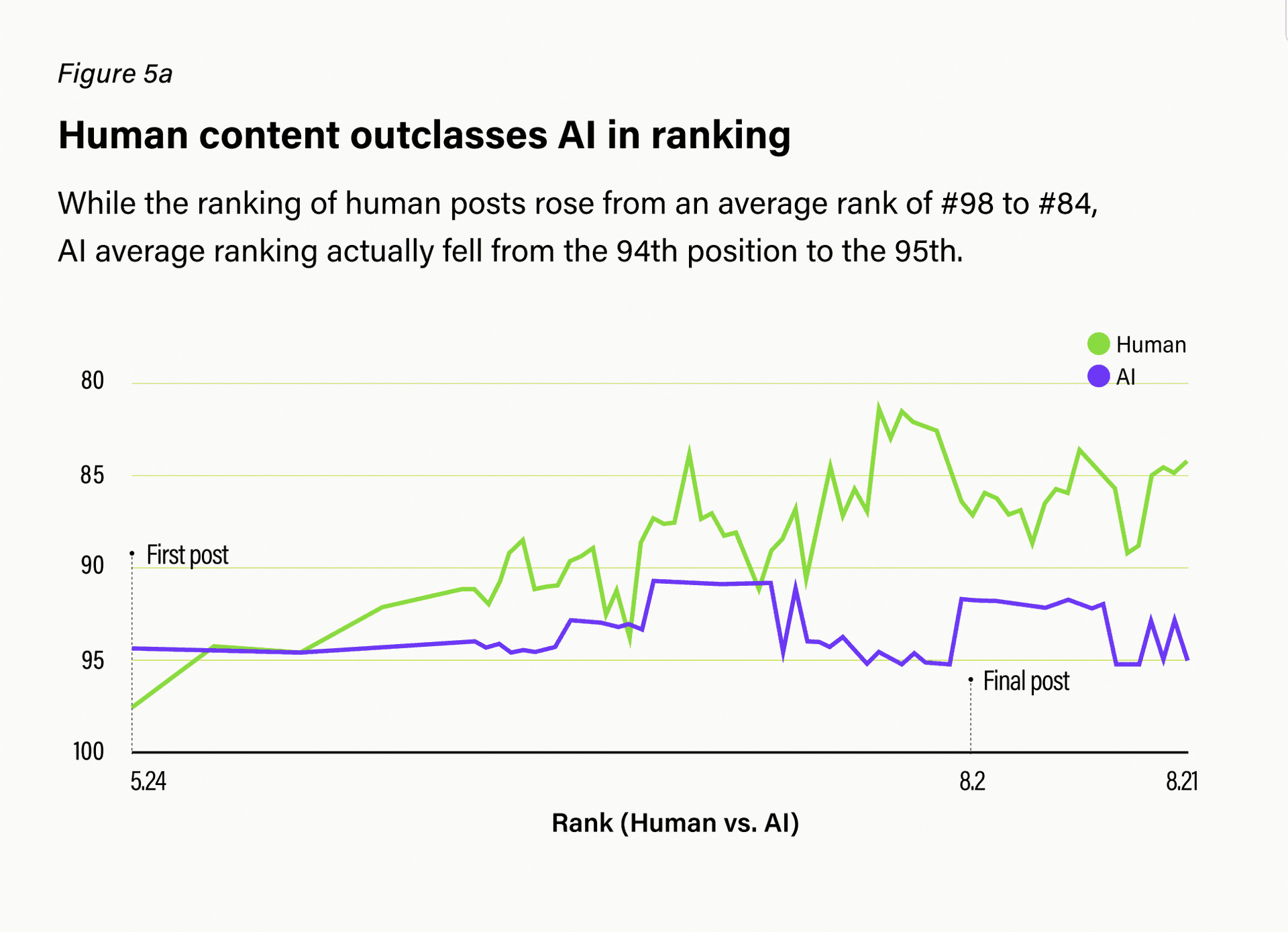
The referenced chart, based on a study analyzing content publication patterns, indicates that the proportion of AI-generated material in new online posts has crossed the 50% threshold. This means that more than half of the text, images, code, and other media being published to the open web at this moment is created or significantly augmented by artificial intelligence systems.
While the specific methodology and dataset of the underlying study are not detailed in the social media post, the claim aligns with the explosive growth in public AI tool usage since the widespread release of models like GPT-4, Midjourney, and Claude in 2023-2024. The crossover point was likely driven by the integration of AI assistants into major publishing platforms (like CMS plugins), social media management tools, and the proliferation of fully automated "AI news" and content farms.
Context and Implications
This milestone follows years of accelerating AI adoption in content creation. Initially, AI was used for auxiliary tasks like grammar checking or simple summarization. The release of capable large language models (LLMs) and diffusion models enabled the generation of coherent long-form articles, marketing copy, software code, and photorealistic images at near-zero marginal cost.
The practical consequences are immediate:
- Search Engine Quality: Search algorithms like Google's, which were built to rank human-authored pages, must now adapt to a web where a majority of indexable content is machine-generated. This challenges core assumptions about originality, expertise, and authoritativeness.
- Data Contamination: The next generation of AI models will be trained on this new, AI-saturated internet. This creates a potential feedback loop where models are trained on data they themselves generated, a phenomenon known as "model collapse" or data degradation, which can lead to a loss of diversity and quality in future models.
- Trust and Authenticity: For users, verifying the source and intent of online information becomes exponentially harder. Distinguishing between human experience, AI-assisted human work, and fully synthetic content is often impossible without technical forensic tools.
- Economic Impact: The economics of digital media, advertising, and creative work are being radically reshaped as the cost of producing passable content approaches zero.
gentic.news Analysis
This reported crossover is not a surprise to industry observers, but its confirmation is a stark data point marking the end of the human-dominated web. We have been tracking the components of this shift. In 2025, our coverage of Anthropic's Project Augeas highlighted early industry efforts to watermark and detect AI text at scale, a direct response to the coming flood of synthetic content. Similarly, our analysis of Google's "Genesis" update detailed the search giant's struggle to retrain its ranking systems to prioritize experience and depth over mere keyword-matching fluency—a trait at which LLMs excel.
The trend of AI content proliferation is strongly linked to entities like OpenAI, Anthropic, and Midjourney, whose models are the primary engines of this generation. Their rapid release cycles and developer-friendly APIs have directly enabled this scale of automation. This also creates a tension with other KG entities like The New York Times and other legacy publishers who have pursued litigation over the use of their human-created content for training these very models, even as the models now out-publish them.
Looking ahead, the focus will shift from generation to curation, verification, and attribution. Startups and research labs (trending entities in our KG like Hive AI and Reality Defender) are pivoting to build the forensic tools needed for this new reality. The next major inflection point won't be about volume, but about developing a sustainable ecosystem where valuable human insight and creativity can still be discovered amid the synthetic noise.
Frequently Asked Questions
What does "AI-generated content" mean in this study?
It likely refers to any digital text, image, or media where the primary creative composition was performed by an artificial intelligence model, such as a large language model (LLM) or a diffusion model. This includes everything from a fully AI-written blog post to a human-prompted image that required significant AI synthesis. The exact definition used by the underlying researchers is crucial but not specified in the social media post.
Does this mean most website content is now written by AI?
For newly published content, the data suggests yes, more than half is AI-generated or heavily AI-augmented. This does not mean the entire existing corpus of the internet (the "stock") is majority AI, but the current flow (the "flux") is. Over time, as new content is added, the overall stock will become increasingly AI-sourced.
How can you tell if content is AI-generated?
It is becoming increasingly difficult for the average person. Tell-tale signs like repetitive phrasing, factual vagueness, or a certain "generic" tone are being engineered out of newer models. Specialized detection tools exist but have declining accuracy against state-of-the-art models. Many experts believe reliable detection will require cryptographic methods like watermarking built into the AI systems themselves.
What is the biggest risk of an AI-dominated web?
The primary risk is the erosion of a shared factual baseline and the poisoning of the data used to train future AI. If models are trained primarily on other AI outputs, they can develop degenerative flaws, amplifying biases and losing touch with genuine human knowledge and nuance. This could lead to a digital ecosystem that is increasingly synthetic, self-referential, and detached from verifiable reality.