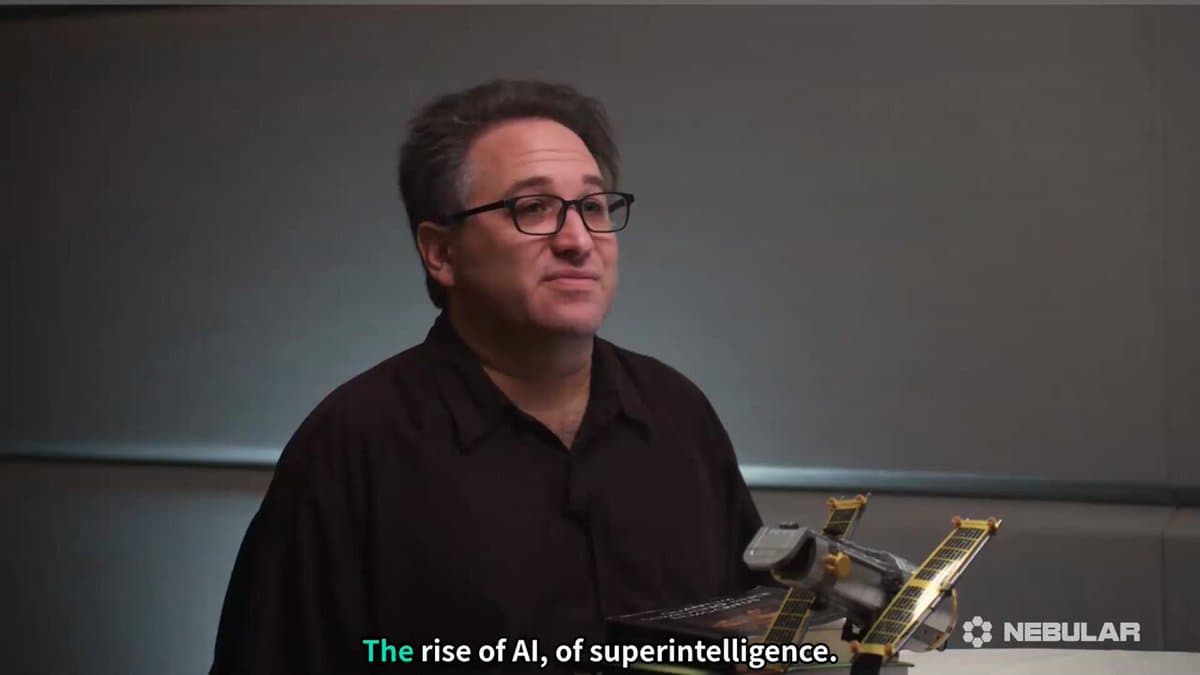
Former OpenAI researcher Scott Aaronson has issued a stark warning about the trajectory of artificial intelligence development, suggesting that AI superintelligence could render humans "as obsolete as baboons in zoos" within the next 25 years. The prominent AI safety researcher, who previously led OpenAI's superalignment team, described artificial intelligence as a "potential successor species" to humanity while expressing deep concern about global leadership's preparedness for this existential shift.
The Baboon Analogy: A Stark Warning
Aaronson's comparison of future humans to baboons in zoos represents one of the most vivid and unsettling metaphors yet from within the AI research community. The analogy suggests not just economic displacement but a fundamental shift in our position in the hierarchy of intelligence and capability. Baboons, while intelligent in their own right, exist in managed environments where their survival depends on the goodwill and management of a more advanced species—humans.
This framing extends beyond previous warnings about job displacement or economic disruption. It suggests a future where human agency, relevance, and even purpose could be fundamentally diminished by the emergence of systems with intelligence vastly superior to our own. The zoo metaphor implies not just obsolescence but dependency—a future where humans might continue to exist but in a managed, controlled environment where our decisions and capabilities no longer determine our collective fate.
The Timeline: 25 Years to Prepare
Perhaps most alarming in Aaronson's assessment is the timeframe: he suggests this existential shift could occur within the next 25 years. This places the potential emergence of superintelligent AI squarely within the lifetimes of most people alive today and certainly within the planning horizons of current governments and institutions.
The quarter-century timeline aligns with some of the more aggressive predictions within the AI community but contradicts more conservative estimates. What makes Aaronson's warning particularly significant is his position as someone who has worked directly on AI safety at one of the leading organizations developing advanced AI systems. His perspective comes not from theoretical speculation but from intimate familiarity with the current state of AI development and its trajectory.
The Preparedness Gap: Leadership Unready for What's Coming
Aaronson's most direct criticism targets global leadership's lack of preparation. "Global leadership is unprepared to manage this existential shift over the next 25 years," he states bluntly. This assessment echoes growing concerns within the AI safety community that political systems move too slowly to address technological developments that advance exponentially.
The preparedness gap exists on multiple levels: regulatory frameworks for AI are still in their infancy, international cooperation on AI governance remains fragmented, and most political leaders lack the technical understanding to make informed decisions about AI development. Meanwhile, the competitive dynamics between nations and corporations create powerful incentives to accelerate AI capabilities with insufficient attention to safety considerations.
The Successor Species Framework
By describing AI as a "potential successor species," Aaronson places the discussion in an evolutionary context. Throughout Earth's history, dominant species have been replaced by others better adapted to changing conditions or possessing superior capabilities. Human dominance has been built on our unique cognitive abilities—language, tool use, complex social organization, and cumulative culture.
Artificial intelligence represents the first potential successor that wouldn't emerge through biological evolution but through human engineering. This creates a paradoxical situation: we might be creating our own replacement. The successor species framing raises profound questions about purpose, meaning, and legacy in a post-human world.
Context: From OpenAI to Public Warning
Scott Aaronson's background adds significant weight to his warnings. As a former researcher at OpenAI, he worked directly on the superalignment problem—the challenge of ensuring that superintelligent AI systems remain aligned with human values and intentions. His departure from OpenAI and subsequent public statements suggest a growing sense of urgency about risks that may not be receiving adequate attention within development organizations.
The fact that someone with insider knowledge of AI development at the highest levels is speaking this frankly about existential risks represents a significant development in the public discourse around AI. It suggests that concerns about superintelligent AI are not merely theoretical but are based on observable trends in current research and development.
Implications for Policy and Society
Aaronson's warning carries several immediate implications:
Accelerated Governance Efforts: The 25-year timeline suggests that current slow-moving regulatory approaches may be inadequate. More urgent, coordinated international action may be necessary.
Rethinking AI Development: The successor species analogy challenges the assumption that increasingly powerful AI will inevitably remain under human control or serve human interests.
Existential Risk Prioritization: This moves AI from being primarily an economic or social issue to an existential one, potentially warranting resources and attention comparable to other existential threats like nuclear war or pandemics.
Public Awareness Gap: There remains a significant disconnect between expert concerns about advanced AI and public understanding of these risks.
The Path Forward: From Warning to Action
While Aaronson's warning is dire, it also serves as a call to action. The 25-year timeframe, while relatively short in historical terms, still provides a window for preparation and intervention. Key priorities might include:
- Developing international frameworks for AI safety and governance
- Investing significantly in AI alignment research
- Creating mechanisms for slowing or pausing development if safety cannot be assured
- Engaging broader society in discussions about what future we want with advanced AI
The baboon analogy, while unsettling, serves an important purpose: it makes abstract risks concrete and memorable. By painting such a vivid picture of potential human obsolescence, Aaronson may hope to spur the serious attention and action he believes this issue demands.
Source: Former OpenAI researcher Scott Aaronson via @rohanpaul_ai on X/Twitter