A notable investor has framed recent market volatility in the tech sector as a fundamental reassessment driven by artificial intelligence, not by quarterly performance.
Key Takeaways
- Altimeter Capital founder Brad Gerstner states that recent software stock drops stem from AI-induced uncertainty over 10-30 year cash flows, not poor earnings.
- This highlights AI's disruptive impact on traditional software valuation models.
What Happened

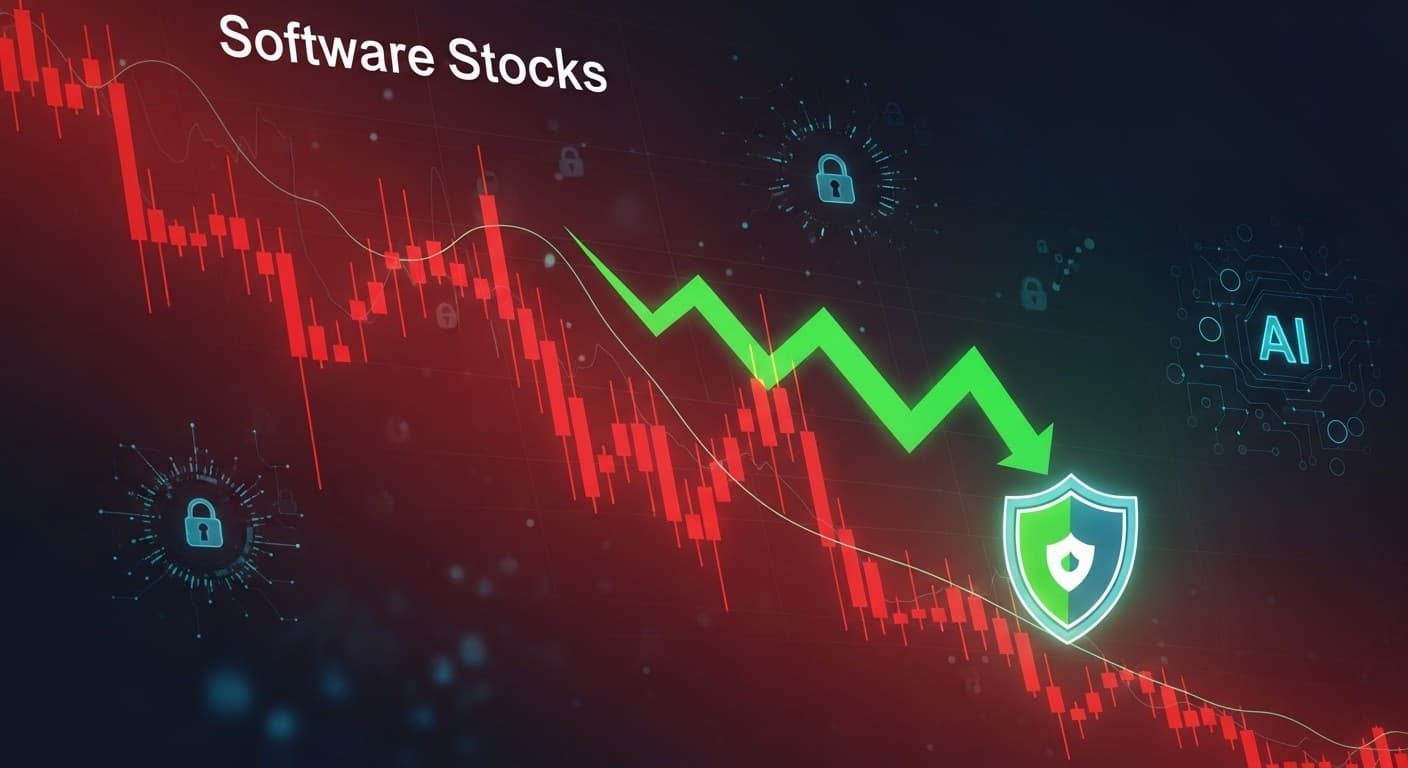
Brad Gerstner, founder and CEO of Altimeter Capital, a major technology investment firm, stated that recent declines in software company stock prices are primarily due to "future uncertainty coming from AI." According to Gerstner, the core issue is that AI has made long-term (10-30 year) cash flow projections for traditional software businesses "suddenly not that clearly visible." This analysis suggests the sell-off is a structural re-rating based on perceived technological disruption, not a reaction to missed earnings targets in the most recent quarter.
Context
Public software companies, especially those with legacy business models, have faced significant investor scrutiny over the past 18-24 months as generative AI capabilities have rapidly matured. The rise of AI-native competitors and the potential for AI to automate or displace functions of existing software stacks has created a pervasive question mark over the durability of moats and growth trajectories. Gerstner's comment, shared by AI commentator Rohan Pandey, distills a complex market sentiment into a clear thesis: AI is now a primary variable in long-term valuation models, and its disruptive potential is being priced in.
gentic.news Analysis

Gerstner's observation is a direct reflection of a trend we've been tracking: the financial markets are moving past the initial hype phase of AI and into a period of concrete, often punitive, valuation adjustments based on perceived winners and losers. This isn't about AI startups raising money; it's about established public companies being judged on their ability to adapt. This aligns with our previous coverage of enterprise software giants like Salesforce and ServiceNow aggressively embedding AI copilots into their platforms—moves that are as much about defending existing revenue streams as they are about capturing new ones.
The commentary also connects to the ongoing performance divergence within the tech sector. While certain "picks and shovels" providers like NVIDIA and cloud infrastructure leaders have seen valuations soar, many application-layer software companies have struggled. Gerstner's firm, Altimeter, has significant holdings in companies like Snowflake and Uber, placing him at the center of this valuation shift. His public framing suggests a strategic narrative is being set: companies that cannot articulate a credible, AI-integrated long-term plan will continue to face headwinds, regardless of short-term earnings. This creates a powerful incentive for every public software CEO to foreground their AI strategy in every earnings call, not as a buzzword, but as a direct answer to this specific investor concern about cash flow visibility.
Frequently Asked Questions
Why did software stocks drop recently?
According to investor Brad Gerstner, the primary cause is not that companies missed their quarterly earnings targets, but a broader market uncertainty about how artificial intelligence will impact the long-term (10-30 year) cash flows and competitive positioning of traditional software businesses.
Who is Brad Gerstner?
Brad Gerstner is the founder and CEO of Altimeter Capital, a technology-focused investment management firm. He is a prominent voice in tech investing and his analysis often influences market sentiment regarding software and internet companies.
What does "long-term cash flow visibility" mean?
In investing, it refers to the predictability and confidence analysts and investors have in forecasting a company's future profits many years out. Gerstner argues that AI introduces so much potential for business model disruption and competition that these once-stable forecasts for software companies have become cloudy and uncertain.
Is this sell-off specific to certain types of software companies?
While not specified in the source, the logic applies most acutely to companies whose core products could be augmented, simplified, or replaced by AI agents or new AI-native applications. Legacy vendors with less adaptable platforms or weaker AI integration roadmaps are likely under more pressure than agile, cloud-native, or AI-infused leaders.