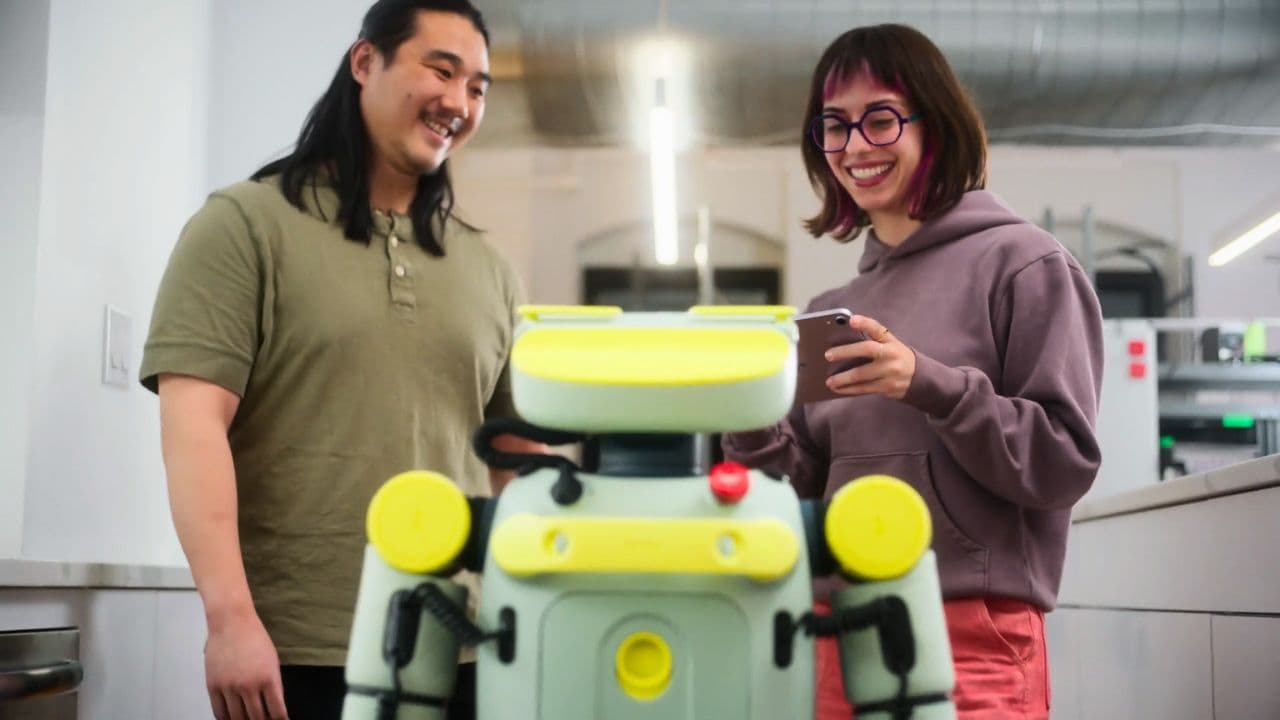
Amazon has made a strategic acquisition in the humanoid robotics space, purchasing the startup Fauna Robotics. The deal, announced via social media, centers on Fauna's key product: a 3.5-foot-tall humanoid robot named "Sprout," which is engineered for real-world manipulation tasks.
What Happened
Amazon has completed the acquisition of Fauna Robotics. The primary asset transferred is the intellectual property and technology behind "Sprout," a compact humanoid robot standing approximately 42 inches (106 cm) tall. Unlike many bipedal robots focused on locomotion or demonstration, Sprout is explicitly "built for real-world" tasks, implying a design priority for practical manipulation and interaction in human-scale environments.
Context
This acquisition fits into Amazon's long-standing and aggressive investment in robotics and automation, primarily for its logistics and fulfillment operations. The company's history includes the $775 million acquisition of Kiva Systems in 2012, which led to the army of wheeled drive units now ubiquitous in its warehouses. More recently, Amazon has deployed robotic arms like Sparrow for item picking and Proteus and Hercules for mobile cart transportation.
A move into humanoid robotics represents a significant technical expansion. While wheeled and fixed-arm robots excel in structured warehouse settings, a humanoid form factor like Sprout could potentially navigate spaces designed for humans, perform a wider variety of dexterous tasks, and operate in retail, delivery, or even home environments—areas where Amazon has clear strategic interests. The compact size of Sprout suggests a focus on tasks in constrained spaces where larger humanoids might not be optimal.
gentic.news Analysis
This acquisition is a direct and logical escalation of Amazon's automation strategy. For over a decade, Amazon has systematically vertically integrated robotics, transforming its supply chain. The Fauna purchase indicates that the company believes the next frontier of operational efficiency requires more general-purpose, embodied agents capable of human-like manipulation and mobility. This aligns with a broader industry trend we've covered, where companies like Tesla (with Optimus), Figure (partnered with BMW), and Boston Dynamics (owned by Hyundai) are pushing humanoids toward commercial applications.
However, Amazon's approach appears distinct. While Tesla's Optimus and Figure's robot are full-sized, Amazon is starting with a smaller platform in Sprout. This could be a pragmatic engineering choice: a 3.5-foot robot has a lower center of gravity, is inherently safer around people, and may be better suited for specific shelf-based picking or sorting tasks within existing infrastructure. The key technical challenge Amazon must now solve is not just mobility, but robust, cost-effective dexterous manipulation at scale—a problem far harder than automated guided vehicle (AGV) logistics.
This move also intensifies the competition for AI and robotics talent. By acquiring Fauna, Amazon instantly onboard a team with specific expertise in humanoid design and control. It follows a pattern of tech giants buying their way into advanced robotics, similar to Google's various robotics acquisitions in the early 2010s (though with arguably more focused commercial intent). The success of this bet will depend on how quickly and reliably Amazon can integrate Sprout's capabilities into a real, high-volume workflow, moving from demonstration to deployment.
Frequently Asked Questions
What is Fauna Robotics' "Sprout" robot?
Sprout is a 3.5-foot-tall (approximately 106 cm) humanoid robot developed by Fauna Robotics. It is designed for "real-world" manipulation tasks, suggesting its hardware and software are built to interact with objects and environments as a human would, but at a smaller scale. Specific technical specifications, payload capacity, or battery life have not been publicly disclosed following the acquisition.
Why would Amazon want a humanoid robot?
Amazon's core business relies on ultra-efficient logistics and delivery. Humanoid robots could eventually perform a wider range of tasks in spaces built for humans, such as picking items from standard shelves, packing boxes, handling returns, or even assisting in last-mile delivery scenarios. They represent a potential path toward more flexible automation compared to single-purpose robotic arms or wheeled transporters.
How does this compare to Tesla's Optimus or Boston Dynamics' Atlas?
Tesla Optimus and Boston Dynamics Atlas are full-sized humanoid robots focused on demonstrating advanced mobility and general-purpose capabilities. Amazon's newly acquired Sprout is significantly smaller (3.5 ft vs. 5'8"+), which likely indicates a different initial use case. Sprout's compact size may make it more suitable for tasks in dense warehouse shelving or other confined spaces. Amazon's approach seems more immediately applied to specific industrial tasks, whereas others have showcased broader ambulatory and athletic skills.
Has Amazon used robots before?
Yes, extensively. Amazon's fulfillment centers are heavily automated using robots from Amazon Robotics (originally from its Kiva Systems acquisition). These include small, wheeled drive units that move shelves, robotic arms like Sparrow for identifying and picking items, and newer mobile robots like Proteus. The Fauna acquisition marks a clear move into a new form factor—bipedal humanoids—for the first time.