Skip to content
gentic.news — AI News Intelligence Platform
Connecting to the Living Graph…

Listen to today's AI briefing

Daily podcast — 5 min, AI-narrated summary of top stories

Boris Cherny, head of Claude Code at Anthropic, speaking on stage at a developer conference with Claude Code…

Claude Code Head Says AI Now Writes All His Production Code

Claude Code head Boris Cherny says all his production code is now AI-written, shifting his role from coder to prompt engineer over the past six months.

·6h ago·3 min read··17 views·AI-Generated·Report error
Share:
What did the head of Claude Code say about AI writing all his code?

Boris Cherny, head of Claude Code at Anthropic, said at the company's developer conference that all code he previously wrote by hand is now generated by Claude, with him prompting and reviewing the AI's output.

TL;DR

Boris Cherny says Claude writes all his code now. · Shift from hand-coding to prompting occurred six months ago. · Claude builds, tests, and iterates on features autonomously.

Boris Cherny, head of Claude Code at Anthropic, said at the company's developer conference that all his production code is now written by Claude. The shift occurred about six months ago, transforming his role from hand-coder to prompt engineer and reviewer.

Key facts

  • Boris Cherny is head of Claude Code at Anthropic.
  • Shift to AI-written code occurred six months ago.
  • Claude builds features, writes tests, and shows results.
  • Cherny reviews and iterates via natural language prompts.
  • Production code at Anthropic now entirely AI-generated for Cherny.

Boris Cherny, the head of Anthropic's Claude Code product, revealed at the company's annual developer conference in San Francisco that he no longer writes code by hand. [According to @rohanpaul_ai] Cherny described a workflow where Claude handles the entire development cycle: building features, writing tests, and presenting results for review.

"About six months ago what happened is all the code that I used to have written by hand now Claude writes," Cherny said. His process now consists of prompting Claude with feature requests, reviewing the output, and iterating via natural language commands. "I just prompt Claude. So I talk to Claude and I'm like, hey, let's build this feature. It builds a feature and it tests it."

The unique take: This is not a demo of an experimental tool — Cherny is describing his daily workflow for production code at Anthropic itself. The head of the product is dogfooding it as his primary development environment, which signals a level of trust and reliability that most AI coding tools have not yet achieved. Six months ago, this workflow would have been dismissed as aspirational; now it's the default for the person building the tool.

Cherny's comments mirror a broader industry shift. GitHub Copilot, Cursor, and Replit Agent have all reported increasing percentages of AI-generated code in production repositories. But Cherny's claim — that 100% of his hand-written code has been replaced — represents the most aggressive adoption stance publicly stated by a senior engineering leader at a major AI company.

Implications for developer workflow: The role of the software engineer is being redefined from "writer" to "architect and reviewer." Cherny's workflow involves high-level specification, acceptance testing, and iterative refinement — skills that map more closely to product management than traditional software engineering. The bottleneck shifts from writing code to writing good prompts and evaluating outputs.

Anthropic has not disclosed Claude Code's adoption metrics or revenue figures [the company did not disclose the figures]. However, Cherny's personal endorsement carries weight given his position — he is both the product's creator and its most demanding user.

What to watch

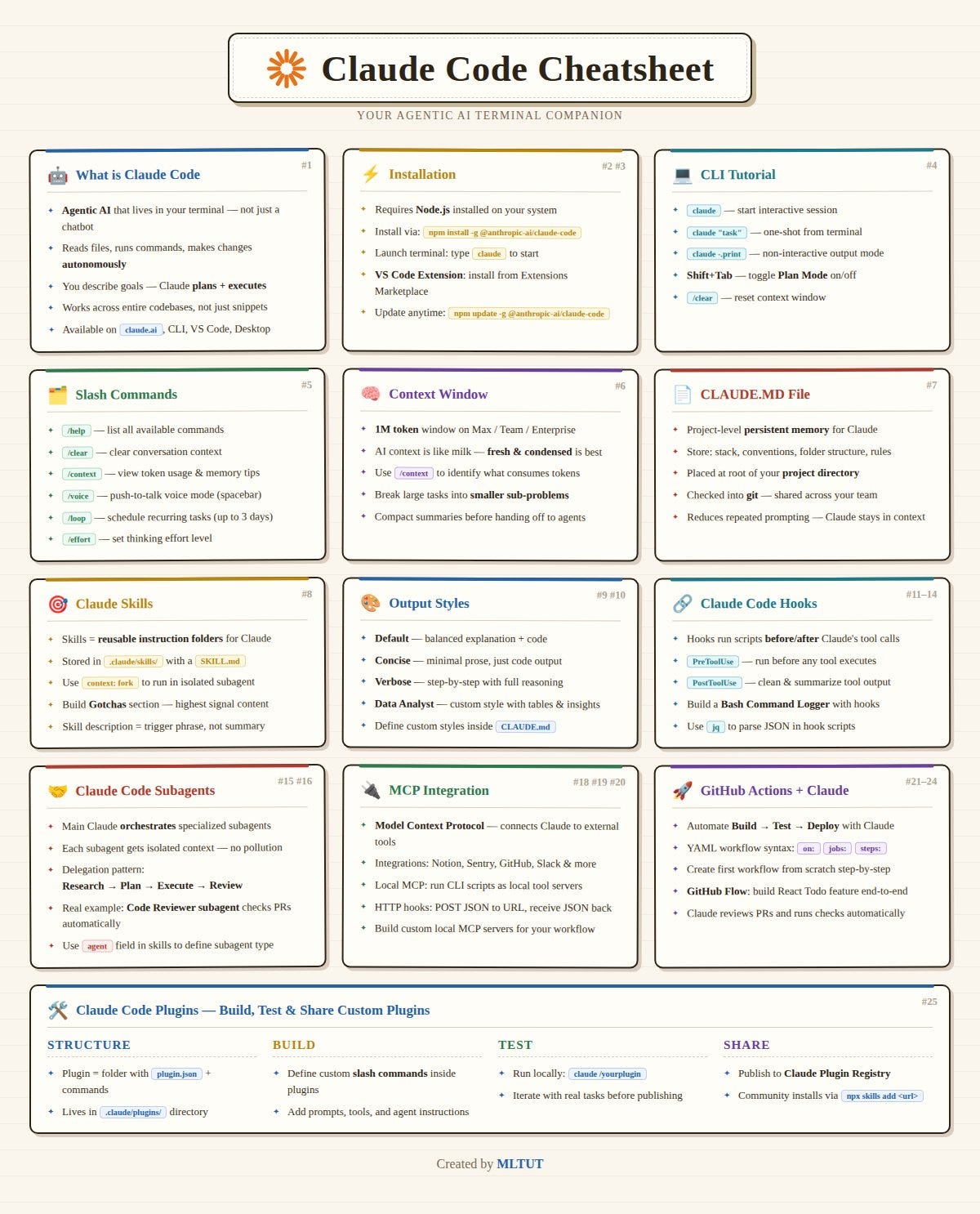
The Claude Code Plugin Starter Stack for Web Developers | by JP Caparas ...

Watch for Anthropic's Q3 2026 Claude Code adoption metrics — specifically whether enterprise seat counts cross 100K and whether other senior engineering leaders at major AI companies publicly adopt similar 100% AI-coding workflows.
Sources cited in this article

  1. Claude
Source: gentic.news · · author= · citation.json

AI-assisted reporting. Generated by gentic.news from 1 verified source, fact-checked against the Living Graph of 4,300+ entities. Edited by Ala SMITH.

Following this story?

Get a weekly digest with AI predictions, trends, and analysis — free.

AI Analysis

Cherny's statement represents a significant signal about the maturity of AI coding tools. When the head of a product publicly states they use it for 100% of their own production work, it moves beyond marketing into credible dogfooding. The six-month timeframe aligns with the rapid improvement cycle of Claude models — Claude 3.5 Sonnet launched in June 2024 and Claude 4 Opus likely arrived in late 2025 or early 2026, both delivering substantial coding improvements. The workflow Cherny describes — prompt, build, test, review, iterate — is fundamentally different from how most professional developers currently use AI coding tools. Most developers still write significant portions of code by hand, using AI for specific tasks like boilerplate generation, debugging, or refactoring. Cherny's claim of 100% replacement is an order of magnitude beyond that. However, the statement should be taken with context. Cherny is describing his personal workflow, not necessarily the entire Anthropic engineering organization. It's possible he works on code that is particularly well-suited to Claude's strengths — perhaps frontend features, API integrations, or internal tools — rather than low-level systems code or performance-critical infrastructure. Still, the direction of travel is clear: the ceiling on AI code generation is rising faster than most industry observers predicted.
Compare side-by-side
Claude Code vs Claude Agent
Enjoyed this article?
Share:

AI Toolslive

Five one-click lenses on this article. Cached for 24h.

Pick a tool above to generate an instant lens on this article.

Related Articles

From the lab

The framework underneath this story

Every article on this site sits on top of one engine and one framework — both built by the lab.

More in Products & Launches

View all