The Innovation: T-REX for Grocery Basket Prediction
Researchers from Amazon have introduced T-REX (Transformer-based Category Sequence Generation), a novel architecture designed specifically for the complex task of next-basket recommendation in online grocery shopping. The work, detailed in a preprint on arXiv, tackles the unique challenges that differentiate grocery e-commerce from general retail.
Unlike traditional sequential recommendation systems, grocery shopping involves highly repetitive purchase patterns (e.g., weekly milk, monthly coffee) and complex, complementary item relationships within a single basket (e.g., pasta, sauce, cheese). Existing state-of-the-art models like BERT4Rec, which use masked language modeling (MLM), struggle here due to information leakage—the model can inadvertently use "future" items in the sequence during training, which misaligns with the real-world task of predicting an entirely new, future basket.
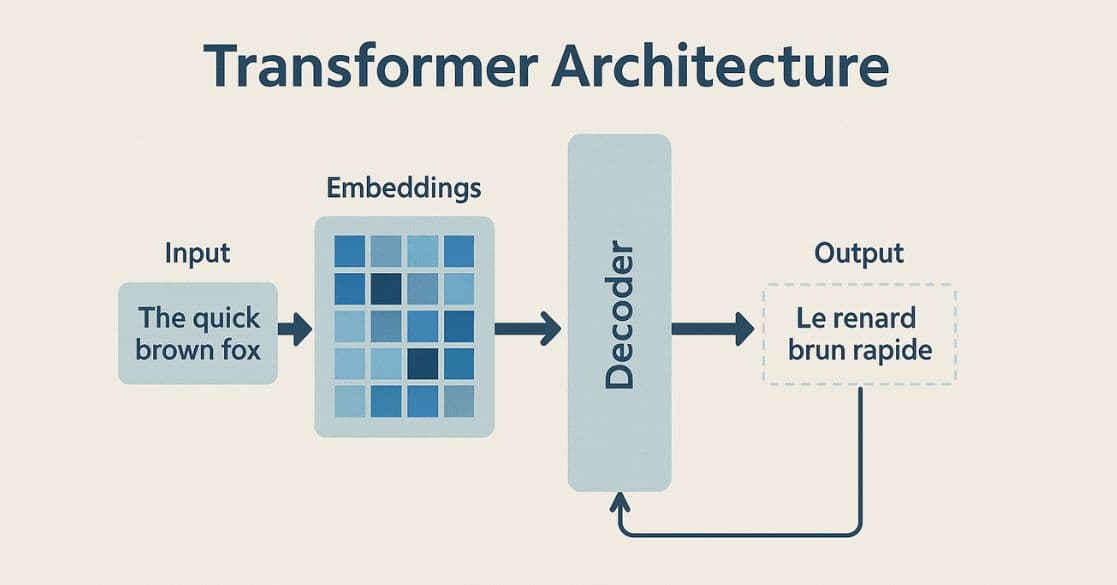
T-REX addresses this with a causal transformer architecture, applying masking that ensures predictions for a given position depend only on previous items in the sequence. This better simulates the real-world scenario of generating a user's next shopping basket.
The model's three core innovations are:
- Dynamic Sequence Splitting for Sparse Patterns: Grocery shopping is infrequent and irregular compared to media consumption or general shopping. The authors developed an efficient sampling strategy that dynamically splits long, sparse user histories into more meaningful, shorter sequences for training, improving data utilization.
- Adaptive Positional Encoding for Temporal Patterns: Standard transformers use fixed positional encodings. T-REX incorporates an adaptive scheme that better captures the temporal gaps and rhythms inherent in grocery shopping (e.g., weekly vs. monthly trips).
- Category-Level Modeling: Instead of predicting individual SKUs—which number in the hundreds of thousands—T-REX operates at the product category level (e.g., "Dairy," "Fresh Produce," "Baking Supplies"). This drastically reduces dimensionality and computational complexity while maintaining, and in their tests, improving, recommendation quality. The final step maps recommended categories back to specific high-probability items.
Why This Matters for Retail & Luxury
While developed for Amazon's grocery vertical, the architectural principles of T-REX have direct, high-value applications in luxury and retail beyond fast-moving consumer goods (FMCG).
For Replenishment & Consumables: Luxury retail includes high-value consumables with predictable cycles: perfumes, skincare, candles, wines, and spirits. A model like T-REX can learn the replenishment cadence for a client's favorite fragrance or the seasonal pattern of their wine purchases, enabling highly personalized "restock" reminders that feel like a service, not spam.
For Complementary & Outfitting Recommendations: The model's strength in learning intra-basket relationships is perfect for outfitting and cross-selling. If a client purchases a suit, T-REX can learn to suggest complementary categories like dress shirts, ties, and shoes in their next digital session, moving beyond simple "customers also bought" to temporally-aware ensemble building.
For Managing High-Dimensional Catalogs: Luxury houses manage vast inventories across ready-to-wear, leather goods, jewelry, and homeware. Category-level modeling provides a strategic framework to tame recommendation complexity. A brand could first predict a client's next category of interest (e.g., "Fine Jewelry") before drilling down into specific pieces, making the system more robust and interpretable.
Business Impact
The paper reports significant improvements over existing systems in both large-scale offline evaluations and online A/B tests, though specific percentage lifts are not disclosed in the provided abstract. The business impact for a luxury retailer adopting a similar approach would be multi-faceted:

- Increased Average Order Value (AOV): More accurate complementary and outfitting suggestions directly boost basket size.
- Enhanced Customer Lifetime Value (CLV): Accurate replenishment predictions for consumables increase purchase frequency and lock-in.
- Reduced Operational Complexity: Category-level modeling simplifies the training and serving infrastructure compared to full SKU-level models, potentially lowering compute costs.
- Improved Personalization at Scale: The model moves beyond session-based recommendations to a holistic view of a client's long-term taste evolution and short-term needs.
Implementation Approach
Implementing a T-REX-inspired system in a luxury context requires a focused technical strategy:

- Data Foundation: A unified, clean timeline of client purchases (baskets/sessions) is non-negotiable. Data must be structured as sequences of transactions, each containing item IDs mapped to a consistent internal category taxonomy.
- Taxonomy Design: The category schema is critical. For luxury, it should reflect business logic (e.g., "Women's Leather Handbags," "Men's Tailoring," "High Jewelry") rather than just product attributes. This schema becomes the model's vocabulary.
- Model Adaptation: The core transformer architecture can be adopted, but the adaptive positional encoding may need tuning to capture luxury purchase cycles (which are less frequent and more event-driven than grocery). The sampling strategy for sparse sequences will be highly relevant.
- Serving Infrastructure: Recommendations would be generated as a ranked list of categories, which then requires a second-stage model or business rules to select specific items within those categories for display, ensuring inventory and exclusivity constraints are respected.
Governance & Risk Assessment
Deploying such a system requires careful governance:

- Privacy & Data Use: Training on detailed purchase histories must comply with GDPR, CCPA, and internal client data policies. Explicit consent for personalization is required.
- Bias & Fairness: The model may reinforce existing purchase patterns, potentially overlooking emerging client interests or new categories. Regular audits are needed to ensure recommendations don't become overly narrow.
- Brand Safety & Curation: An automated system must operate within strict brand guardrails. Recommendations must align with the house's image—certain category pairings may be commercially logical but aesthetically inappropriate. Human-in-the-loop oversight for top-tier clients is advisable.
- Maturity Level: The research is promising and backed by Amazon's scale, but it is a preprint, not peer-reviewed. The concept is production-ready in principle, but any luxury implementation would be a bespoke, significant engineering project requiring a dedicated ML team.