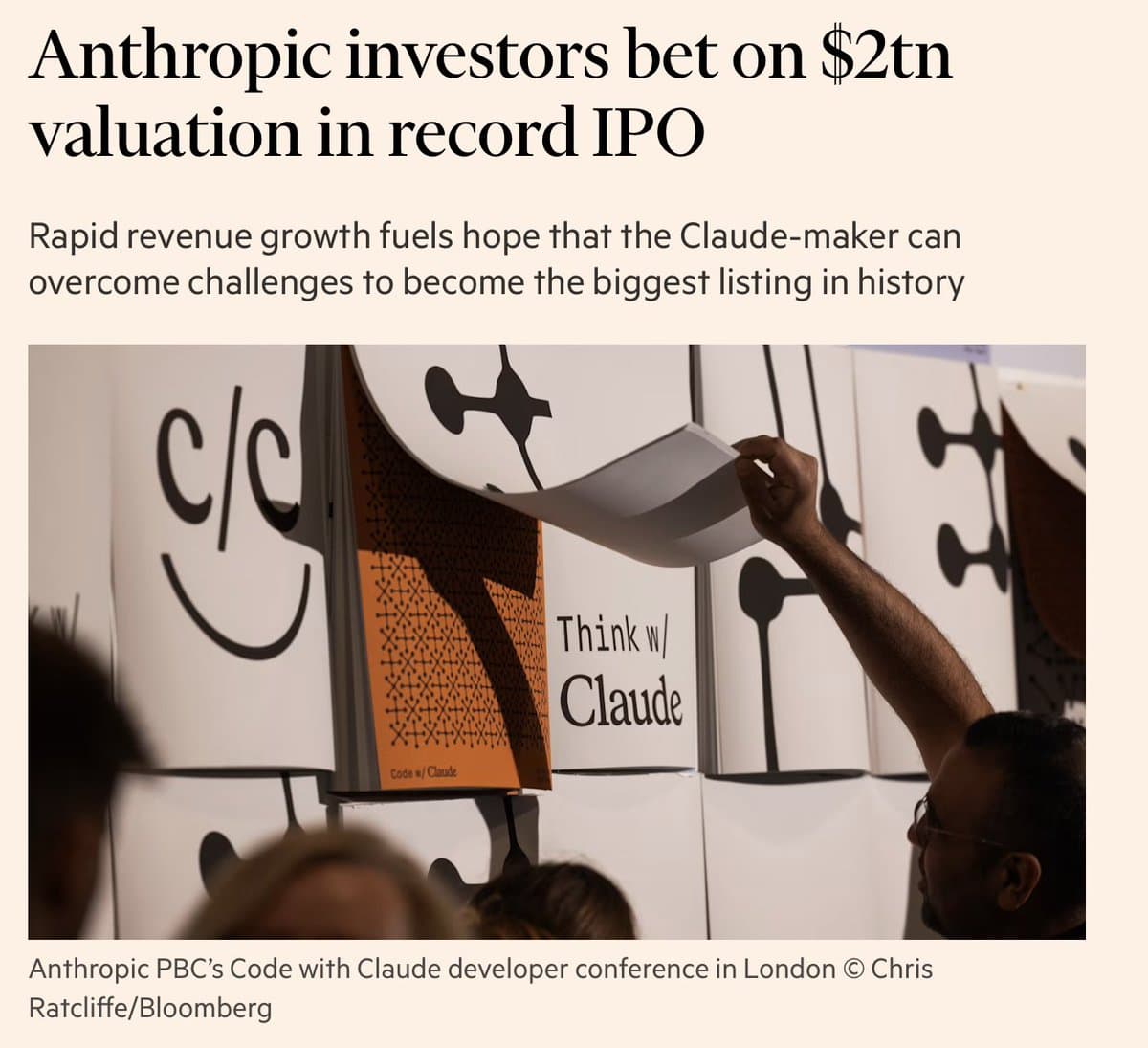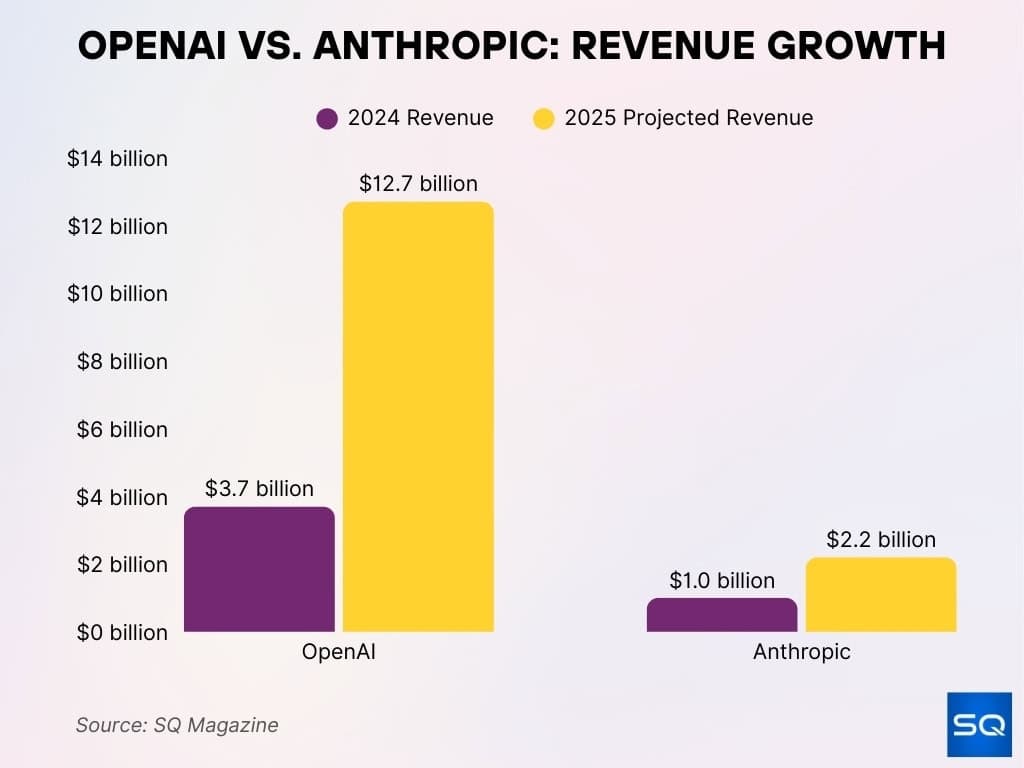
A single post on X from a credible industry observer has sent shockwaves through the AI ecosystem: Anthropic has reportedly surpassed OpenAI in annualized revenue run rate. According to the post, OpenAI's run rate is at roughly $25 billion, while Anthropic has just crossed the $30 billion mark.
The growth trajectory is the story. Sixteen months ago, Anthropic was reportedly operating at a $1 billion annual run rate. Two months ago, that figure was said to be $9 billion. The leap to $30 billion represents a tripling in just eight weeks and a 30x multiplier in under a year and a half—a growth curve that defies conventional scaling in enterprise software.
What the Numbers Suggest
A "revenue run rate" is an extrapolation of current financial performance to an annual figure. For a company like Anthropic, this revenue is almost exclusively driven by its Claude API and, to a lesser but growing extent, its enterprise-facing Claude Pro subscriptions and dedicated console. The $30B figure suggests massive, accelerating adoption of Claude 3.5 Sonnet and its predecessor models by developers and large corporations, likely through multi-year, committed contracts.
The reported $25B run rate for OpenAI, while still colossal, indicates that the market leader in mindshare and first-mover advantage is now facing a formidable and faster-growing competitor in pure commercial terms. This data point, if accurate, redefines the competitive landscape from a race for the best benchmark scores to a battle for the enterprise wallet.
The Context of Hypergrowth
This explosive growth follows a period of intense capital formation and product execution for Anthropic. The company has secured massive funding rounds, including a reported $4 billion from Amazon and up to $2 billion from Google. This capital has fueled an aggressive research and infrastructure push, culminating in the highly-regarded Claude 3 model family. The flagship Claude 3.5 Sonnet model, released in June 2024, was particularly noted for its strong performance in coding and reasoning, directly competing with OpenAI's GPT-4o and o1 models.
For OpenAI, maintaining a $25B run rate is itself a monumental achievement, built on the back of ChatGPT's viral adoption and a deeply embedded developer ecosystem. However, Anthropic's surge suggests a significant portion of the market is actively diversifying its model providers, seeking performance, cost-efficiency, or contractual terms that Anthropic is currently winning.
gentic.news Analysis
If this report is verified, it represents the most significant power shift in the commercial foundation model market since ChatGPT's launch. For over two years, OpenAI has been the undisputed revenue leader. Anthropic overtaking them is not merely an incremental change; it's a market inflection point. It validates the "multi-model future" thesis for enterprises and suggests that technical differentiation—particularly in areas like reasoning, safety, and cost-per-token—is translating directly into market share.
This financial momentum directly stems from Anthropic's relentless product cadence. As we covered in our analysis of Claude 3.5 Sonnet's release, the model was a strategic masterstroke, offering top-tier performance at a mid-tier price and API latency. Enterprises evaluating cost-to-performance ratios appear to have voted with their budgets. Furthermore, this aligns with a broader trend we've noted: the center of gravity in AI is shifting from consumer-facing chatbots to mission-critical enterprise APIs and agents, a domain where Anthropic's focus on reliability and constitutional AI has strong appeal.
The competitive response will be immediate and fierce. OpenAI is not standing still; its o1 series represents a fundamental bet on a new architecture for reasoning. Google's Gemini platform remains a massive contender with deep integration into its cloud ecosystem. However, Anthropic's reported numbers give it unprecedented war chest and credibility to invest in next-generation training runs, potentially widening its technical lead. The next 6-12 months will likely see an all-out war on pricing, feature sets, and long-term enterprise deals, with Microsoft, Amazon, and Google using their cloud arms as battlegrounds for their respective model partners.
Frequently Asked Questions
What is a revenue run rate?
A revenue run rate is a financial metric that takes a company's current revenue over a short period (like a month or a quarter) and extrapolates it to a full year. It's a useful indicator of growth momentum for fast-scaling companies like Anthropic, but it is not the same as audited annual revenue, as it assumes current conditions will continue unchanged.
How does Anthropic generate $30B in revenue?
Anthropic's revenue primarily comes from its API, where developers and companies pay for tokens (units of text processing) used by models like Claude 3.5 Sonnet. They also generate revenue from Claude Pro subscriptions for heavy individual users and, most significantly, from large-scale, multi-year enterprise contracts where companies commit to spending millions on API access, dedicated support, and custom terms.
Is this confirmed by Anthropic or OpenAI?
No. As of this writing, this information comes from a single industry observer's post on X. Neither Anthropic nor OpenAI has publicly confirmed these specific run rate figures. Financial data of this nature for private companies is often shared confidentially with investors and select partners, making such leaks plausible but unverified.
What does this mean for the future of AI development?
This level of revenue validates the enormous market for large language models and funds the next cycle of AI research. Anthropic now has the resources to fund training runs that could cost billions of dollars, potentially accelerating the pace toward more capable AI systems. It also intensifies competition, which should lead to faster innovation, better models, and potentially more competitive pricing for developers.