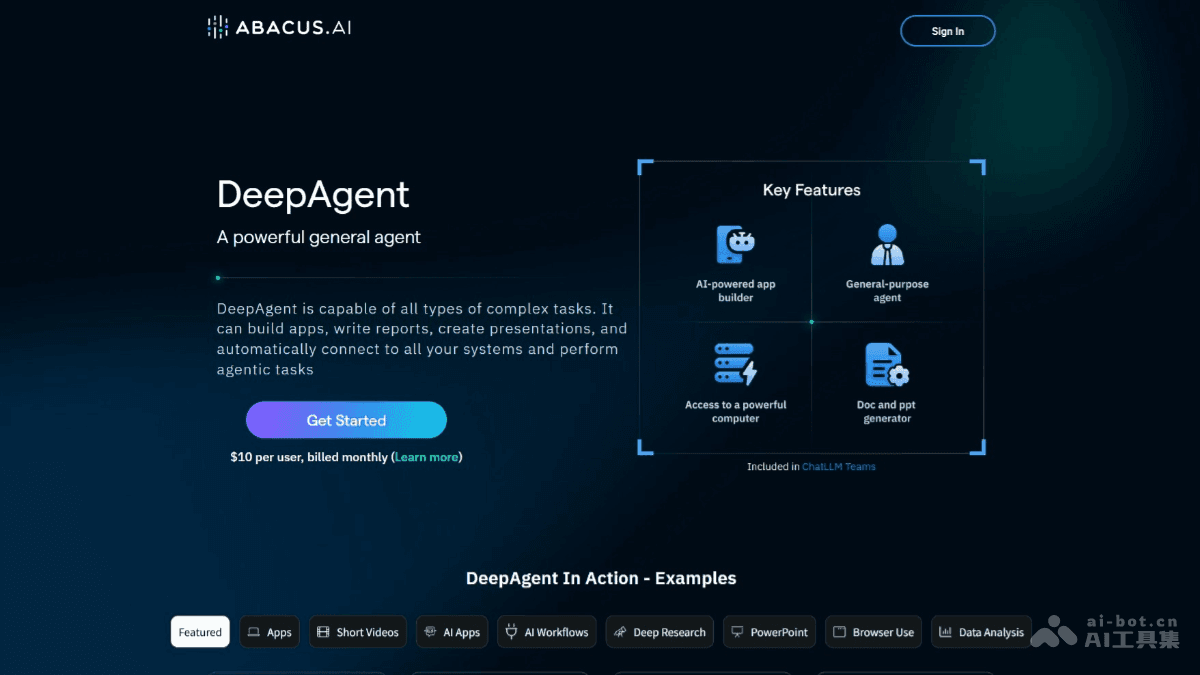
HyperAgent, a new agent platform from former Airtable team members, launched with a $10M grant pool for 500 founders. The product claims to replace Zapier with autonomous agents that execute real work, not chatbot conversations.
Key facts
- $10M grant pool for first 500 founders
- Built by former Airtable team members
- Claims to replace Zapier with agentic automation
- Focus on real work over chatbot conversations
The team behind Airtable has launched HyperAgent, a system of agents designed to automate complex workflows. [According to @hasantoxr] The product promises to make Zapier look outdated by replacing rule-based triggers with autonomous agents that can complete multi-step tasks.
HyperAgent differentiates itself from chatbot-based agents by focusing on execution rather than conversation. The company describes it as a system that "does real work, not chatbot work," suggesting a shift from LLM-based chat interfaces to agentic automation that directly manipulates business tools.
The $10M grant pool is structured as direct funding for the first 500 founders building on the platform. This approach mirrors early-stage accelerator models but with a product-specific focus — HyperAgent is betting that seeding a community of builders will create a library of reusable agent workflows that attract enterprise customers.
The unique take: HyperAgent represents a structural bet that the next wave of automation won't come from better integrations (Zapier's moat) but from agentic reasoning that can adapt to unstructured tasks. If successful, it could collapse the distinction between no-code automation and custom software development.
How the grant pool works
The $10M is allocated as direct grants, not equity investments, per the announcement. Each founder receives a combination of cash and HyperAgent credits. The company did not disclose the exact split or vesting terms.
The pool targets early-stage builders, not established SaaS companies. This suggests HyperAgent is prioritizing developer mindshare and workflow creation over immediate revenue — a strategy that worked for Airtable when it seeded its template marketplace.
Competitive positioning
Zapier connects 7,000+ apps through predefined triggers and actions. HyperAgent's agent architecture can theoretically handle tasks Zapier cannot — such as extracting data from unstructured emails, negotiating with vendors via API, or reconciling invoices across systems.
However, HyperAgent faces the same reliability challenges as all agentic systems: LLM hallucinations, inconsistent API behavior, and the difficulty of building trust in autonomous decision-making. The $10M grant pool is also a recruiting cost — HyperAgent needs those 500 founders to build and debug the workflows that make its agents reliable enough for enterprise adoption.
What to watch
Watch for the first public demos showing HyperAgent completing a task Zapier cannot handle — for example, autonomously resolving a billing dispute across Stripe, QuickBooks, and email. Also watch whether the 500 founder slots fill within 30 days, which would signal strong developer interest.
What to watch

Watch for the first public demos showing HyperAgent completing a task Zapier cannot handle — for example, autonomously resolving a billing dispute across Stripe, QuickBooks, and email. Also watch whether the 500 founder slots fill within 30 days, which would signal strong developer interest.