Cerebras opened at $385 per share on its first trading day. The IPO priced at $185, raising $5.5 billion at that valuation.
Key facts
- Opening price: $385 per share.
- IPO price: $185, raised $5.5B.
- Market cap at open: ~$68 billion.
- Revenue first 9 months 2025: $187M.
- WSE-3: 4 trillion transistors, 900K cores.
Cerebras Systems, the wafer-scale AI chip maker, opened at $385 per share on its Nasdaq debut, more than doubling the $185 IPO price that raised $5.5 billion. The 108% first-day pop signals strong investor demand for alternatives to Nvidia's GPU architecture, but the valuation—roughly $68 billion at the open—prices in aggressive revenue growth that Cerebras has not yet demonstrated.
Cerebras' wafer-scale engine (WSE) offers a monolithic chip design that competes directly with Nvidia's H100 and B200 clusters, targeting training and inference workloads for large language models. The company reported $187 million in revenue for the first nine months of 2025, up from $78 million in the same period a year prior, according to its S-1 filing. The IPO proceeds are earmarked for scaling production and expanding its Colossal AI cloud service.
The pop mirrors the reception of other AI hardware IPOs—such as Astera Labs, which rose 72% on its debut in March 2024—but Cerebras faces a steeper climb. Nvidia commands roughly 80% of the AI chip market, and hyperscalers (Google, Amazon, Microsoft) are designing their own custom silicon. Cerebras' differentiation rests on its wafer-scale approach, which reduces inter-chip communication overhead, but the company has yet to win a major hyperscaler customer.
Key Takeaways
- Cerebras opened at $385, 108% above the $185 IPO price, raising $5.5B.
- The $68B market cap prices in aggressive growth against Nvidia's dominance.
Why the pop matters
[According to the TradingView report], the $385 open gives Cerebras a market cap of roughly $68 billion, or 240x trailing revenue. That multiple is higher than Nvidia's 35x and AMD's 18x, implying that investors are betting on Cerebras capturing meaningful share in a market that could reach $400 billion by 2030, per McKinsey estimates. The risk: if Cerebras fails to convert its technology lead into enterprise contracts, the stock could re-rate sharply lower.
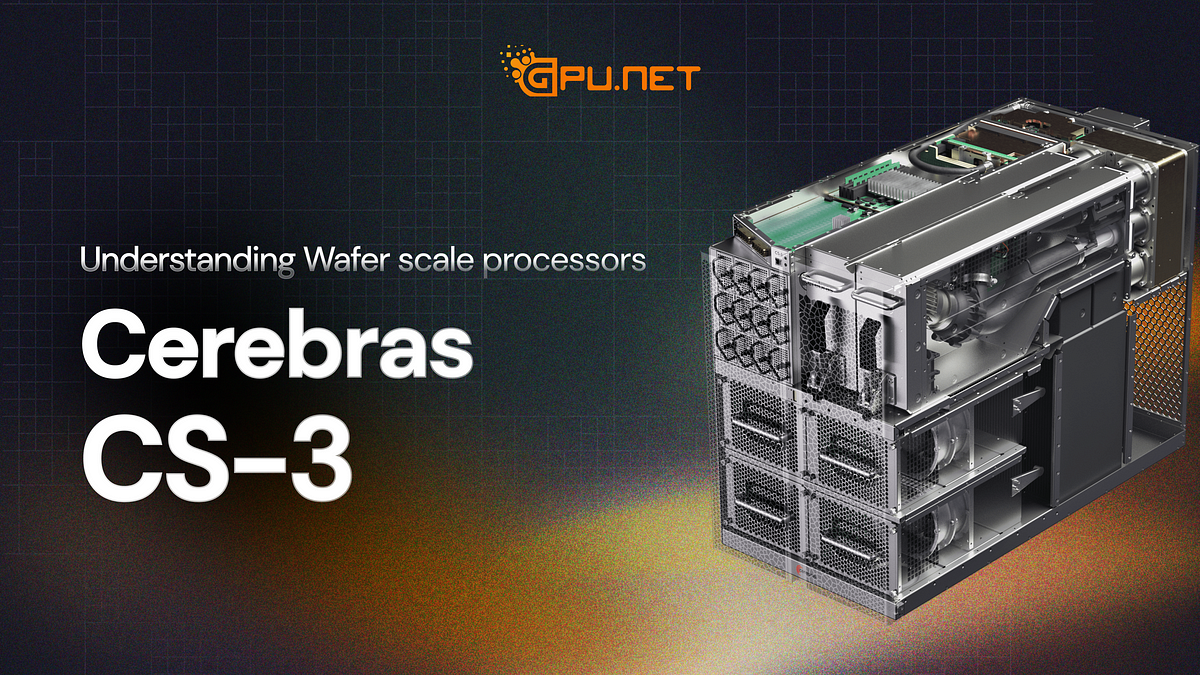
Cerebras' wafer-scale engine (WSE-3), announced in March 2025, packs 4 trillion transistors and 900,000 AI cores on a single wafer—a feat no competitor has matched. The company claims it can train GPT-3-class models in under 24 hours on a single CS-3 system. But benchmarks have been sparse, and independent validation of those claims remains limited.
What to watch

The real test comes with the first quarterly earnings report as a public company, expected in August 2026. Key metrics: revenue growth rate, gross margin trajectory, and—most critically—the number of enterprise customers with contracts worth over $10 million. Watch for disclosure of any hyperscaler partnerships, particularly with Google Cloud, which has invested in competing TPU designs but could still become a Cerebras customer for specialized workloads.
What to watch
Watch for Cerebras' first quarterly earnings as a public company in August 2026. Key metrics: revenue growth, gross margin, and enterprise customer count. A hyperscaler deal—especially with Google Cloud or Amazon—would validate the wafer-scale thesis and justify the premium valuation.