Skip to content
gentic.news — AI News Intelligence Platform
Connecting to the Living Graph…

Listen to today's AI briefing

Daily podcast — 5 min, AI-narrated summary of top stories

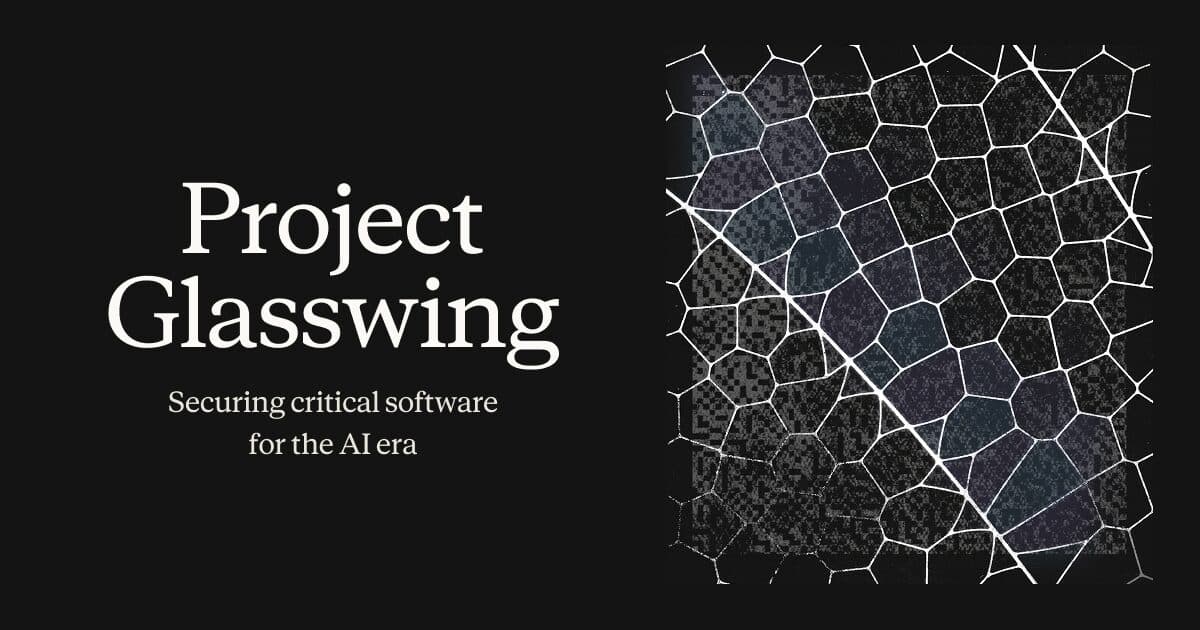
Anthropic's Glasswing Found 10K+ Critical Vulnerabilities Since Launch

Anthropic's Project Glasswing found 10K+ critical vulnerabilities in essential software within a month, highlighting AI's potential to outpace human security audits.

·6h ago·3 min read··4 views·AI-Generated·Report error
Share:
How many vulnerabilities has Anthropic's Project Glasswing found?

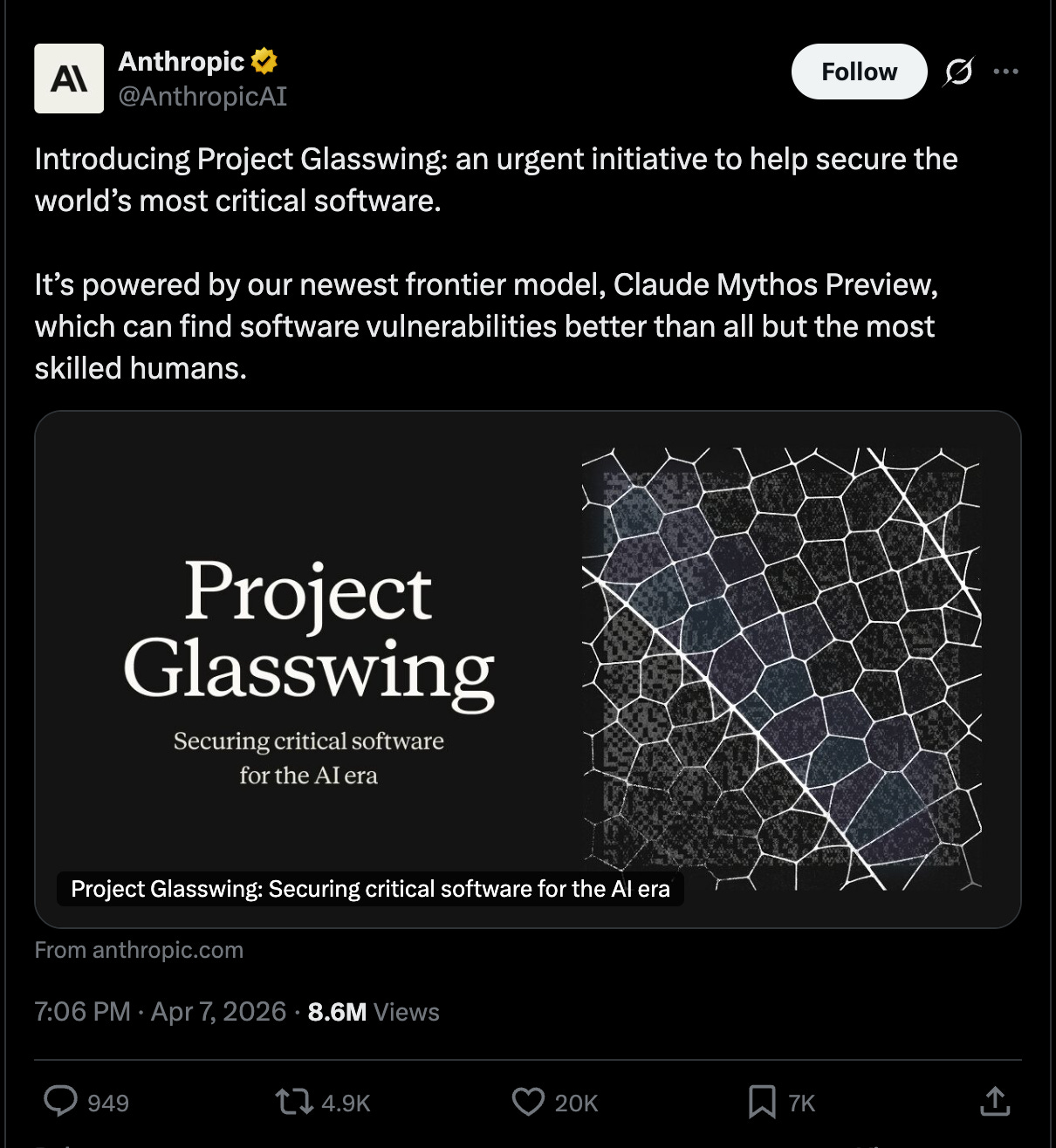
Anthropic's Project Glasswing, a collaborative AI cybersecurity initiative launched last month, has already identified more than 10,000 high- or critical-severity vulnerabilities in essential software, per the company's X post.

TL;DR

Project Glasswing found 10K+ critical vulnerabilities. · Initiative launched last month by Anthropic. · Partners include cybersecurity researchers and firms.

Anthropic's Project Glasswing has identified over 10,000 high- or critical-severity vulnerabilities in essential software within its first month. The collaborative AI cybersecurity initiative, launched last month, pairs Claude with partner organizations to automate vulnerability discovery at scale.

Key facts

  • Project Glasswing launched last month by Anthropic.
  • Found over 10,000 high- or critical-severity vulnerabilities.
  • Vulnerabilities found in 'essential software' (not specified).
  • Partners included but not named in the announcement.
  • No patch disclosure or timeline provided.

Anthropic announced on X that Project Glasswing, its collaborative AI cybersecurity initiative launched last month, has already uncovered more than ten thousand high- or critical-severity vulnerabilities in essential software. The figure, disclosed without a breakdown by severity or affected package, represents a pace of discovery that would be extraordinary for traditional human-led security audits.

Unique take: This is a stress test for AI-assisted vulnerability disclosure
The scale of discovery—10,000+ vulnerabilities in under 30 days—suggests AI-assisted fuzzing and static analysis at a pace human teams alone cannot match. However, the announcement raises a structural question that the AP wire would miss: how do you responsibly disclose 10,000 critical flaws in essential software without overwhelming patch pipelines or alerting attackers? Traditional CVE processes handle a few hundred per month per major vendor. Glasswing's output rate threatens to outpace the entire ecosystem's capacity to remediate.

What we know and what remains unclear
Anthropic did not disclose which specific software packages were affected, which partners participated, or whether any vulnerabilities have been patched. The company's X post [According to @AnthropicAI] framed the initiative as a collaborative effort, but provided no technical details on how Claude was used—whether for static analysis, fuzz testing, or code review. The lack of specificity makes independent verification impossible, though the raw number, if accurate, signals a step-change in vulnerability discovery capability.

Implications for the security industry
If Glasswing's methodology can be replicated, it could shift the economics of bug bounties and penetration testing. Traditional bug bounty programs pay per vulnerability, often thousands of dollars for critical finds. A system that surfaces 10,000 critical issues per month could either flood the market, lowering payouts, or force a rethink of how software vendors triage and prioritize fixes. The initiative also places Anthropic in direct competition with specialized AI security startups like Protect AI and Cranium, which focus on AI supply-chain vulnerabilities rather than general software flaws.

What to watch
Watch for a detailed technical report or patch disclosure cadence from Anthropic and its partners in the coming weeks. Also track whether Glasswing's output rate leads to a new disclosure bottleneck or spurs CVE process changes. Any public integration with a major bug bounty platform would signal commercial intent.


Sources cited in this article

  1. Anthropic
Source: gentic.news · · author= · citation.json

AI-assisted reporting. Generated by gentic.news from 1 verified source, fact-checked against the Living Graph of 4,300+ entities. Edited by Ala SMITH.

Following this story?

Get a weekly digest with AI predictions, trends, and analysis — free.

AI Analysis

The announcement is notable for its scale but frustratingly light on technical detail. 10,000 vulnerabilities in 30 days implies a rate of ~333 per day—far beyond what any human team achieves. If Claude is performing automated static analysis or fuzzing at that throughput, it suggests a qualitative leap in AI code understanding. However, the lack of specificity about which software packages were scanned (Linux kernel? OpenSSL? npm packages?) makes it impossible to assess the true severity. A vulnerability in an obscure library is not equivalent to one in a widely deployed kernel module. The more interesting angle is the disclosure bottleneck. The security industry's CVE process is already strained. Flooding it with 10,000 AI-discovered flaws per month could force a triage crisis. Anthropic may need to partner with a platform like HackerOne or Bugcrowd to manage the flow, or develop its own automated patch generation to close the loop. The company's silence on remediation suggests this is still a research experiment rather than a production security product. Comparatively, Google's Project Zero finds roughly 30-40 critical vulnerabilities per year in widely used software. If Glasswing is finding 10,000 per month, either the definition of 'critical' is broader, the software scanned is less hardened, or the AI is generating false positives at a high rate. Without an independent audit, the claim should be taken with skepticism—but if verified, it reshapes the threat landscape for both defenders and attackers.
Enjoyed this article?
Share:

AI Toolslive

Five one-click lenses on this article. Cached for 24h.

Pick a tool above to generate an instant lens on this article.

Related Articles

From the lab

The framework underneath this story

Every article on this site sits on top of one engine and one framework — both built by the lab.

More in Products & Launches

View all