Key Takeaways
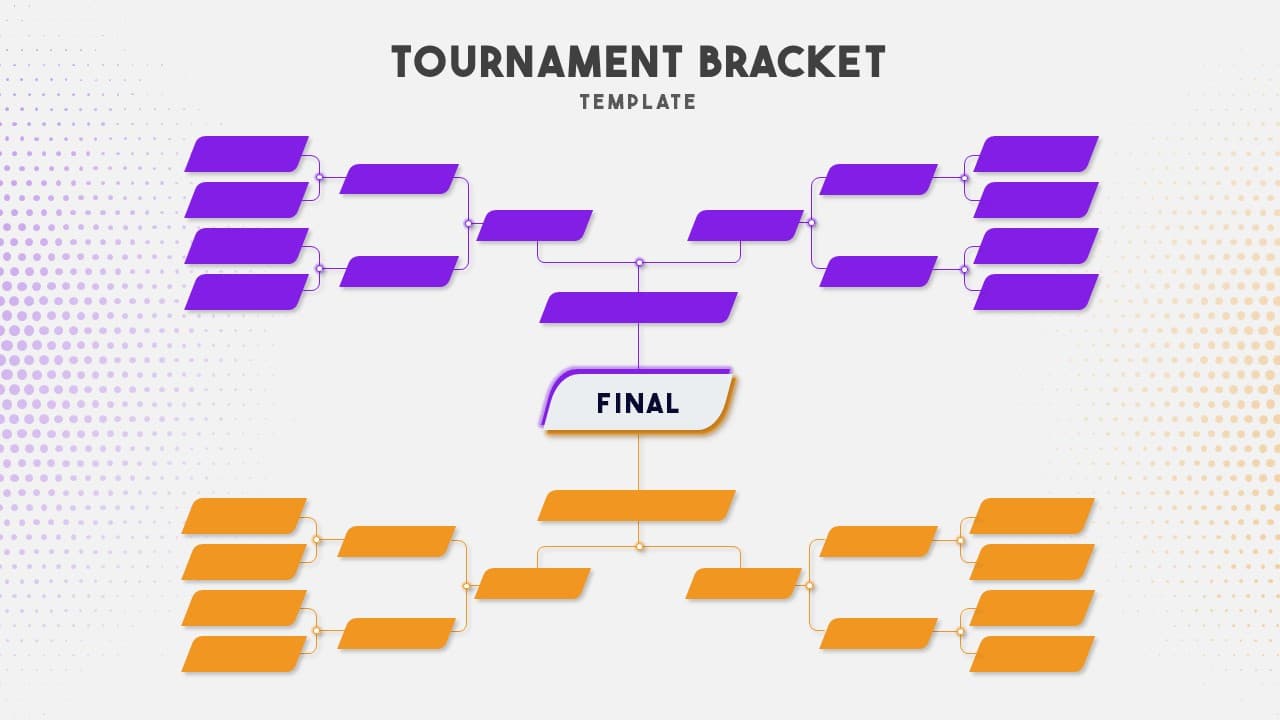
- A new paper introduces BracketRank, which treats document reranking as a reasoning-driven competitive tournament with adaptive grouping and bracket-style elimination.
- It achieves 26.56 nDCG@10 on the BRIGHT reasoning benchmark, outperforming RankGPT-4 and Rank-R1-14B.
- This represents a novel approach to handling complex, multi-step retrieval tasks where deep semantic inference is required.
What Happened
Researchers from the University of Innsbruck have introduced BracketRank, a novel framework that reimagines Large Language Model (LLM)-based document reranking as a reasoning-driven competitive tournament. The work addresses a critical limitation in current retrieval systems: the need for "deep semantic inference beyond surface-level keyword matching" in reasoning-intensive tasks.
Current LLM rerankers face two primary constraints: context window limits and order sensitivity. When presented with too many documents at once, they either exceed their token capacity or produce inconsistent rankings based on document position rather than true relevance. BracketRank tackles these issues through a structured elimination process inspired by sports tournaments.
Technical Details
The framework operates on three key innovations:
Adaptive Grouping: Instead of processing all candidate documents at once, BracketRank dynamically groups documents based on the LLM's context window limitations. This allows the system to handle large document sets without truncation or performance degradation.
Reasoning-Enhanced Prompts: The system doesn't just ask the LLM to rank documents—it requires step-by-step relevance explanations for each comparison. This forces the model to articulate its reasoning process, leading to more robust and explainable decisions.
Bracket-Style Elimination with Dual Tracks: Documents compete in head-to-head matches within groups. Winners advance through a "winner track," while losers get a second chance through a "loser track" (similar to double-elimination tournaments). This structure ensures that strong documents aren't accidentally eliminated early due to unlucky matchups.
The tournament design enables parallel processing across competition stages, significantly improving efficiency compared to sequential processing approaches.
Performance Results
Evaluation on the BRIGHT reasoning benchmark—specifically designed for complex, multi-step retrieval tasks—shows BracketRank achieving 26.56 nDCG@10, substantially outperforming:
- RankGPT-4: 17.0 nDCG@10
- Rank-R1-14B: 20.5 nDCG@10

On standard TREC datasets, BracketRank achieves:
- 77.90 nDCG@5 on TREC DL 2019
- 75.85 nDCG@5 on TREC DL 2020
Both results exceed all baseline methods, establishing competitive elimination with explicit reasoning as a powerful paradigm for complex retrieval.
Retail & Luxury Implications
While the paper doesn't specifically address retail applications, the technology has clear implications for high-stakes search and discovery systems in luxury and retail:

Complex Product Discovery: Luxury shopping often involves nuanced queries that go beyond simple keyword matching. A customer might search for "a timeless handbag for Parisian evenings that works from day to night"—a query requiring understanding of style, occasion, versatility, and aesthetic philosophy. BracketRank's reasoning-enhanced approach could better interpret such complex intent.
Content-Rich Product Pages: Luxury brands maintain extensive product narratives—heritage stories, craftsmanship details, material origins, and sustainability credentials. When customers search within this content, traditional keyword matching often fails to surface the most relevant information. A reasoning-based reranker could better connect queries to appropriate narrative elements.
Personalized Recommendations: The tournament structure could be adapted for recommendation systems where products "compete" based on multiple customer preference dimensions, with the LLM providing reasoning for why one item advances over another.
Customer Service Knowledge Bases: For internal or customer-facing Q&A systems, BracketRank could improve retrieval from policy documents, product specifications, and service guidelines—especially for complex, multi-part questions.
The framework's explainability component is particularly valuable for luxury brands, where decisions need justification. Being able to trace why certain products or content were ranked higher aligns with the consultative, relationship-based nature of luxury retail.
Implementation Considerations
For retail AI teams considering this approach:

Technical Requirements: The system requires integration with an LLM capable of following complex reasoning prompts. While the paper doesn't specify model requirements, the comparison with RankGPT-4 suggests GPT-4-level capabilities are beneficial. The framework is model-agnostic but performance will scale with reasoning ability.
Latency vs. Accuracy Trade-off: The tournament structure introduces computational overhead compared to simpler reranking methods. However, the parallel processing design mitigates this, and for luxury applications where retrieval quality matters more than millisecond latency, this trade-off may be acceptable.
Customization Needs: The prompts and grouping strategies would need adaptation to retail-specific document types (product descriptions, customer reviews, brand heritage content, etc.). The reasoning criteria would need to reflect luxury-specific relevance factors like brand alignment, aesthetic coherence, and occasion appropriateness.
Integration Pathway: A practical approach might involve implementing BracketRank for specific high-value use cases first—such as personalized shopping assistant systems or heritage archive search—before broader deployment.