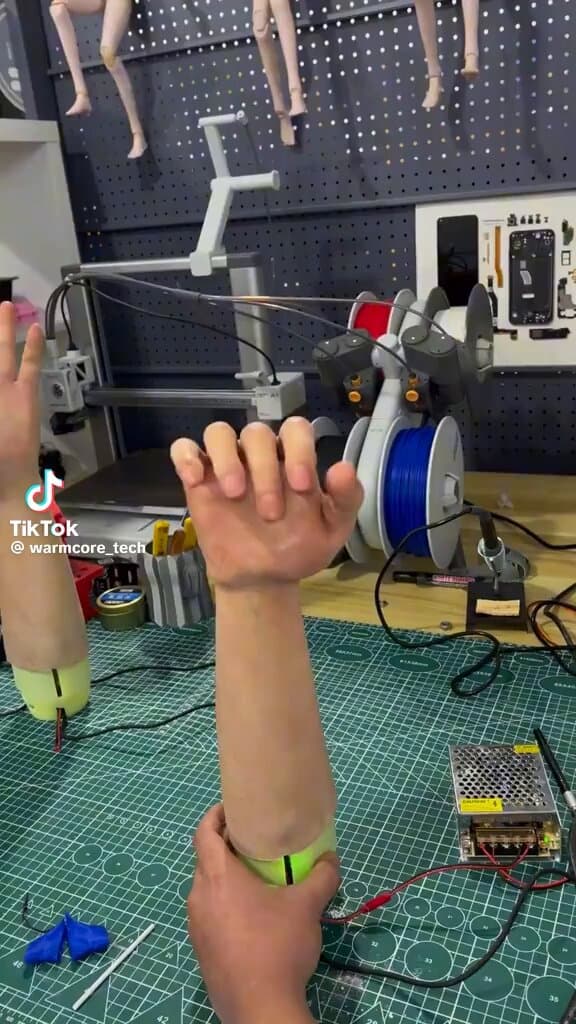
A research team in China has developed a highly realistic bionic robotic hand integrated with a neuromorphic electronic skin system. The system processes tactile sensory data using artificial intelligence models running locally on the hardware, a design intended to advance prosthetics and robotics beyond the limitations of biological tissue.
The development was highlighted in a social media post by AI observer Rohan Pandey (@rohanpaul_ai), who noted the project's ambition to engineer solutions to "human fragility." The post links to a video demonstration of the robotic hand.
What Happened
The core achievement is the integration of two key technologies: a physically realistic bionic hand and a neuromorphic sensory skin. The term "neuromorphic" refers to electronic systems designed to mimic the neural architecture and processing of biological nervous systems. In this context, the electronic skin contains sensors that capture tactile data (like pressure and texture), which is then processed not by a remote server, but by AI algorithms running locally on the device's hardware.
This local AI processing is a significant technical detail. It implies the system is designed for low-latency response and operational independence, crucial for real-world prosthetic use where consistent cloud connectivity cannot be guaranteed and split-second reactions are needed.
Context
The work fits into the broader, accelerating field of intelligent prosthetics and tactile robotics. Traditional prosthetic hands offer basic motor control, while advanced research prototypes have begun integrating simple sensor feedback. This project pushes further by emphasizing a neuromorphic approach—likely using spiking neural networks or other event-based processing—coupled with local AI inference.
The claim that such technology could make "biological tissue obsolete" is a philosophical projection from the observer, not a stated goal from the researchers. It reflects a long-term transhumanist vision where advanced cybernetics could surpass natural human capabilities in durability and performance. The primary, immediate application remains in creating more responsive and dexterous prosthetic limbs for amputees and sophisticated robotic manipulators for industry.
Note: The source material is a brief social media post linking to a demonstration video. Specific technical details such as the exact AI model architecture, sensor density, power consumption, latency metrics, or direct performance comparisons to prior bionic hands are not provided in the available source.