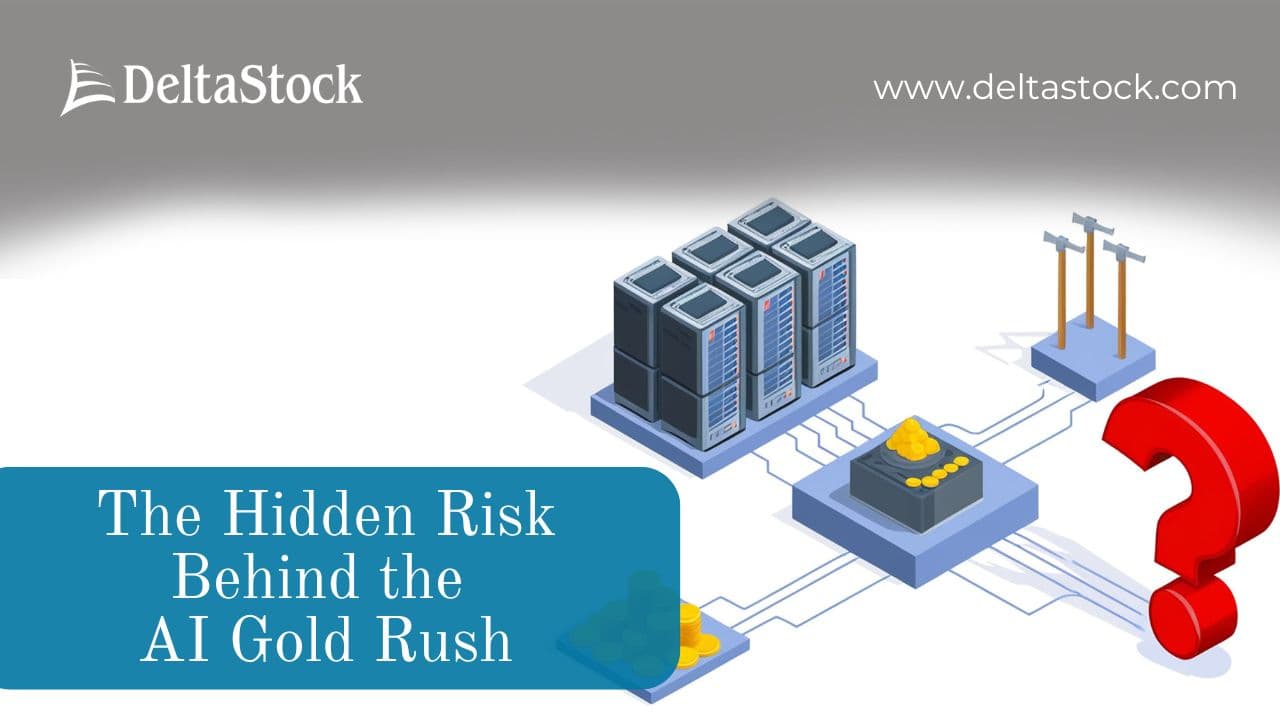
Billionaire hedge fund manager Ken Griffin, founder and CEO of Citadel and Citadel Securities, has publicly expressed a deeply skeptical view of artificial intelligence, stating that putting money into AI is "not worth it" and dismissing much of its output as "all garbage." The comments were reported via a social media post from AI commentator Rohan Paul.
Key Takeaways
- Billionaire hedge fund CEO Ken Griffin stated that investing in AI is 'not worth it' and that much of its output is 'garbage'.
- This critique from a major financial player highlights a growing skepticism about AI's tangible returns.
What Happened
/cloudfront-us-east-2.images.arcpublishing.com/reuters/SMYYAVKLNZKXNPXLGOSAREGR4U.jpg)
According to the report, Griffin made the remarks in a recent, unspecified context. The CEO of one of the world's most successful financial institutions directly questioned the return on investment for AI, a sector that has attracted hundreds of billions in capital from venture firms and corporations over the past three years. His characterization of AI output as "garbage" suggests a critique of the technology's current practical utility and quality, particularly in high-stakes domains like finance where Citadel operates.
Context
Ken Griffin leads Citadel, a hedge fund managing roughly $60 billion in assets, and Citadel Securities, a dominant market maker that executes nearly a quarter of U.S. stock trading volume. His firms are known for deploying sophisticated quantitative strategies, making his dismissal of AI notable. While many financial institutions are aggressively exploring AI for algorithmic trading, risk modeling, and operational efficiency, Griffin's comments position him as a prominent contrarian voice among financial elites.
This skepticism stands in stark contrast to the aggressive AI investment strategies of rival hedge funds like Bridgewater Associates or Two Sigma, and the massive AI infrastructure bets being made by tech giants like Microsoft, Google, and Meta. It also follows a period of heightened scrutiny where the actual productivity gains and profitability of generative AI tools are being questioned, despite widespread adoption.
gentic.news Analysis

Griffin's comments are a significant data point in the ongoing recalibration of the AI investment thesis. For the past two years, the narrative has been dominated by capital influx and hype. A critique from a figure of Griffin's stature—who runs firms that are quintessential consumers of advanced technology—signals a shift towards a more critical, ROI-focused evaluation phase. It’s not an academic debate; it’s a capital allocator declaring that the current costs (both financial and computational) do not justify the outputs.
This aligns with a trend we noted in our analysis of Sequoia's "AI's $600B Question" memo, which highlighted the enormous infrastructure costs and uncertain monetization paths for generative AI. Griffin’s "garbage" assessment, while blunt, echoes a growing practitioner sentiment that much of today's LLM output is verbose, unreliable, or of marginal incremental value for mission-critical tasks. His view may be particularly informed by Citadel's domain, where stochastic parrots—models that confidently generate plausible but incorrect financial reasoning—are not just useless but dangerously costly.
However, it’s crucial to contextualize this within Citadel’s own strategy. The firm is famously secretive and competitive. Public dismissal of a technology can sometimes be a strategic feint. It does not preclude Citadel from investing heavily in private, specialized AI systems for market prediction or execution while dismissing the public, general-purpose tools. The critique is likely aimed at the current wave of generative AI products, not necessarily all forms of machine learning, which Citadel has relied on for decades.
Frequently Asked Questions
Who is Ken Griffin?
Ken Griffin is the founder, CEO, and Co-Chief Investment Officer of Citadel, a multinational hedge fund, and the founder of Citadel Securities, one of the world's largest market makers. He is a prominent billionaire financier whose views on markets and technology carry significant weight in investment circles.
What does Ken Griffin's comment mean for AI investing?
Griffin's comment is a high-profile signal of skepticism from a major capital allocator. It suggests that some sophisticated institutional investors believe the current valuation of AI companies and the expected returns on AI infrastructure spending may be overstated. This could influence sentiment among other investors and lead to more rigorous scrutiny of AI startups' business models and path to profitability.
Is Citadel using AI at all?
While Griffin is publicly skeptical of the value of investing in AI, it is virtually certain that Citadel and Citadel Securities utilize advanced machine learning and quantitative models in their trading and operations. His criticism is likely directed at the broader, generative AI hype cycle and its associated costs, rather than at the specialized, deterministic quantitative analytics his firms have long employed.
How do other hedge funds view AI?
Views are mixed. Many quantitative hedge funds ("quant funds") like Two Sigma, Renaissance Technologies, and D.E. Shaw are deeply invested in AI and machine learning research. Others may share Griffin's skepticism about the incremental value of the latest generative AI models for core trading strategies, preferring more traditional statistical arbitrage and signal-based approaches.