A special report from the U.S. Department of Energy (DOE) confirms plans to develop the world's largest artificial intelligence data center at the Portsmouth Site in Ohio. This project represents a significant, direct investment by the federal government into foundational AI infrastructure, moving beyond grant funding to owning and operating cutting-edge compute resources.
The Site and the Scale

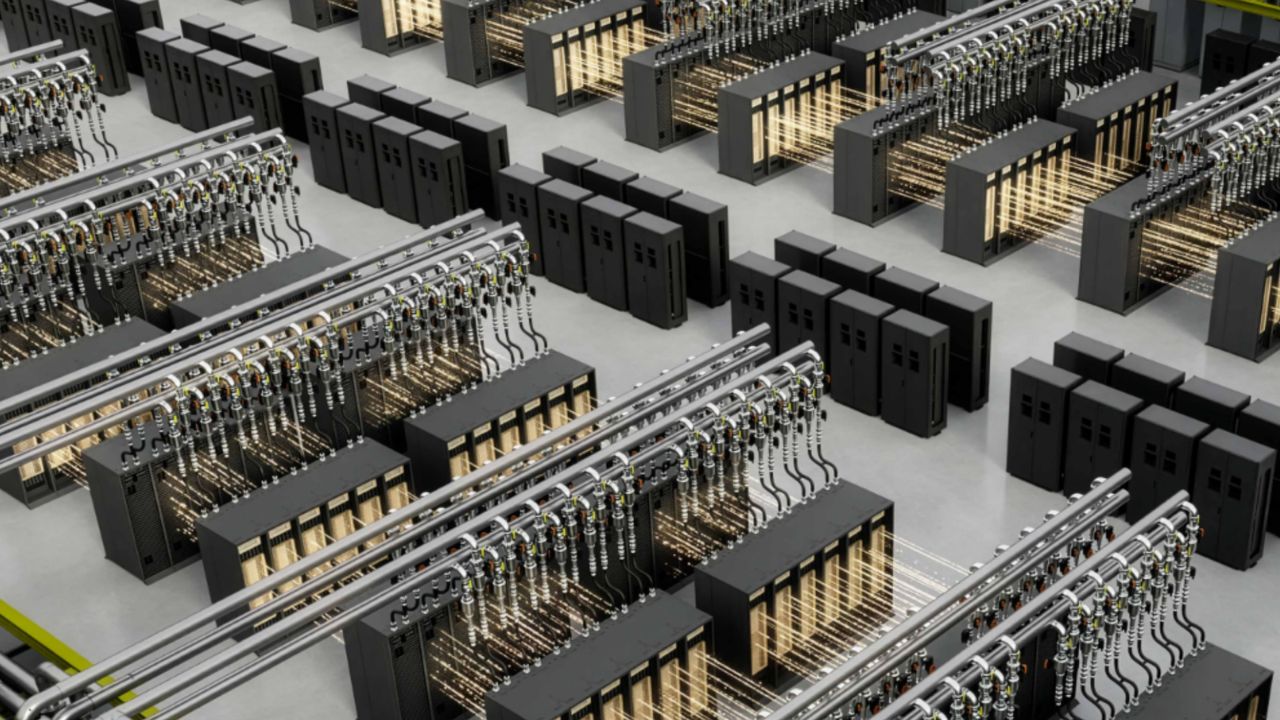
The Portsmouth Gaseous Diffusion Plant, a former uranium enrichment facility, is the designated location. The DOE's report highlights the site's existing advantages for such a project: substantial secured land, robust power infrastructure capable of supporting multi-hundred megawatt loads, and a pre-existing security perimeter. While the report does not specify an exact power capacity or compute flops figure, its claim of "world's largest" implies it will surpass current known leaders like the planned 700 MW data center cluster in Mesa, Arizona, by companies like Meta and Google.
This scale is not incidental. Training frontier AI models requires exponentially more compute. The DOE's move indicates an understanding that maintaining a competitive and secure edge in AI requires sovereign control over the hardware layer, not just access to commercial clouds.
Strategic Rationale and Dual Use
The data center is expected to serve a dual-purpose mission:
- Scientific Research: Supporting DOE's traditional missions in areas like climate modeling, materials science, nuclear fusion simulation, and high-energy physics. These fields are increasingly reliant on AI-driven discovery and massive simulation workloads.
- National Security & AI Development: Providing secure, government-controlled compute for the development and evaluation of large-scale AI models relevant to national security. This aligns with initiatives like the National AI Research Resource (NAIRR) pilot and the Department of Defense's Joint All-Domain Command and Control (JADC2) efforts, which require vast, secure computational resources.
The location at a former nuclear site is strategic, offering inherent physical security and isolation. The project likely involves partnerships with national laboratories (e.g., Oak Ridge, Lawrence Livermore, Sandia) which have expertise in supercomputing and AI for science.
Infrastructure and Sustainability Challenges

Building a data center of this magnitude presents immense challenges, primarily around power and cooling. The Portsmouth site's legacy electrical infrastructure will require massive upgrades. The report will likely address plans for on-site substations and potentially direct connections to the high-voltage transmission grid.
Sustainability will be a critical public and operational concern. The DOE will face pressure to power the facility with carbon-free energy, potentially leveraging Ohio's growing wind and solar capacity or exploring advanced nuclear micro-reactors, a technology area of significant interest to the DOE.
gentic.news Analysis
This announcement is a tectonic shift in the AI infrastructure landscape. Until now, the "world's largest" data centers have been built and operated by private hyperscalers (Google, Microsoft Azure, Amazon AWS) or large tech firms (Meta, Tesla). The DOE's entry as a primary builder and operator signals that the U.S. government views AI compute as a strategic national asset, akin to the strategic petroleum reserve or the national highway system.
This move can be seen as a direct response to two trends: the overwhelming private sector dominance in frontier AI model development and growing concerns about securing the AI supply chain against geopolitical rivals. By controlling a top-tier compute resource, the DOE can ensure accredited researchers and government agencies have access to capabilities that may be rationed or prohibitively expensive on the commercial market, especially for sensitive work.
Furthermore, this dovetails with the Biden administration's 2023 executive order on AI and the ongoing establishment of the NAIRR. The Portsmouth facility could become the physical cornerstone of the NAIRR, providing the raw computational horsepower for its shared resource pool. It also creates a natural home for testing and evaluating AI safety and security—a key mandate of the U.S. AI Safety Institute—within a controlled, government-owned environment.
The success of this project will hinge on execution. The DOE and its contractors must navigate supply chains for tens of thousands of GPUs, manage unprecedented power demands, and attract the operational talent to run a facility that rivals the largest commercial operations. If successful, it will create a new paradigm for public-sector AI capability.
Frequently Asked Questions
Where exactly is the new AI data center being built?
It is planned for the Department of Energy's Portsmouth Site in Pike County, Ohio. This location is a former uranium enrichment plant, offering significant existing infrastructure and security.
Why is the US government building its own AI data center?
The government is building this to secure sovereign, high-performance compute capacity for national security AI applications, scientific research, and to ensure access to frontier-level resources independent of commercial cloud providers. It treats AI compute as a strategic national asset.
How will this data center be powered?
While specific power sourcing details are not yet public, the site has access to major electrical infrastructure. Given DOE's climate goals, a mix of grid power, renewable energy projects, and potentially advanced nuclear micro-reactors is likely under consideration to meet its massive, multi-hundred megawatt demand.
Who will have access to the compute resources at this facility?
Access will likely be granted to federally funded academic researchers, scientists at DOE national laboratories, and government agencies working on approved projects related to scientific discovery and national security. It is expected to be a key resource for the National AI Research Resource (NAIRR) initiative.