What Changed — The Dual-Track Operating Model for Agentic Coding
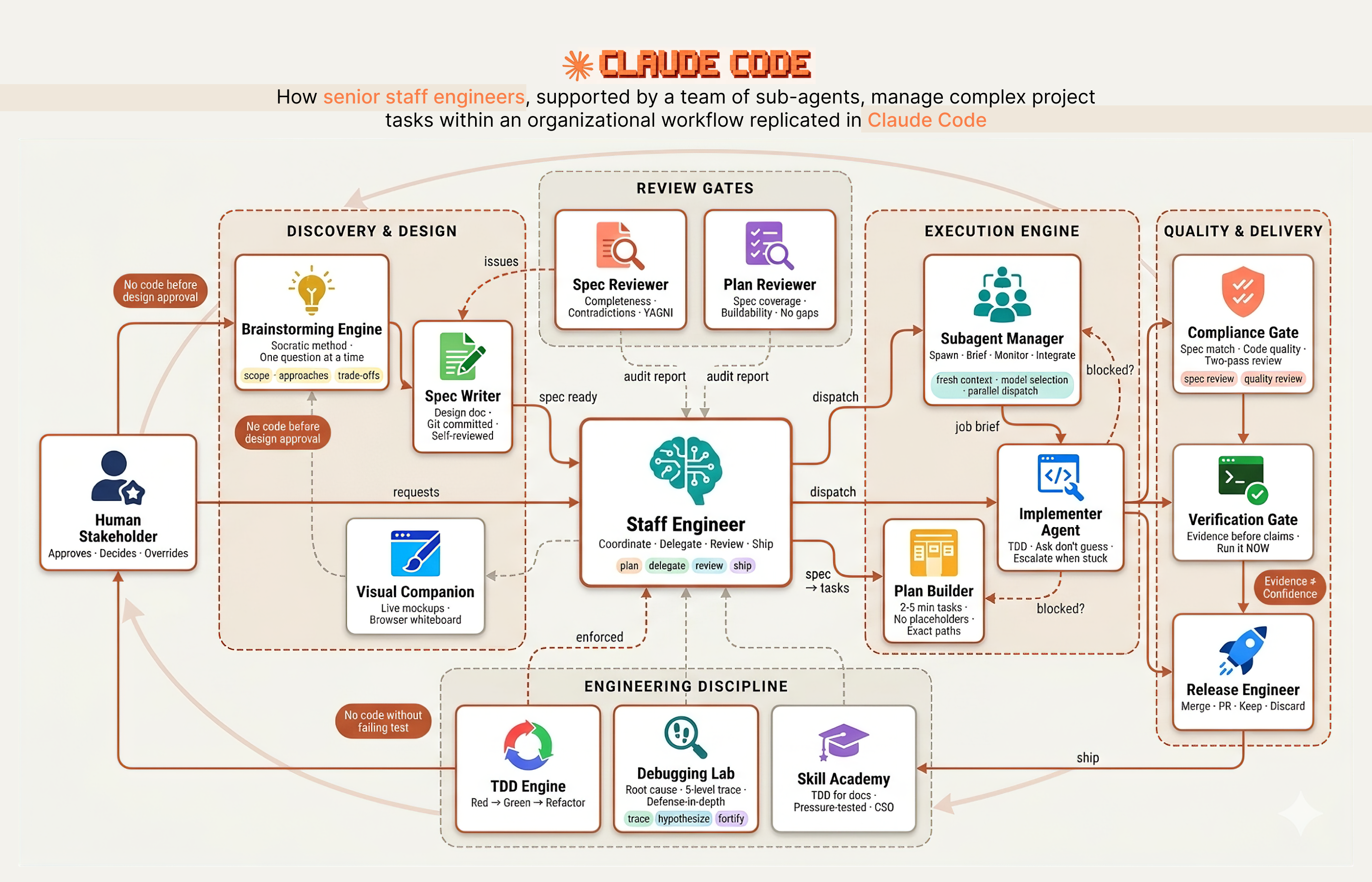
Inspired by Anthropic's observations on AI-driven development, a new enterprise governance model is emerging: the dual-track operating model. This isn't a Claude Code feature update — it's a workflow pattern that separates AI-assisted development into two distinct modes: exploration and exploitation.
Exploration track: Rapid prototyping, spike solutions, and architectural experiments using Claude Code with minimal guardrails. Think of it as your "what if" sandbox.
Exploitation track: Production-grade development with strict CLAUDE.md rules, version control discipline, and systematic testing. This is your "ship it" lane.
The key insight? Don't mix the two. Developers who blur exploration and exploitation in a single Claude Code session waste up to 40% of tokens on context switching and rework.
What It Means For You — Concrete Impact on Daily Claude Code Usage
The 40% Rework Problem
When you ask Claude Code to both prototype a new API endpoint AND harden it for production in the same session, you're fighting two opposing forces:
- Exploration wants speed, loose constraints, and permission to fail.
- Exploitation wants rigor, error handling, and production patterns.
Claude Code's context window gets polluted with contradictory instructions. The result? You spend 40% of your tokens undoing exploration decisions when switching to exploitation mode.
The 3x Speedup
Teams using the dual-track model report 3x faster shipping because:
- Exploration sessions are timeboxed to 2 hours max — no feature creep.
- Exploitation sessions start with a clean CLAUDE.md that enforces production standards.
- No context switching costs within a single session.
Try It Now — How to Apply the Dual-Track Model
Step 1: Set Up Your Exploration Track
Create a lightweight CLAUDE.md for exploration:
# CLAUDE.md — Exploration Mode
## Rules
- Focus on speed over perfection
- Use any library, even experimental ones
- Generate multiple solutions and compare
- Ignore error handling and edge cases
- Timebox: 2 hours max per session
Start exploration with:
claude code --claude-md CLAUDE_EXPLORE.md
Step 2: Set Up Your Exploitation Track
Create a strict CLAUDE.md for production:
# CLAUDE.md — Production Mode
## Rules
- All code must include unit tests (80%+ coverage)
- Follow project coding standards (link to style guide)
- No experimental dependencies
- All errors must be handled with try/catch
- TypeScript strict mode required
- Maximum function length: 40 lines
- All PRs must pass CI pipeline
Start exploitation with:
claude code --claude-md CLAUDE_PRODUCTION.md
Step 3: Use Git Branches for Separation
- Exploration branch:
explore/feature-name— force-push allowed, no PR reviews. - Exploitation branch:
feat/feature-name— strict PR process, code review required.
Step 4: Handoff Protocol
When moving from exploration to exploitation, never continue the same Claude Code session. Instead:
- Document exploration findings in a markdown file (e.g.,
EXPLORE-notes.md). - Commit to the explore branch.
- Start a new Claude Code session with the production CLAUDE.md.
- Feed the exploration notes as context:
@EXPLORE-notes.md.
Why This Works — Token Economics
Claude Code's context window is finite. By separating modes, you:
- Reduce token waste: No contradictory instructions competing for attention.
- Improve output quality: Each session has a clear, consistent persona.
- Lower costs: Fewer tokens spent on context switching = lower API bills.
Anthropic's own research confirms that agentic coding tools perform best when given unambiguous, role-specific instructions. The dual-track model is essentially prompt engineering at the workflow level.
When to Break the Rules
Some developers worry this adds overhead. Here's when the dual-track model is not worth it:
- Quick bug fixes: A single-line fix doesn't need exploration.
- Tiny features: If you can complete it in one session, don't split.
- Personal projects: The overhead only pays off for team-based or production-critical work.
But for any feature that takes more than 2 hours or involves architectural decisions, the dual-track model will save you time and money.
The Bottom Line
Claude Code is powerful, but its power comes from how you structure your workflow, not just the model. The dual-track operating model gives you the best of both worlds: rapid prototyping without production debt, and production rigor without creativity-killing constraints.
Start today: Create two CLAUDE.md files, set a 2-hour timer on exploration, and never mix modes in the same session again.
Source: powerarchi.medium.com