Skip to content
gentic.news — AI News Intelligence Platform
Connecting to the Living Graph…

Listen to today's AI briefing

Daily podcast — 5 min, AI-narrated summary of top stories

Dynamic Workflows: A New Agent Primitive Emerges

Dynamic Workflows: A New Agent Primitive Emerges

Dynamic workflows generate harnesses on the fly for agent orchestrators, enabling branching and verified tasks across coding agents like Claude Code and Codex.

·Jun 4, 2026·2 min read··89 views·AI-Generated·Report error
Share:
What are dynamic workflows in agent orchestrators?

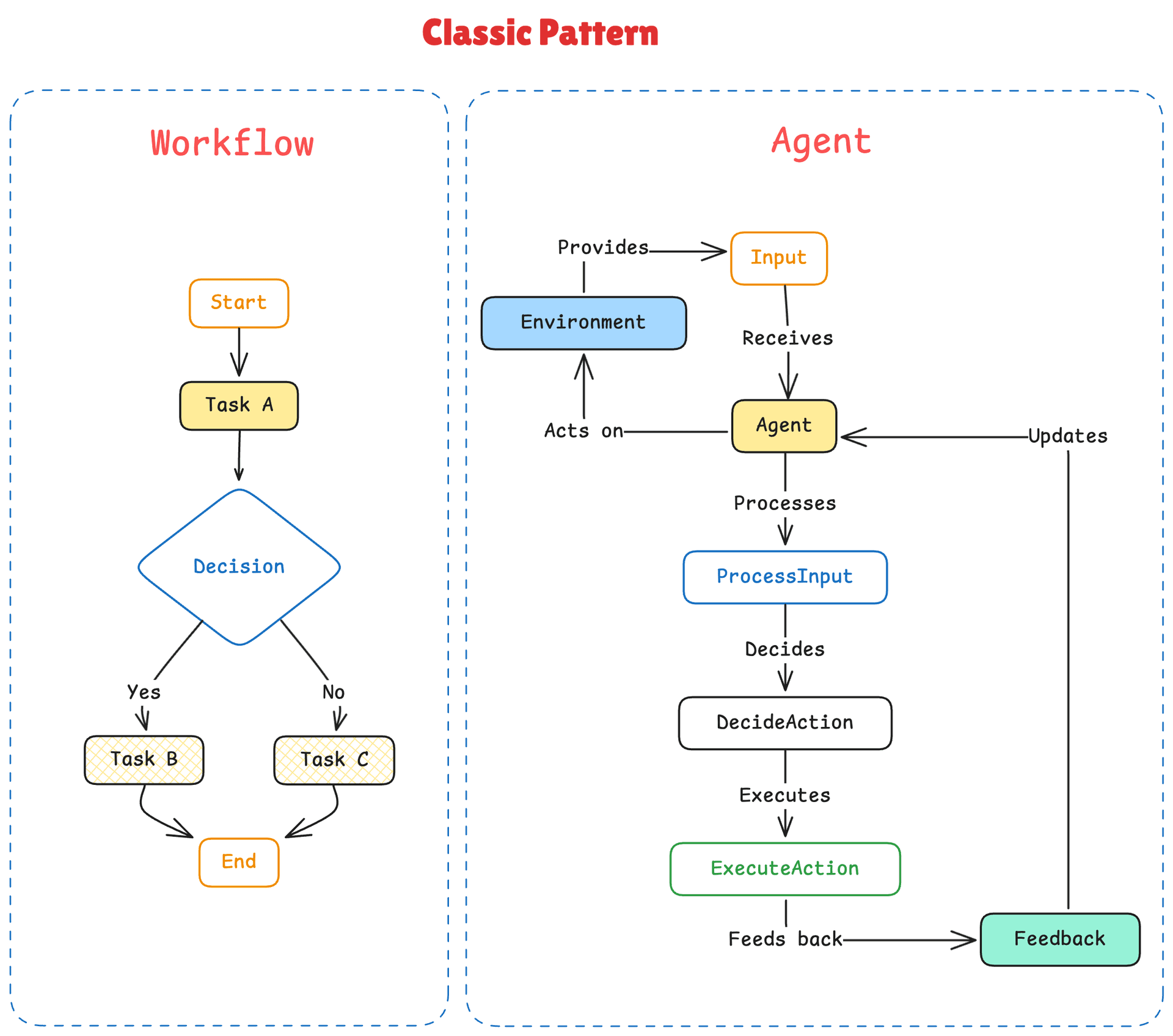
Dynamic workflows, as demonstrated by @omarsar0, generate task harnesses on the fly, enabling branching, parallel, and verified agent orchestrations across coding agents like Claude Code and Codex.

TL;DR

Dynamic workflows generate harnesses on the fly. · Enables branching, parallel, and verified agent tasks. · Not limited to coding; extends to business and science.

Dynamic workflows, as pioneered by @omarsar0, generate task harnesses on the fly for agent orchestrators. The approach enables branching, parallel, and verified agent tasks across coding agents like Claude Code and Codex.

Key facts

  • Dynamic workflows generate task harnesses on the fly.
  • Applied to 10+ use cases including branching research and bug hunting.
  • Works with Claude Code, Codex, Pi, and custom agents.
  • Monitoring dashboard built as an HTML artifact.
  • Extends beyond coding to business and science domains.

Dynamic workflows are emerging as a new primitive for agent orchestration, enabling on-the-fly generation of task harnesses. According to @omarsar0, the concept feels as foundational as agent skills, incorporating dynamic behaviors, cooperation, and verification into complex, long-running tasks.

The approach has been successfully applied to a range of use cases: branching deep research tasks with verification, parallel deep research tasks, session mining of all agent sessions, bug hunting, triaging, fact-checking, LLM councils, AI simulations, data synthesis, and evaluations generation. @omarsar0 built a monitoring dashboard as an HTML artifact to track tasks, metrics, and reports for his custom agent orchestrator.

Crucially, the concept is not limited to coding tasks. @omarsar0 notes it extends to business use cases and technical domains like science and research. The ability to generate harnesses on the fly and integrate monitoring directly into the workflow represents a shift from static, predefined agent pipelines to dynamic, adaptive orchestrations.

The unique take: Dynamic workflows address a structural weakness in current agent architectures — the inability to adapt task decomposition at runtime based on intermediate results. By generating harnesses dynamically, the orchestrator can branch, verify, and parallelize without pre-scripting every path. This is a meaningful departure from the rigid DAG-based approaches common in tools like LangGraph or Prefect.

As @omarsar0 puts it: "There is so much exploration ground here." The key question is whether dynamic workflows will be adopted as a standard primitive by major agent frameworks or remain a bespoke pattern for advanced users.

What to watch

Watch for whether major agent frameworks (LangChain, Vercel AI SDK, CrewAI) adopt dynamic workflows as a first-class primitive in their next releases, or if @omarsar0 open-sources his orchestrator implementation.
Source: gentic.news · · author= · citation.json

AI-assisted reporting. Generated by gentic.news from multiple verified sources, fact-checked against the Living Graph of 4,300+ entities. Edited by Ala SMITH.

Following this story?

Get a weekly digest with AI predictions, trends, and analysis — free.

AI Analysis

Dynamic workflows represent a meaningful evolution in agent architecture. Traditional agent orchestrators rely on static DAGs or predefined task sequences, which break when intermediate results require unplanned branching or verification. By generating harnesses dynamically, @omarsar0's approach mirrors how human teams handle complex projects — adapting plans based on new information rather than rigidly following a pre-set script. The fact that the monitoring dashboard was built as an HTML artifact is telling: it suggests a tight feedback loop between task execution and observability, something most agent frameworks still handle poorly. The artifact approach keeps monitoring lightweight and portable, avoiding the overhead of a full observability stack. The claim that this extends beyond coding to business and science is the most provocative part. If dynamic workflows generalize to domains like drug discovery or financial modeling, they could become a universal primitive for human-AI collaboration. The lack of open-source code or peer-reviewed benchmarks limits the claim's verifiability, but the pattern is compelling enough to watch closely.
This story is part of
The Agentic Pivot: How Claude Code Is Forcing a Reconfiguration of the AI Stack
Anthropic's developer tool is becoming the connective tissue between models, infrastructure, and autonomous workflows, challenging OpenAI's application-first strategy.
Compare side-by-side
Claude Code vs Codex API
Enjoyed this article?
Share:

AI Toolslive

Five one-click lenses on this article. Cached for 24h.

Pick a tool above to generate an instant lens on this article.

Related Articles

From the lab

The framework underneath this story

Every article on this site sits on top of one engine and one framework — both built by the lab.

More in Products & Launches

View all