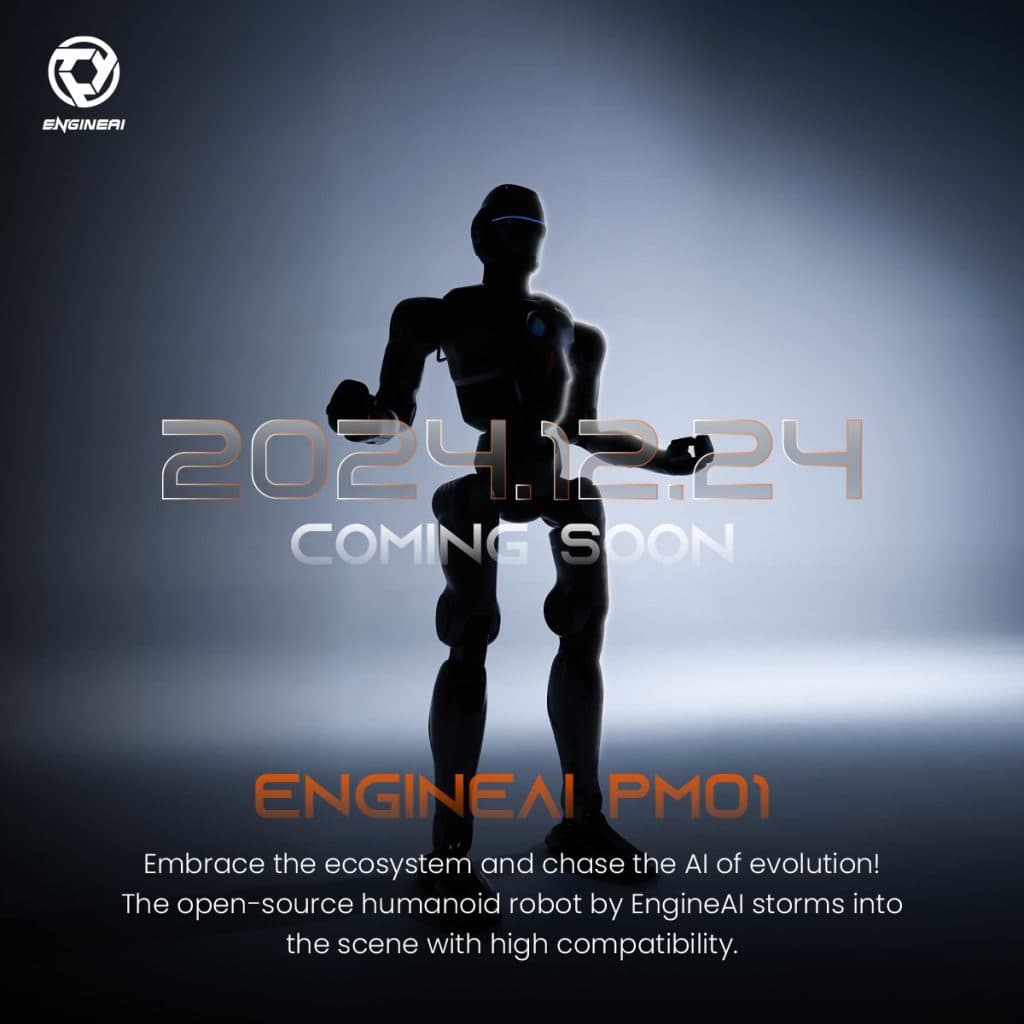
A brief incident during a media demonstration highlighted both a current limitation and a functional recovery feature of EngineAI's bipedal robot.
What Happened
While being filmed by a CGTN news crew, the EngineAI PM01—a 40 kg (approximately 88 lb) humanoid robot—was subjected to a light kick from a reporter. This physical disturbance occurred before the robot's push-recovery stabilization mode was actively engaged. According to a post by AI observer Rohan Paul on X, there was "no time to adjust balance" before the robot fell.
The key operational detail follows: human operators then manually flipped a switch to activate the PM01's push-recovery mode. Once activated, the system functioned as intended, and the robot recovered to a stable standing position "smoothly afterward."
A short video clip accompanying the post appears to show the moment of the fall and subsequent recovery.
Context: Push-Recovery in Humanoid Robotics
Push-recovery is a critical capability for legged robots operating in unstructured, human-centric environments. It refers to a robot's ability to detect an external force (like a push, shove, or in this case, a kick) and execute a series of coordinated movements—such as taking a step or adjusting its center of mass—to avoid falling. This capability is essential for safety and practical deployment around people.
Implementation can vary. Some advanced systems feature always-on, reactive stabilization that responds autonomously to disturbances. Others, particularly in development or demonstration phases, may require the mode to be explicitly activated, often for safety or power management reasons. The PM01 incident suggests its system currently operates in the latter category.
The EngineAI PM01
Public details on the EngineAI PM01 are sparse. Based on the description, it is a mid-sized humanoid platform. The 40 kg mass places it in a similar weight class to other research and development humanoids, lighter than industrial models like Boston Dynamics' Atlas (≈ 80 kg) but heavier than some smaller consumer-focused prototypes.
The fact that it possesses a dedicated push-recovery mode, even if not always active, indicates its design intent includes dynamic balancing and interaction with physical forces.
gentic.news Analysis
This incident is a minor but instructive real-world test of a humanoid's robustness. It underscores a fundamental challenge in robotics: the transition from controlled lab demonstrations to unpredictable field operations. The PM01 was reportedly performing correctly until met with an unexpected input (the kick) outside its then-active operational parameters. Its subsequent smooth recovery once the correct mode was engaged is a positive data point for the basic functionality of its stabilization algorithms.
This event fits into the broader, accelerated trend of humanoid robotics moving into public view for commercial and industrial applications. In recent months, we've covered multiple companies—from established players to startups—conducting similar public field tests, often with mixed results that reveal the gap between targeted capabilities and real-world reliability. These public stress tests, whether planned or accidental, are becoming a valuable, transparent benchmark for the industry.
The manual activation step is telling. For a robot intended to eventually operate autonomously alongside humans, having critical safety systems like balance recovery require a manual switch flip is a significant limitation. It points to a development platform where full autonomy is a future goal, not a current feature. The industry's trajectory is clearly toward robots that can perceive disturbances and react instantaneously without human intervention. This incident serves as a public benchmark for where EngineAI's platform currently sits on that journey.
Frequently Asked Questions
What is push-recovery in robotics?
Push-recovery is a stabilization capability that allows a legged robot to maintain its balance when subjected to sudden external forces, such as being pushed or bumping into an object. It typically involves rapid sensor feedback to detect the force and a control system that calculates and executes corrective motions, like stepping or swinging its arms, to prevent a fall.
Who is EngineAI?
EngineAI is a company developing humanoid robot platforms. Based on available information, their PM01 model is a mid-sized, bipedal humanoid robot weighing approximately 40 kilograms. Detailed public specifications about its actuators, sensors, computing, or intended applications are not widely available from this source.
Why would the push-recovery mode not be active?
During development, testing, or specific demonstrations, certain high-power or sensitive autonomous systems may be kept in a standby mode. This can be for safety (preventing unintended movements), for conserving battery power, or because the system is not yet fully integrated for continuous operation. The need for a manual switch suggests the feature is still being refined or is not part of a fully autonomous operational stack.
How does this compare to other humanoid robots like Boston Dynamics' Atlas?
Boston Dynamics' Atlas robot is renowned for its highly advanced, always-active dynamic balancing and recovery capabilities, often demonstrated through parkour and complex manipulation tasks. The Atlas platform represents a more mature stage of development in this specific domain. The EngineAI PM01 incident shows a platform at an earlier stage, where recovery is a demonstrated feature but not yet a seamless, autonomous reflex.