Solar installation company ForeverSolar has implemented Anthropic's Claude Agent SDK to handle the complex permitting paperwork required for solar projects, according to a social media post from Noah Zweben that was reshared by Boris Cherny. The deployment represents one of the first publicly documented cases of Claude's agent framework being used in a regulated physical industry rather than software development.
What Happened
ForeverSolar, a solar installation company, has integrated Anthropic's Claude Agent SDK into their workflow to generate, complete, and submit the extensive documentation required for solar permitting. Permitting represents one of the most significant bottlenecks in solar deployment, with approval processes often taking weeks or months and requiring specialized knowledge of local regulations, building codes, and utility requirements.
While specific performance metrics weren't disclosed in the brief announcement, the characterization of "driving permitting wins" suggests the Claude-powered system is successfully navigating regulatory hurdles that previously required significant human expertise and time.
Context
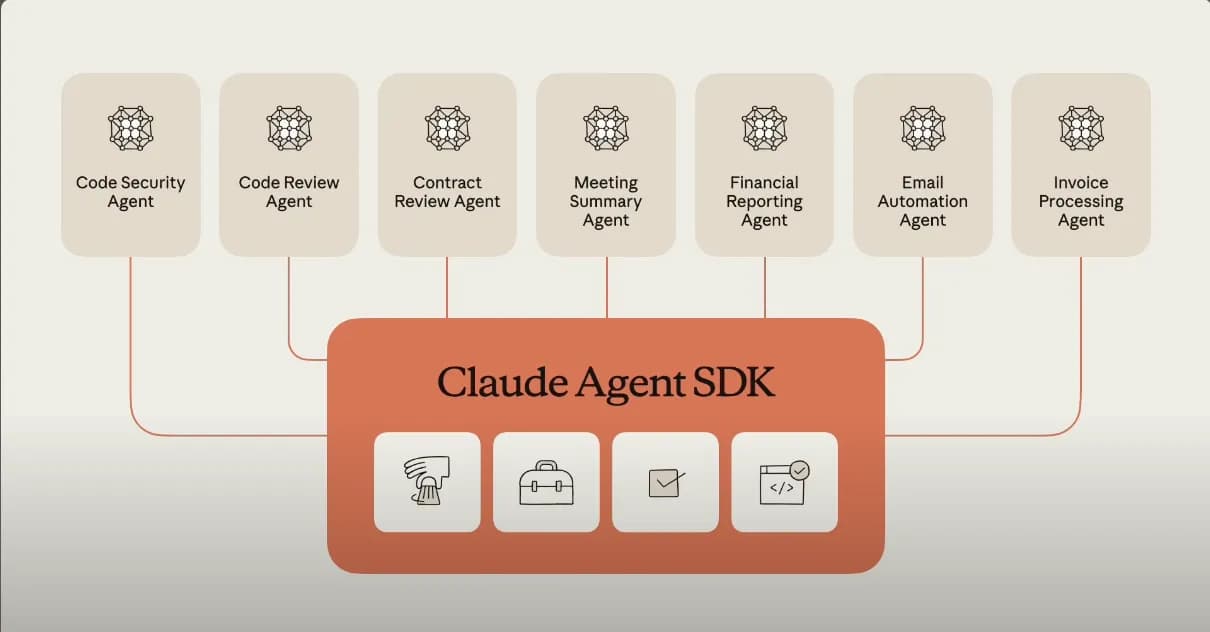
Anthropic released the Claude Agent SDK in late 2024 as part of their push into enterprise AI applications. The SDK allows developers to create persistent AI agents that can perform multi-step tasks, maintain context across sessions, and interact with external systems through tools and APIs.
Most early applications of agentic AI frameworks have focused on software development (code generation, debugging, testing) or digital content creation. The ForeverSolar implementation represents a notable expansion into physical world industries with complex regulatory requirements.
Solar permitting varies significantly by jurisdiction, with requirements differing across counties, cities, and utility territories. The process typically involves:
- Electrical system diagrams
- Structural load calculations
- Fire safety plans
- Utility interconnection applications
- Building permit applications
- Historical preservation reviews (where applicable)
How It Likely Works
Based on the Claude Agent SDK's capabilities, ForeverSolar's system probably operates as follows:
- Project Intake: The agent receives basic project parameters (location, system size, roof type)
- Regulatory Research: The agent accesses databases of local permitting requirements
- Document Generation: Using Claude's reasoning capabilities, the agent generates compliant documentation
- Form Completion: The agent fills out jurisdiction-specific forms with project details
- Submission & Tracking: The agent submits documents to appropriate authorities and tracks status
- Revision Handling: When revisions are requested, the agent modifies documents accordingly
The agent likely maintains a persistent context for each project, allowing it to handle the multi-week permitting process without losing track of project specifics or regulatory requirements.
Why This Matters for AI Adoption
This deployment is significant for several reasons:
1. Expansion Beyond Digital Domains: While most AI agent applications target software or content creation, this moves into physical infrastructure with safety-critical requirements.
2. Handling of Complex Regulation: Solar permitting involves navigating overlapping regulations from building departments, fire departments, utilities, and historical commissions. Success here suggests AI agents can manage similarly complex regulatory environments in other industries.
3. Enterprise Validation: A commercial company risking its core business processes on an AI system represents stronger validation than experimental or internal use cases.
4. Economic Impact: Reducing permitting time directly accelerates solar deployment and reduces soft costs, which can represent 20-30% of total system costs according to National Renewable Energy Laboratory estimates.
Limitations and Considerations
Without specific performance data, several questions remain:
- What percentage of permits can be fully automated versus requiring human review?
- How does the system handle edge cases or novel situations?
- What validation processes ensure regulatory compliance?
- How does the system interface with legacy permitting platforms used by municipalities?
Successful deployment likely required significant customization and fine-tuning to ForeverSolar's specific operational regions and project types.
gentic.news Analysis
This deployment represents a strategic validation of Anthropic's enterprise-focused approach with Claude. While competitors like OpenAI have focused on consumer and developer adoption through ChatGPT and API access, Anthropic has consistently positioned Claude as the "responsible AI for business" option. The ForeverSolar case demonstrates this positioning in action—a regulated industry with compliance requirements choosing Claude over potentially more capable but less controlled alternatives.
This follows Anthropic's pattern of targeting vertical-specific applications rather than horizontal capabilities. In February 2026, we covered Anthropic's partnership with healthcare documentation company ScribeMD, which similarly applied Claude to a regulated domain with complex compliance requirements. Both cases suggest Anthropic is building industry-specific expertise that creates switching costs beyond raw model performance.
The timing is particularly notable given the increased regulatory scrutiny on AI safety. By demonstrating successful deployment in a safety-critical infrastructure domain, Anthropic strengthens its position as the "compliant AI" provider. This aligns with their recent white papers on AI safety benchmarks and their advocacy for responsible scaling policies.
From a market perspective, this represents the continued fragmentation of AI applications. Rather than a single general intelligence handling all tasks, we're seeing specialized deployments where specific AI capabilities (in this case, regulatory navigation and document generation) solve concrete business problems. This fragmentation creates opportunities for both large model providers and vertical-specific implementers.
Frequently Asked Questions
What is the Claude Agent SDK?
The Claude Agent SDK is Anthropic's framework for building persistent AI agents that can perform multi-step tasks, maintain context across sessions, and interact with external systems through tools and APIs. Released in late 2024, it's designed for enterprise applications requiring reliability and compliance.
How does AI help with solar permitting?
Solar permitting involves extensive documentation that must comply with local building codes, electrical standards, fire safety regulations, and utility requirements. AI can automate document generation, ensure regulatory compliance, track submission status, and handle revision requests—reducing processing time from weeks to days in some cases.
Is this the first use of AI in solar permitting?
No, various AI tools have been applied to aspects of solar permitting, particularly for site assessment and system design. However, this appears to be one of the first documented cases of a comprehensive agentic AI system handling the entire permitting workflow from documentation through submission and tracking.
What are the risks of using AI for regulated processes?
Primary risks include regulatory non-compliance due to AI errors, liability issues if automated systems make mistakes, and potential rejection by authorities unfamiliar with AI-generated submissions. Successful implementations typically involve human oversight for final review and validation, particularly for novel or complex cases.