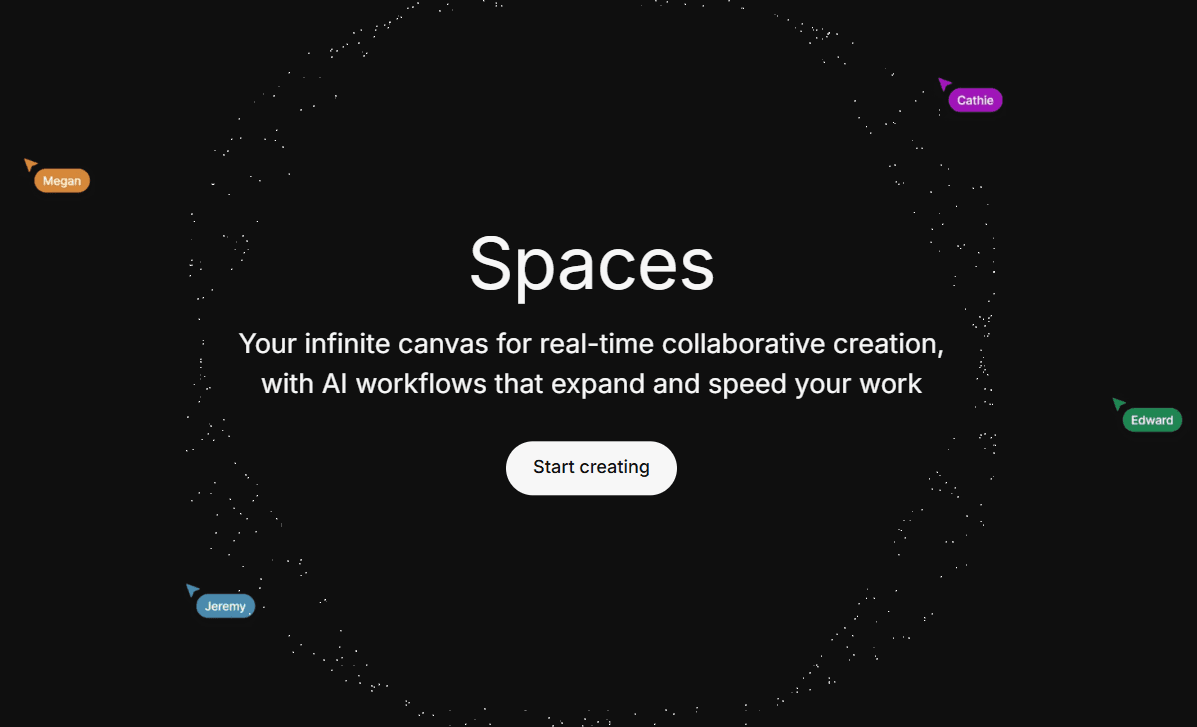
In a significant leap forward for AI-powered creative tools, Freepik has launched Spaces, a groundbreaking platform that allows creators to build entire visual worlds around their references while maintaining remarkable consistency across characters, brands, and styles. This development, highlighted by AI commentator Hasan Toor, represents a major advancement in generative AI's practical application for professional creative work.
What Freepik Spaces Actually Does
Freepik Spaces functions as an AI-powered environment where creators can upload reference images—whether characters, products, brand elements, or stylistic examples—and generate entirely new visual content that maintains fidelity to those references. Unlike traditional AI image generators that produce one-off images, Spaces appears to excel at maintaining visual consistency across multiple generations, enabling the creation of cohesive visual narratives, campaigns, or brand materials.
According to early demonstrations, the tool can maintain consistent character appearances across different scenes, preserve brand colors and design elements through various applications, and replicate specific artistic styles throughout extended projects. This addresses one of the most significant limitations in current generative AI tools: the inability to reliably reproduce the same elements across multiple generated images.
The Technical Breakthrough: Reference-Based Consistency
The core innovation of Freepik Spaces appears to be its sophisticated reference management system. Where most AI image generators rely primarily on text prompts, Spaces seems to prioritize visual references as the primary input, with text prompts serving as supplementary guidance. This reference-first approach allows the AI to analyze specific visual characteristics—facial features, clothing styles, color palettes, compositional elements—and apply them consistently across new generations.
This technical approach represents a significant step beyond current fine-tuning methods like LoRAs or Dreambooth, which require extensive training on specific subjects. Spaces appears to offer similar consistency benefits without the complex training process, potentially making consistent character and brand generation accessible to non-technical creators.
Implications for Creative Industries
For Marketing Agencies and Brands
Freepik Spaces could fundamentally transform how agencies approach visual content creation. The ability to generate unlimited variations of campaign materials while maintaining perfect brand consistency addresses a major pain point in marketing workflows. Agencies could rapidly prototype campaign visuals, create personalized content at scale, and maintain visual coherence across dozens or hundreds of generated assets.
For Solo Creators and Freelancers
The tool democratizes capabilities previously available only to well-resourced studios. Independent creators can now maintain character consistency in comic series, generate cohesive visual portfolios, or create branded content with professional-level consistency—all without extensive manual editing or specialized technical knowledge.
For Content Production at Scale
The "unlimited scale" aspect mentioned in early descriptions suggests that Spaces could enable entirely new content production models. Imagine generating hundreds of social media posts, product variations, or illustration series with guaranteed visual consistency—a capability that could reshape content strategies across digital platforms.
Potential Applications and Use Cases
Brand Marketing Campaigns: Generating countless variations of advertisements, social media posts, and promotional materials while maintaining strict brand guidelines.
Character-Driven Content: Creating consistent characters across story illustrations, children's books, educational materials, or animation pre-visualization.
E-commerce and Product Visualization: Generating lifestyle images featuring products in various settings while maintaining product appearance accuracy.
Game Development and World Building: Creating consistent environmental assets, character variations, and promotional materials for game projects.
Educational and Training Materials: Producing cohesive visual materials that maintain character and style consistency across entire curricula.
Ethical Considerations and Industry Impact
As with any powerful generative AI tool, Freepik Spaces raises important questions about creative labor, intellectual property, and content authenticity. The tool's ability to generate "unlimited scale" content could potentially disrupt traditional illustration and design markets, particularly for repetitive or template-based work.
However, it also opens new possibilities for creatives to focus on higher-level conceptual work while automating repetitive execution tasks. The key will be how the creative industry adapts to these new capabilities and develops ethical frameworks for their use.
The Competitive Landscape
Freepik Spaces enters a rapidly evolving market for AI creative tools, competing with platforms like Midjourney, DALL-E 3, and Adobe Firefly. Its unique focus on reference-based consistency rather than pure text-to-image generation positions it in a potentially valuable niche. If it delivers on its promise of reliable consistency at scale, it could become an essential tool in professional creative workflows.
Looking Forward
The launch of Freepik Spaces represents more than just another AI image generator—it signals a shift toward AI tools designed specifically for professional creative workflows. By addressing the consistency problem that has plagued generative AI since its inception, Spaces moves the technology from novelty to practical utility.
As agencies and creators begin to "abuse this" capability, as Hasan Toor predicts, we're likely to see an explosion of consistently styled visual content across digital platforms. This could raise the baseline for visual content quality while simultaneously challenging creators to develop more distinctive styles that transcend what AI can easily replicate.
Source: Hasan Toor on Twitter