In the complex world of energy system analysis, one persistent challenge has been coupling models with mismatched spatial resolutions—a problem that can lead to inaccurate projections, inefficient resource allocation, and flawed policy decisions. Traditional approaches have relied on oversimplified geographic assumptions, but a groundbreaking study published on arXiv on February 24, 2026, introduces an innovative solution using Graph Neural Networks (GNNs) that promises to revolutionize how we model energy systems.
The Spatial Resolution Challenge in Energy Systems
Energy system models must integrate diverse data sources with varying spatial resolutions—from high-resolution satellite imagery of solar potential to regional energy demand projections. Traditional coupling methods often use Voronoi diagrams, which allocate areas based solely on geographic proximity to predefined points. While mathematically elegant, this approach ignores crucial geographical features like terrain, infrastructure, population density, and resource availability that significantly impact energy systems.
"Traditional models are limited by using only a single geospatial attribute," the researchers note in their abstract. This limitation becomes particularly problematic when modeling renewable energy integration, where factors like wind patterns, solar exposure, and transmission infrastructure create complex spatial relationships that simple proximity models cannot capture.
The Graph Neural Network Solution
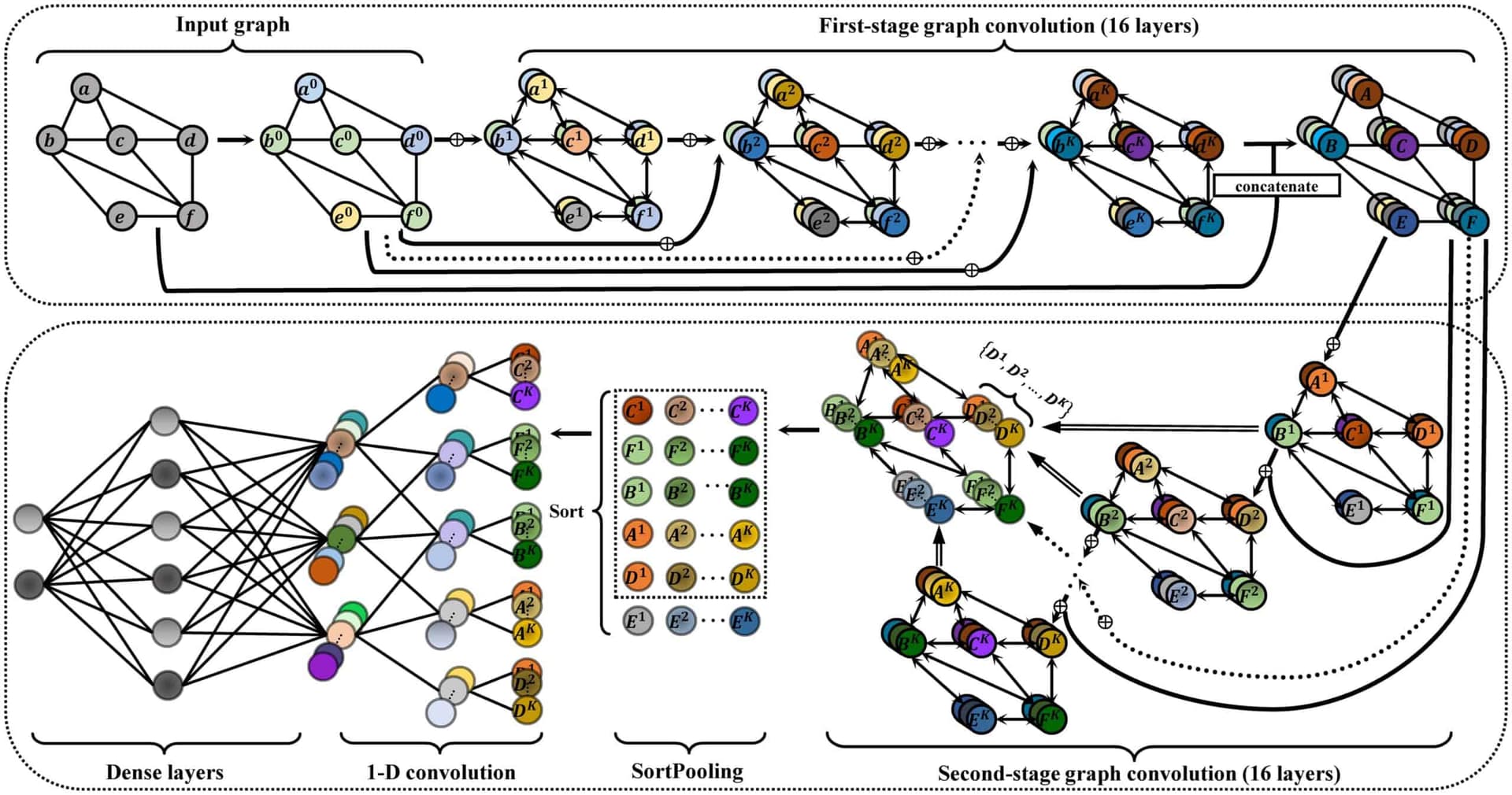
The research team's innovative approach models high-resolution geographic units as nodes in a heterogeneous graph, where edges represent spatial relationships and nodes contain multiple geographical features. This graph structure allows the system to learn complex spatial patterns that traditional methods miss.
Key Technical Innovations
1. Heterogeneous Graph Architecture: Unlike homogeneous graphs where all nodes and edges are of the same type, the heterogeneous approach allows different geographical features (terrain, infrastructure, resources) to be represented distinctly while maintaining their interrelationships.
2. Self-Supervised Learning Paradigm: A critical breakthrough is the self-supervised approach, which overcomes the lack of accurate ground-truth data—a common problem in energy system modeling where "correct" allocations are rarely known. The system learns to generate physically meaningful weights without requiring labeled training data.
3. Enhanced Voronoi Allocation: The GNN-generated weights enhance traditional Voronoi diagrams, creating what the researchers call "cluster-based Voronoi Diagrams" that incorporate essential geographic information beyond simple proximity.
Experimental Results and Performance
The paper reports significant improvements across multiple metrics:
- Scalability: The method handles larger, more complex geographical areas without performance degradation
- Accuracy: Allocation precision increases substantially compared to traditional methods
- Physical Plausibility: Results align better with real-world geographical constraints and energy system requirements
- Computational Efficiency: Despite increased complexity, the approach maintains practical computational requirements
These improvements are particularly relevant as energy systems become more distributed and renewable-dependent, requiring more sophisticated spatial modeling to optimize placement of solar farms, wind turbines, storage facilities, and transmission lines.
Broader Implications for AI and Energy Transition
This development arrives at a critical moment in both AI research and global energy transformation. The arXiv repository, which hosts this preprint, has recently published several significant studies highlighting both the potential and limitations of current AI approaches. Just days before this energy modeling paper, arXiv published research showing that nearly half of major AI benchmarks are saturated and losing discriminatory power—suggesting the field needs more applied, real-world challenges like energy system modeling to drive meaningful progress.
Similarly, another recent arXiv study revealed critical flaws in AI safety where text safety doesn't translate to action safety—a reminder that AI systems must be rigorously tested in practical applications. The energy modeling research represents exactly this type of applied, consequential AI development.
Future Applications and Research Directions
The methodology has potential applications beyond energy systems, including:
- Urban planning and infrastructure development
- Environmental impact assessment and conservation planning
- Disaster response and resource allocation
- Agricultural optimization and land use planning
The self-supervised aspect is particularly promising for domains where labeled data is scarce or expensive to obtain. As the researchers note, this approach "overcomes the lack of accurate ground-truth data"—a common limitation across many scientific and engineering domains.
Challenges and Considerations
While the results are promising, several challenges remain:
- Computational Requirements: Graph Neural Networks can be computationally intensive, especially for continental-scale energy systems
- Data Quality and Availability: The approach depends on comprehensive geographical feature data, which may not be uniformly available globally
- Interpretability: Like many deep learning approaches, the internal decision-making processes of the GNN may be difficult to interpret—a concern for policy decisions
- Integration with Existing Systems: Energy modeling infrastructures would need adaptation to incorporate this new approach
Conclusion
The integration of Graph Neural Networks into energy system spatial allocation represents a significant step forward in both AI applications and sustainable energy planning. By moving beyond simplistic geographic assumptions to incorporate multiple geographical features through self-supervised learning, this approach addresses a fundamental limitation in current energy modeling practices.
As the world accelerates its transition to renewable energy systems, such methodological advances become increasingly critical. Accurate spatial allocation affects everything from investment decisions to policy formulation to grid stability. This research demonstrates how advanced AI techniques can solve practical, consequential problems in the energy sector—exactly the type of applied AI development needed as the field moves beyond saturated benchmarks toward real-world impact.
The preprint is available on arXiv under identifier 2602.22249, continuing the repository's tradition of hosting cutting-edge research at the intersection of computer science and applied domains. As with all arXiv preprints, the work has been moderated but not yet peer-reviewed, representing an early look at what may become a transformative approach to energy system modeling.