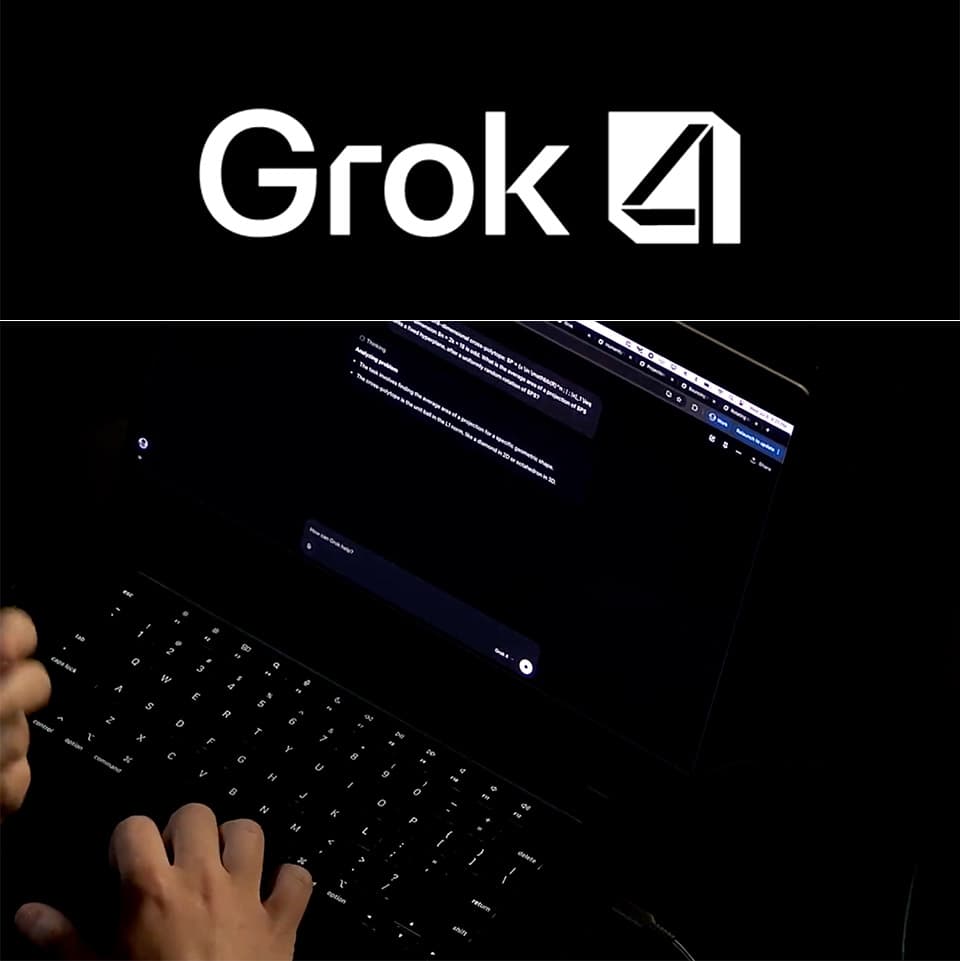
Elon Musk's artificial intelligence venture, xAI, has announced the imminent release of Grok 4.20, scheduled to launch next week according to a recent social media update. The announcement, made via Twitter by an account associated with xAI developments, has generated significant buzz within the AI community about what this next iteration of the Grok AI assistant might bring to the rapidly evolving landscape of conversational AI.
The Grok Evolution: From 1.0 to 4.20
Grok first entered the AI scene in late 2023 as xAI's answer to established conversational AI systems like ChatGPT and Claude. Named after Robert Heinlein's concept of deep understanding, Grok distinguished itself with its integration with X (formerly Twitter) data, giving it access to real-time information and a distinctive personality that Musk described as having "a rebellious streak."
The version numbering suggests this represents a substantial leap from previous iterations. While xAI hasn't released detailed version histories, the jump to 4.20 indicates at least three previous major versions and potentially significant architectural improvements. Previous Grok versions have demonstrated capabilities in coding, creative writing, and real-time information synthesis, but have generally been considered to trail industry leaders in certain benchmark performances.
What We Might Expect from Grok 4.20
While official specifications haven't been released, several areas of improvement seem likely based on xAI's stated goals and competitive pressures:
Enhanced Reasoning Capabilities
Previous Grok versions have shown competency in logical reasoning, but industry observers expect xAI to focus on improving complex problem-solving abilities. This could involve better chain-of-thought reasoning, improved mathematical capabilities, and more sophisticated analysis of multi-step problems.
Real-Time Knowledge Integration
One of Grok's distinctive features has been its access to X platform data. Grok 4.20 may enhance how it processes and utilizes real-time information, potentially improving accuracy in current events, trending topics, and time-sensitive queries while maintaining appropriate verification mechanisms.
Multimodal Expansion
The AI industry has rapidly moved toward multimodal systems that can process both text and images. While earlier Grok versions were primarily text-based, Grok 4.20 may introduce or significantly improve image understanding capabilities, bringing it closer to parity with competitors who already offer robust multimodal features.
Performance Optimization
Speed and efficiency improvements are almost certain given xAI's focus on creating accessible AI. This could mean faster response times, lower computational requirements, or more efficient handling of complex queries.
The Competitive Landscape
Grok 4.20 enters a crowded field where OpenAI's GPT-4, Anthropic's Claude 3, and Google's Gemini models have established strong positions. Each of these competitors has recently released significant updates, raising the bar for what constitutes state-of-the-art AI performance.
xAI's approach has differed from competitors in several key ways. The company has emphasized transparency about training data sources, focused on creating AI that "understands the universe," and positioned Grok as having a distinct personality rather than neutral objectivity. Grok 4.20 will need to demonstrate not just technical improvements but also how xAI's philosophical approach translates into practical advantages for users.
Implications for AI Development
The release of Grok 4.20 represents more than just another product update—it signals several important trends in AI development:
Accelerated Release Cycles
The rapid progression from Grok's initial release to version 4.20 suggests increasingly compressed development cycles in the AI industry. Where major model updates once took years, they now appear to be happening within months, reflecting both intense competition and rapid technological advancement.
Specialization vs. Generalization
As AI models proliferate, differentiation becomes increasingly important. Grok's integration with X platform data represents one form of specialization—creating an AI particularly attuned to real-time, social media-informed contexts. Grok 4.20 may further develop this specialized knowledge while maintaining broad general capabilities.
Open vs. Closed Development
xAI has taken a middle path between fully open and completely closed AI development. While not open-sourcing its models like some competitors, the company has been relatively transparent about its approaches and limitations. Grok 4.20's release may provide insights into whether this balanced approach yields competitive advantages.
What This Means for Users
For everyday users, Grok 4.20's improvements could translate to:
- More accurate and nuanced responses to complex questions
- Better integration of current events and real-time information
- Improved performance across specialized domains like coding, analysis, and creative tasks
- Potentially new features or interface improvements
- Continued development of Grok's distinctive conversational style
For developers and businesses, the release may offer new integration possibilities, improved API performance, or expanded capabilities that could be leveraged in applications.
Looking Ahead
The "exciting" nature of this release, as promised in the announcement, suggests xAI believes it has made substantial progress. Given Musk's history of ambitious technological goals and xAI's stated objective of creating AI that seeks "maximum truth," Grok 4.20 may represent a significant step toward more capable, reliable, and useful AI systems.
As with all AI announcements, the proof will be in the performance. Next week's release will provide the first opportunity to assess whether Grok 4.20 represents incremental improvement or a more substantial leap forward in AI capabilities.
Source: Announcement via @kimmonismus on X/Twitter