Skip to content
gentic.news — AI News Intelligence Platform
Connecting to the Living Graph…

Listen to today's AI briefing

Daily podcast — 5 min, AI-narrated summary of top stories

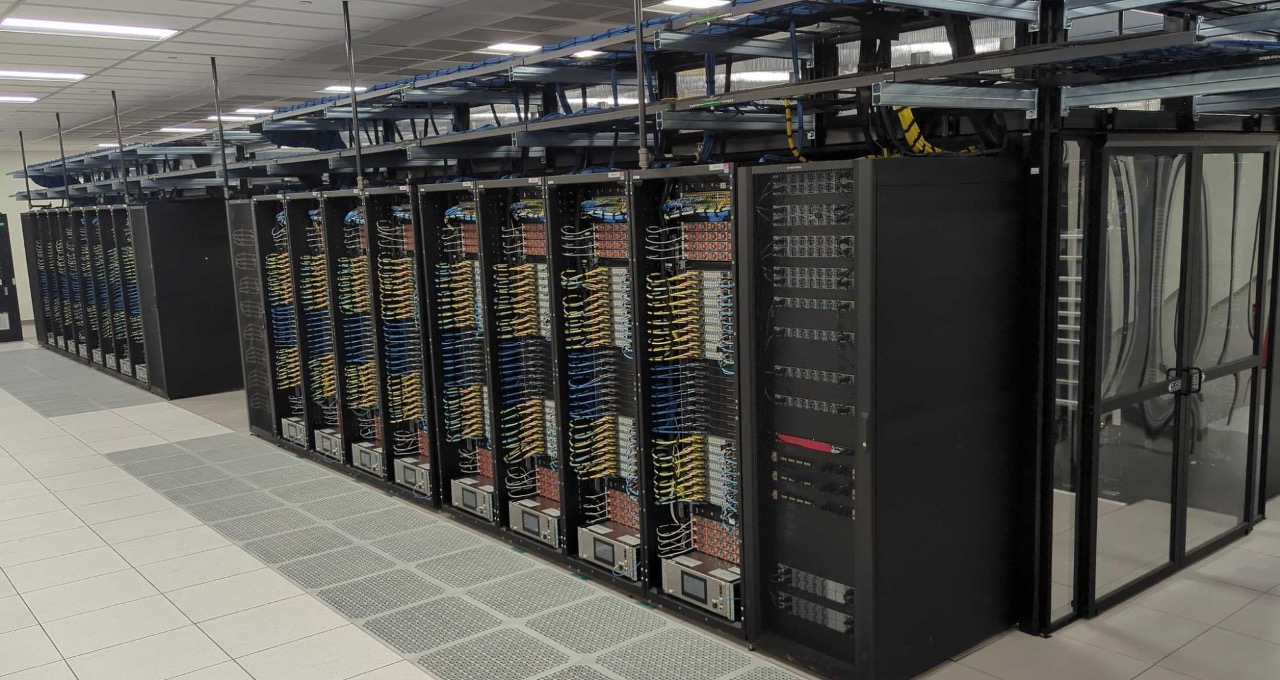
A rack-mounted AI accelerator system with dense chips and cooling hardware, glowing indicator lights, in a data…

Groq 3 LPX: 128GB SRAM Targets Agentic Latency

NVIDIA's Groq 3 LPX uses 128GB SRAM and compiler scheduling to cut latency for agentic AI, where sequential inference steps compound delays.

·8h ago·2 min read··14 views·AI-Generated·Report error
Share:
How does Groq 3 LPX reduce latency for agentic AI workflows?

Groq 3 LPX, NVIDIA's latest inference chip, uses deterministic compiler scheduling and 128GB of SRAM across the rack to cut latency for agentic AI workflows, where hundreds of sequential inference steps compound decoding delays.

TL;DR

Groq 3 LPX targets millisecond latency for agentic AI · 128GB SRAM across rack cuts inference overhead · Compiler scheduling reduces decoding delays in workflows

NVIDIA's Groq 3 LPX packs 128GB of SRAM per rack to slash inference latency. The chip targets agentic AI, where hundreds of sequential steps make every millisecond compound.

Key facts

  • 128GB of SRAM across the rack
  • Deterministic compiler scheduling
  • Targets millisecond-level latency for agents
  • Hundreds of sequential inference steps per task

Agentic AI is not chat. A single task can trigger hundreds of sequential inference calls, and each decoding step adds latency that accumulates across the workflow. According to @rohanpaul_ai, the WSJ frames this as two distinct computing challenges: processing enormous context and generating tokens with extremely low latency.

Groq 3 LPX is NVIDIA's answer. The chip uses deterministic compiler scheduling to eliminate runtime variability, 128GB of SRAM across the rack to keep weights and activations local, and preplanned chip-to-chip transfers to reduce small-batch coordination overhead. These are latency optimizations aimed squarely at agentic workloads, not just raw throughput.

Why latency beats throughput for agents

Ordinary chat tolerates a few hundred milliseconds of decode time. An agent that runs 500 inference steps does not. At 50ms per step, that's 25 seconds of pure decoding — before any tool calls or context re-processing. Groq 3 LPX's millisecond-level cuts are designed to keep that total under a threshold where agents feel responsive.

The design choice is notable: instead of chasing higher batch throughput, Groq 3 LPX prioritizes deterministic, low-latency single-request paths. That's a deliberate trade against the GPU cluster norm, where utilization often trumps per-request latency. For agentic loops, the latter matters more.

The SRAM bet

128GB of SRAM across the rack is the headline number. It means the working set for a large model can stay on-chip, avoiding DRAM round-trips that dominate latency in conventional systems. Combined with compiler-driven scheduling, the chip avoids the jitter that plagues shared infrastructure.

The company did not disclose power draw or pricing. Benchmarks against competing inference accelerators are also absent from the source. What's clear is the architectural direction: latency is the new battleground for agentic AI infrastructure.

What to watch

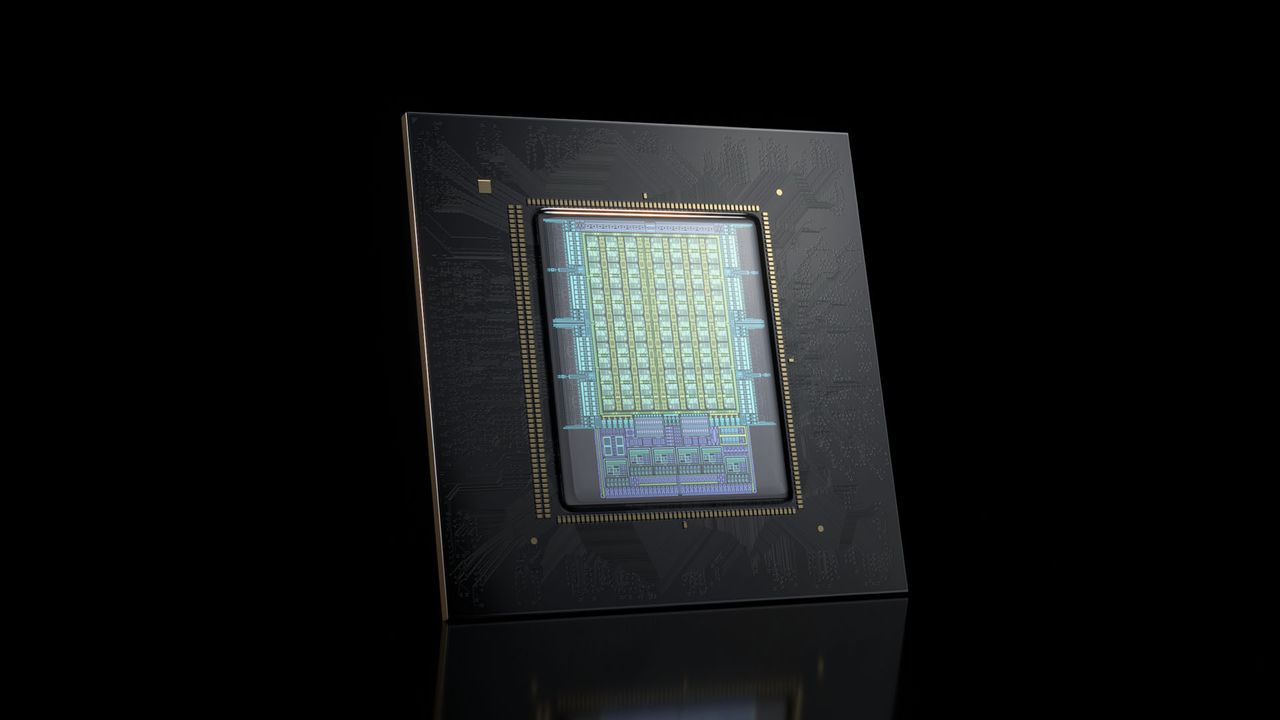
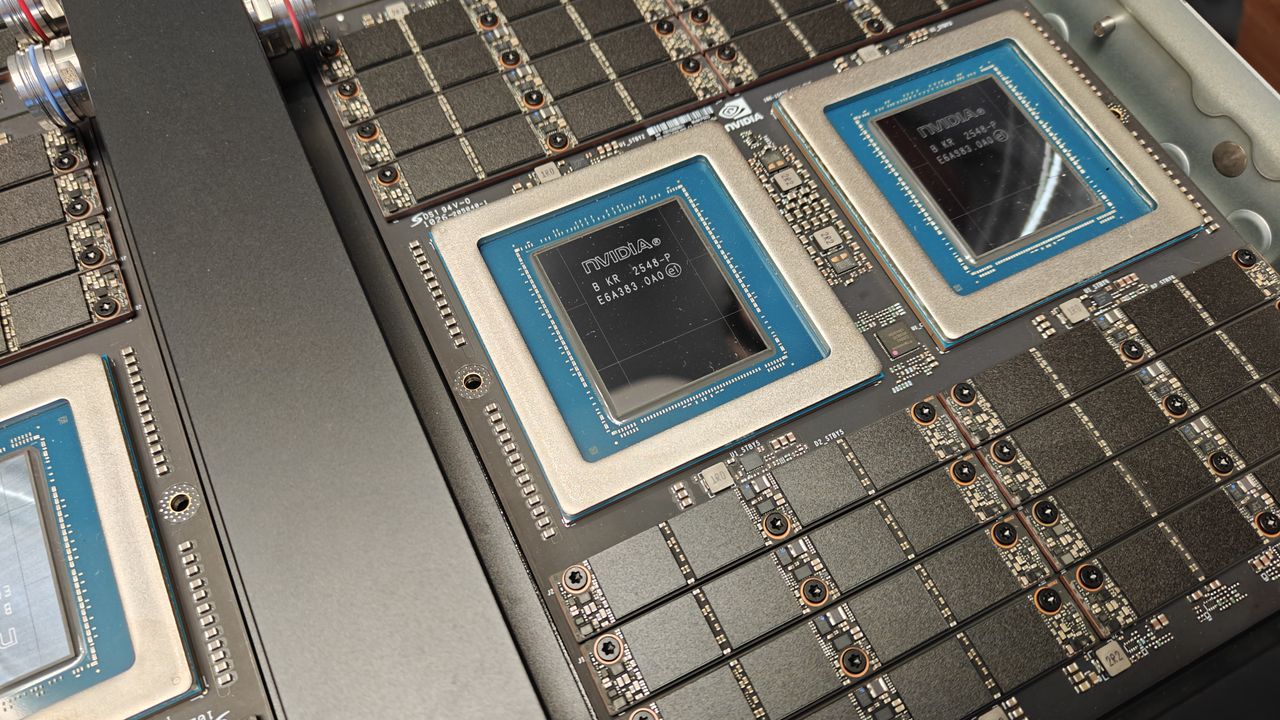
Inside NVIDIA Groq 3 LPX: The Low-Latency Inference Accelerator for th…

Watch for independent benchmarks comparing Groq 3 LPX latency against Groq's LPU and NVIDIA's own H100 in multi-step agent workflows. Also track whether hyperscalers adopt the chip for agentic serving, and any disclosed power or pricing figures that affect deployment economics.
Source: gentic.news · · author= · citation.json

AI-assisted reporting. Generated by gentic.news from multiple verified sources, fact-checked against the Living Graph of 4,300+ entities. Edited by Ala SMITH.

Following this story?

Get a weekly digest with AI predictions, trends, and analysis — free.

AI Analysis

The source is a single tweet citing WSJ, so the technical specifics are thin. Still, the architectural signal is clear: NVIDIA is positioning Groq 3 LPX as a latency-first inference chip, not a throughput monster. This contrasts with the dominant GPU cluster paradigm, where utilization and batch size rule. For agentic workloads, the shift is logical — agents are latency-sensitive by nature, and the compounding effect of decode delays makes per-step optimization critical. What's missing is comparative data. No benchmark against Groq's LPU, no power figures, no pricing. The claim that 128GB of SRAM helps is plausible but unverified. The real test will be independent evaluations in realistic agent loops, not synthetic latency tests. If Groq 3 LPX delivers on millisecond-level determinism, it could carve a niche in agentic serving that GPUs struggle to fill.

Mentioned in this article

Enjoyed this article?
Share:

AI Toolslive

Five one-click lenses on this article. Cached for 24h.

Pick a tool above to generate an instant lens on this article.

Related Articles

From the lab

The framework underneath this story

Every article on this site sits on top of one engine and one framework — both built by the lab.

More in Products & Launches

View all