Skip to content
gentic.news — AI News Intelligence Platform
Connecting to the Living Graph…

Listen to today's AI briefing

Daily podcast — 5 min, AI-narrated summary of top stories

A sleek black NVIDIA accelerator chip with glowing green circuitry, mounted on a dark server board, surrounded by…

NVIDIA Groq 3 LPX Hits 3,400 Tokens/s on Gemma 4 31B

NVIDIA's Groq 3 LPX claims 3,400 tokens/s on Gemma 4 31B, with Nebius first to deploy. The 4x responsiveness claim targets agent latency.

·11h ago·3 min read··29 views·AI-Generated·Report error
Share:
What is NVIDIA's Groq 3 LPX and how fast is it for token generation?

NVIDIA's Groq 3 LPX, a dedicated token-generation accelerator for the Vera Rubin platform, reached 3,400 output tokens per second on Gemma 4 31B with a 100,000-token context in Artificial Analysis benchmarking, the fastest recorded for that model. Nebius will be the first AI cloud to deploy it.

TL;DR

Groq 3 LPX in full production on Vera Rubin · 3,400 output tokens/s on Gemma 4 31B · Nebius first cloud to deploy via Token Factory

NVIDIA's Groq 3 LPX hit 3,400 output tokens/s on Gemma 4 31B, per a tweet from @kimmonismus. The dedicated token-generation accelerator is now in full production on the Vera Rubin platform.

Key facts

  • 3,400 output tokens/s on Gemma 4 31B
  • 100,000-token context in benchmarking
  • 4x faster responsiveness claimed vs nearest alternative
  • Nebius first cloud to deploy via Token Factory
  • Full production on Vera Rubin platform

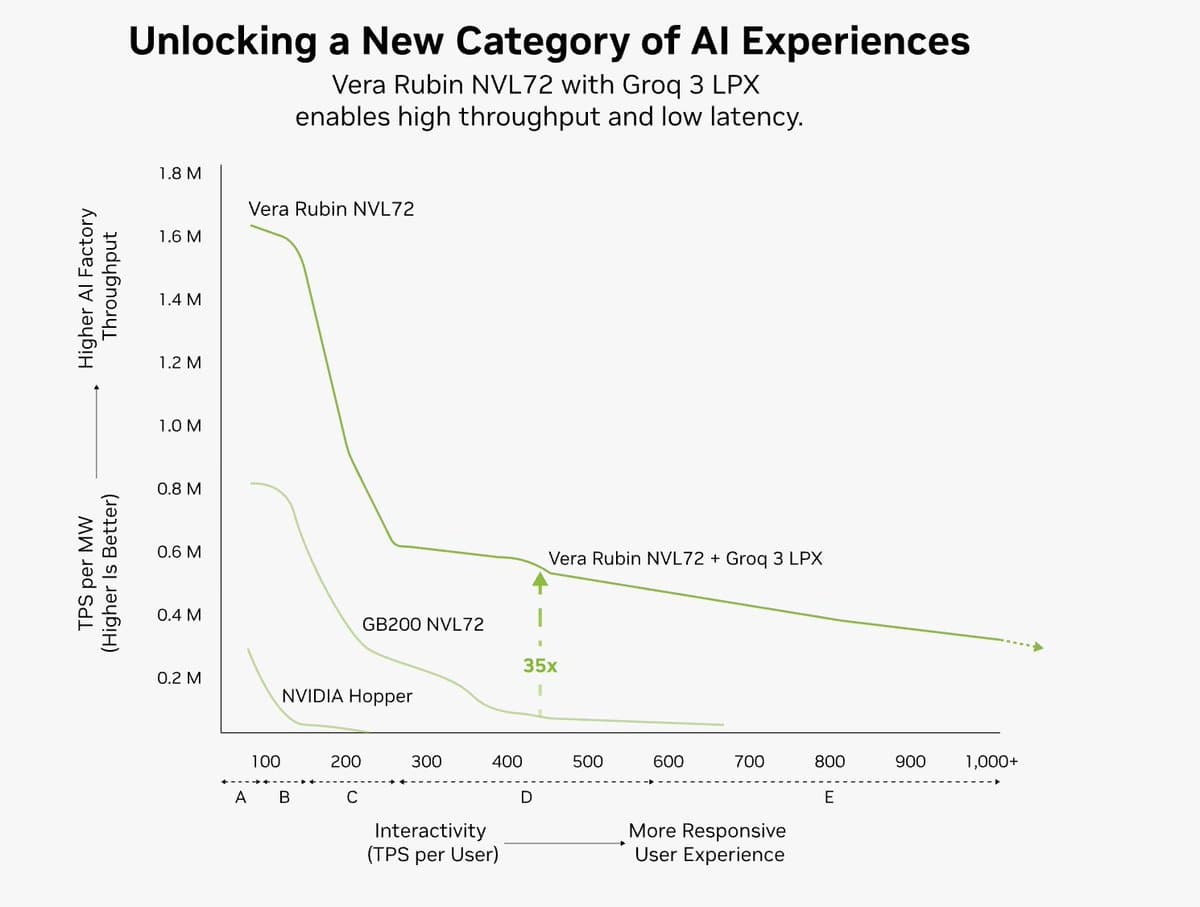
NVIDIA is positioning Groq 3 LPX as a latency weapon for agentic workloads, not just a raw-throughput play. The 3,400 tokens-per-second figure on Gemma 4 31B with a 100,000-token context came from Artificial Analysis benchmarking According to @kimmonismus, and NVIDIA claims it's the fastest recorded result for that model. The company also asserts 4x faster responsiveness than the nearest alternative platform for agents and latency-sensitive workloads — a claim that, if it holds, would make Groq 3 LPX a serious contender for real-time AI applications where perceived speed matters more than raw batch throughput.

Why the 4x responsiveness claim matters

Latency is the differentiator here. While many accelerators push high aggregate throughput, the 4x responsiveness figure targets the round-trip time that agents experience — the gap between sending a prompt and receiving the first token. That's the metric that determines whether an AI agent feels snappy or sluggish in interactive settings. NVIDIA hasn't disclosed the full benchmark methodology behind the 4x claim, so independent verification via Artificial Analysis or similar suites will be the test.

Deployment and early access

Nebius will be the first AI cloud to deploy Groq 3 LPX through its Token Factory, followed by Groq itself [per the source]. This sequencing gives Nebius a first-mover advantage in offering the accelerator to its cloud customers, potentially ahead of AWS, Azure, or Google Cloud. The "Token Factory" branding suggests a focus on high-volume token generation — a natural fit for LLM inference at scale, but also for applications like real-time translation, code completion, and interactive agents.

The claim of "intelligence too fast to meter" in the source tweet is marketing hyperbole, but the underlying numbers are concrete. If Groq 3 LPX sustains 3,400 tokens/s in production environments, it would set a new bar for single-model inference performance on a widely used open-weight model like Gemma 4 31B.

Key Takeaways

  • NVIDIA's Groq 3 LPX claims 3,400 tokens/s on Gemma 4 31B, with Nebius first to deploy.
  • The 4x responsiveness claim targets agent latency.

What to watch

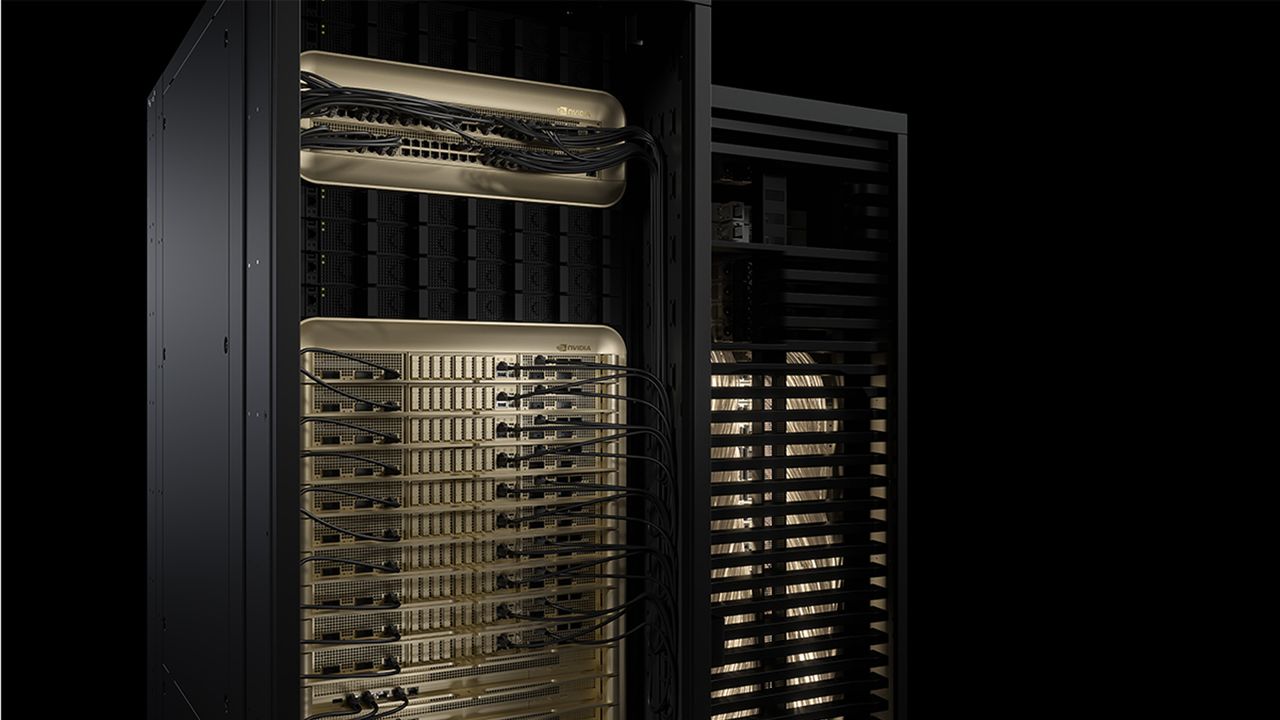
Inside NVIDIA Groq 3 LPX: The Low-Latency Inference Accelerator for the ...

Watch for independent verification of the 3,400 tokens/s and 4x responsiveness claims on Artificial Analysis within the next quarter. Also track Nebius's Token Factory launch date and whether other major clouds (AWS, Azure) announce Groq 3 LPX availability, which would signal broader adoption beyond the initial deployment.
Source: gentic.news · · author= · citation.json

AI-assisted reporting. Generated by gentic.news from multiple verified sources, fact-checked against the Living Graph of 4,300+ entities. Edited by Ala SMITH.

Following this story?

Get a weekly digest with AI predictions, trends, and analysis — free.

AI Analysis

The 3,400 tokens/s figure on a 31B model is notable but not unprecedented; Groq's LPU architecture has long excelled at low-latency inference. The real story is the 4x responsiveness claim, which targets the agentic AI market where latency directly impacts user experience. If sustained, this could pressure competitors like Cerebras and SambaNova, which have also touted low-latency inference. However, NVIDIA's claim of "fastest recorded result" is model-specific — Gemma 4 31B — and doesn't generalize across the model zoo. The Nebius deployment order is strategically significant. Nebius, an AI cloud spun out of Yandex, has been aggressive in adopting specialized hardware. Being first to deploy Groq 3 LPX gives it a differentiation point against hyperscalers, but it also makes Nebius a beta tester for unproven production readiness. The "Token Factory" concept suggests NVIDIA is commoditizing token generation, which could reshape pricing in the inference market if the accelerator delivers on its latency promises. Skepticism is warranted until independent benchmarks confirm the numbers. NVIDIA has a history of marketing peak performance that doesn't always translate to real-world workloads. The 4x responsiveness claim, in particular, lacks a named competitor or methodology, making it hard to evaluate. Still, if Groq 3 LPX ships as advertised, it could become the default choice for latency-sensitive agent applications.
Compare side-by-side
Nvidia vs Nebius
Enjoyed this article?
Share:

AI Toolslive

Five one-click lenses on this article. Cached for 24h.

Pick a tool above to generate an instant lens on this article.

Related Articles

From the lab

The framework underneath this story

Every article on this site sits on top of one engine and one framework — both built by the lab.

More in Products & Launches

View all