At Beijing's 2026 humanoid robot half-marathon, a humanoid robot named Lightning, developed by Chinese electronics giant HONOR, completed the 21-kilometer course in 50 minutes and 26 seconds. This performance shatters the current human men's world record of 57 minutes and 20 seconds by nearly seven minutes.
The event highlights a staggering acceleration in humanoid robotics capabilities. The winning time from the previous year's competition was over 2 hours and 40 minutes, meaning the state-of-the-art has advanced by more than 50% in just 12 months.
Key Takeaways
- At Beijing's 2026 humanoid robot half-marathon, HONOR's 'Lightning' robot finished the 21 km course in 50 minutes and 26 seconds.
- This time surpasses the current human men's world record of 57:20, marking a massive leap from last year's winning robot time of over 2 hours 40 minutes.
What Happened
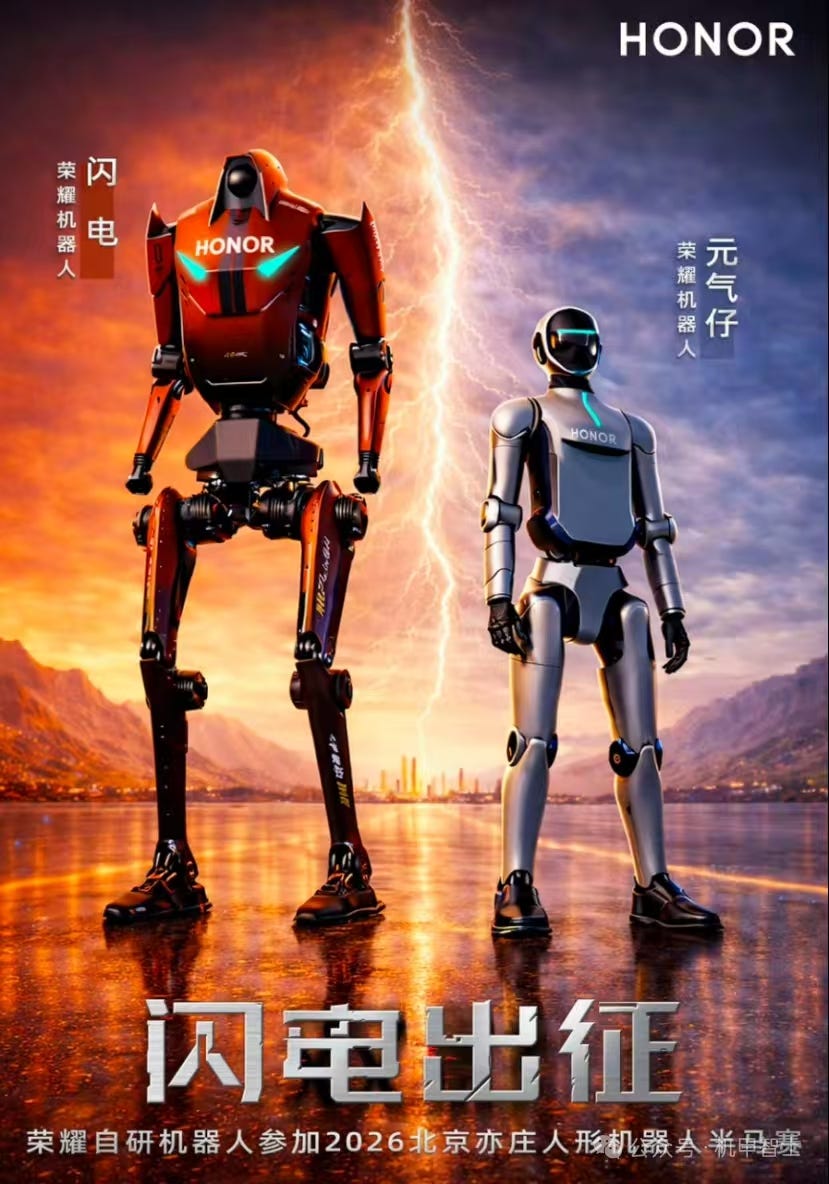
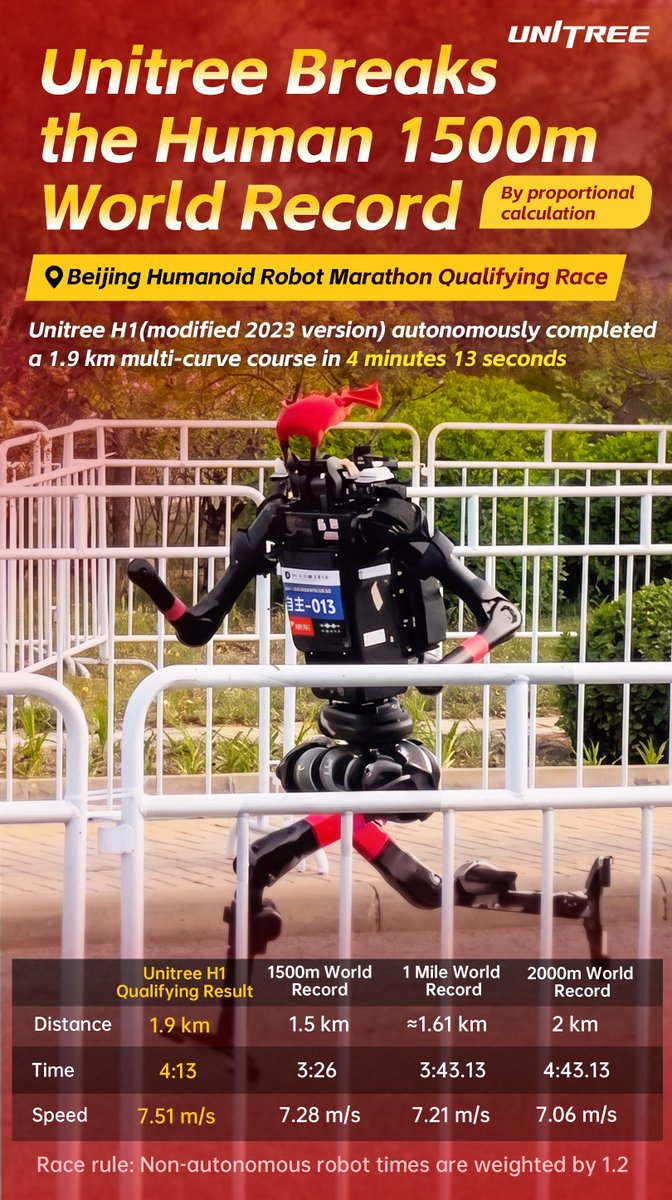
The event was a dedicated half-marathon for humanoid robots, a format that has emerged as a key benchmark for real-world physical AI and robotic endurance. HONOR's Lightning robot not only won the race but did so at a pace that would be elite for a human athlete. Completing 21 km in 50:26 requires sustaining an average pace of approximately 2 minutes and 24 seconds per kilometer (or about 3:52 per mile).
Context: The Benchmark of Robotic Locomotion
Running a long-distance race is a complex integration challenge for a humanoid robot. It requires:
- Dynamic Balance: Maintaining stability over uneven terrain and through the gait cycle for tens of thousands of steps.
- Energy Efficiency: Managing battery power and actuator torque to complete the distance.
- Terrain Adaptation: Handling potential changes in surface, minor obstacles, and course turns.
- Endurance: Preventing mechanical or thermal failure in motors and joints under sustained load.
The dramatic year-over-year improvement suggests breakthroughs in several areas, likely including:
- Gait Optimization: More efficient walking and running algorithms, potentially using reinforcement learning trained in simulation.
- Hardware Design: Lighter, stronger materials and more efficient actuator systems (likely high-torque density motors).
- Power Management: Improved battery technology and real-time systems that optimize energy expenditure per stride.
- Proprioception & Control: Advanced sensor fusion (IMUs, force sensors, vision) providing better real-time state estimation for stable, high-speed locomotion.
The Competitive Landscape
While the source does not name other competitors, the existence of a "last year's winner" confirms this is a recurring, competitive event. The fact that HONOR—a company primarily known for smartphones and consumer electronics—fielded the winning robot indicates a significant and successful diversification into advanced robotics. It places them in direct competition with other companies pursuing general-purpose humanoid robots, such as Boston Dynamics (Atlas), Tesla (Optimus), Figure, and Agility Robotics (Digit).
gentic.news Analysis
This result is a tangible data point in the rapidly converging curves of robotic and human physical performance. For years, roboticists have used animal and human benchmarks—like the DARPA Robotics Challenge—to measure progress. A robot now outperforming the human world record in a pure endurance locomotion task is a symbolic and practical milestone. It moves the discussion from "catching up" to human baselines to defining new, super-human performance envelopes for machines.
Technically, the leap from a 2h40m to a 50m half-marathon in one year is extraordinary. It suggests the winning team may have pivoted to a fundamentally different control architecture, perhaps a large-scale reinforcement learning policy trained in a massive simulation environment and successfully transferred to reality (sim-to-real). This approach, championed by teams like Google DeepMind (with RT-2 and other robotics work), allows for the discovery of highly efficient and robust movement strategies that are non-intuitive to human engineers.
The involvement of HONOR is particularly notable. It signals that major consumer electronics firms, with their deep expertise in mass manufacturing, miniaturization, battery technology, and chip design, are now serious players in the humanoid robotics space. Their supply chain and vertical integration advantages could be decisive in moving from lab prototypes to cost-effective, producible units. This aligns with broader industry trends where the boundaries between AI software, semiconductor hardware, and advanced mechanical design are blurring to create a new generation of intelligent machines.
Frequently Asked Questions
What company built the Lightning robot?
The Lightning robot was developed by HONOR, a Chinese consumer electronics company originally known for smartphones and now expanding into advanced robotics and AI.
How does the robot's time compare to a human?
The Lightning robot's time of 50 minutes and 26 seconds for a half-marathon is significantly faster than the current human men's world record of 57 minutes and 20 seconds, held by Jacob Kiplimo.
What does this mean for the future of humanoid robots?
This demonstrates rapid progress in the core mobility and endurance capabilities of humanoid robots. Such reliable, long-duration locomotion is a foundational requirement for robots intended for real-world tasks in logistics, manufacturing, or disaster response, bringing commercial deployment closer.
Was the course flat, and did the robot run the entire way?
The source tweet does not specify course details or whether the robot ran or walked. However, achieving this time likely required a running gait for significant portions. Official race details would be needed to understand the exact course profile.