What Changed — The Specific Architecture
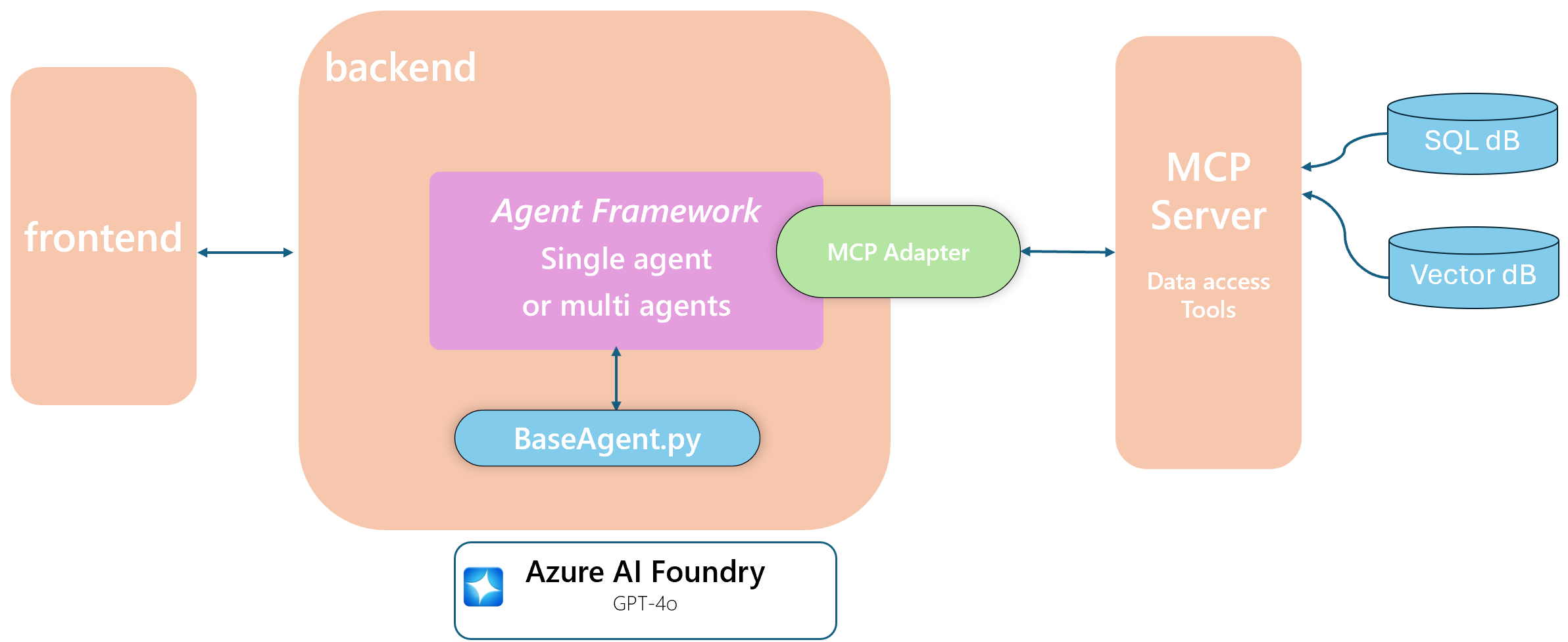
A developer named ALICE deployed 99 MCP (Model Context Protocol) tools across a manufacturing company's entire data ecosystem — ERP orders, CRM opportunities, MES work records, supplier delivery notes. The tools were packaged into a system called ARIA, acting as a unified orchestration layer.
This isn't a demo. It's a production deployment where an AI agent holds 99 keys to a factory's internal systems.
What It Means For You — Concrete Impact on Daily Claude Code Usage
The Health Check Pattern
ALICE ran an "operational health check" by calling 10 MCP tools sequentially. The results were brutal:
- Financial: Operating margin at 3.2%, halved
- Cost: Estimate-to-actual variance at 135.6%, estimation system failing
- Inventory: Dead stock rate at 44.9%, $150M stuck in items over 2 years old
- Sales: DSO at 139 days, cash not coming back
Key insight: 7 tools succeeded, 3 failed. ALICE wrote "Data Unavailable" on the report cover for the failures. No fabrication. This is the fail loud pattern — and it builds trust.
Multi-Agent Cross-Validation
Here's the technique you can use today:
- Run two independent Claude sessions on the same data
- Cross-validate their conclusions
- Treat consistent findings as confirmed
- Treat divergent findings as complementary insights
ALICE did this. Two agents, different contexts, same data. Seven conclusions matched exactly. The differences were complementary — Claude caught missing pieces (like "data traceability layer": every number must trace back to a SQL query), while ALICE's role definitions and KPI hierarchy were deeper.
The Six-Layer Verification Pyramid
Before building the full 10-person executive team, ALICE designed a verification system:
- L0: Every number traces to a specific SQL query
- L1: Cross-system reconciliation (ERP vs MES vs CRM)
- L2: Cross-domain contradiction detection
- L3: Temporal consistency checks
- L4: LLM Judge using reconciliation data as ground truth
- L5: Human-in-the-loop sign-off
Rule: If the data is wrong, the analysis is completely wrong.
Try It Now — Commands, Config, and Prompts
Step 1: Set Up Your MCP Tool Cluster
# In your Claude Code config
{
  "mcpServers": {
    "erp-orders": {
      "command": "npx",
      "args": ["@anthropic/mcp-erp", "--db", "your-erp-url"]
    },
    "crm-opportunities": {
      "command": "npx",
      "args": ["@anthropic/mcp-crm", "--db", "your-crm-url"]
    },
    "mes-work-records": {
      "command": "npx",
      "args": ["@anthropic/mcp-mes", "--db", "your-mes-url"]
    }
  }
}
Step 2: Run the Health Check Pattern
claude code --prompt "Run operational health check across all MCP tools. Report successes and failures explicitly. For any failed tool, write 'Data Unavailable' — do not fabricate."
Step 3: Multi-Agent Cross-Validation
Open two terminal sessions:
# Session 1
claude code --prompt "Analyze the data from all MCP tools. Focus on financial health."

# Session 2
claude code --prompt "Analyze the same data from all MCP tools. Focus on operational risks."
Compare outputs. Look for:
- Consistent conclusions (trust them)
- Complementary insights (merge them)
- Contradictions (investigate further)
Step 4: Implement the Verification Pyramid
Add this to your CLAUDE.md:
## Data Verification Protocol

For every analysis:
1. Every number must trace to a specific MCP tool query
2. Cross-validate with at least one other data source
3. Check for temporal consistency (trends must make sense)
4. Flag any contradiction between systems
5. If a tool fails, report "Data Unavailable" — never fabricate
Summary
99 MCP tools, two independent Claude agents, six-layer verification. That's how ALICE made enterprise data trustworthy. The key takeaway: data tells its own story, but you have to be willing to hear it — including the parts where it says "I don't know."
Source: dev.to
[Updated 13 Jul via devto_mcp]
Meanwhile, a complementary protocol called MarketNow Agent Protocol (MAP) has emerged to solve a different MCP challenge: autonomous discovery, evaluation, and installation of skills. MAP introduces a trust-score system (0–10) that lets agents decide whether to install without human approval (score ≥8), warn a human (5–7), or refuse (0–1). It also supports autonomous payment via USDC on Base L2 and provides signed SHA-256 certificates with eight audit layers including static analysis, adversarial probing, and gVisor sandbox isolation [per devto_mcp].