The Technique — Prompting for Deep Research
The recent discussion around 'vibe physics' highlights a powerful, underutilized capability of Claude Code: its ability to conduct structured, graduate-level research on complex, open-ended technical problems. This isn't about simple code generation; it's about using Claude Code as a reasoning partner to explore fuzzy concepts, synthesize information, and propose novel frameworks.
'Vibe coding' refers to an intuitive, prompt-driven development style. 'Vibe physics' extends this to scientific and mathematical exploration—using Claude to reason about ill-defined systems, propose analogies, and build conceptual models from first principles, all within your terminal.
Why It Works — Claude Opus 4.6's Reasoning Engine
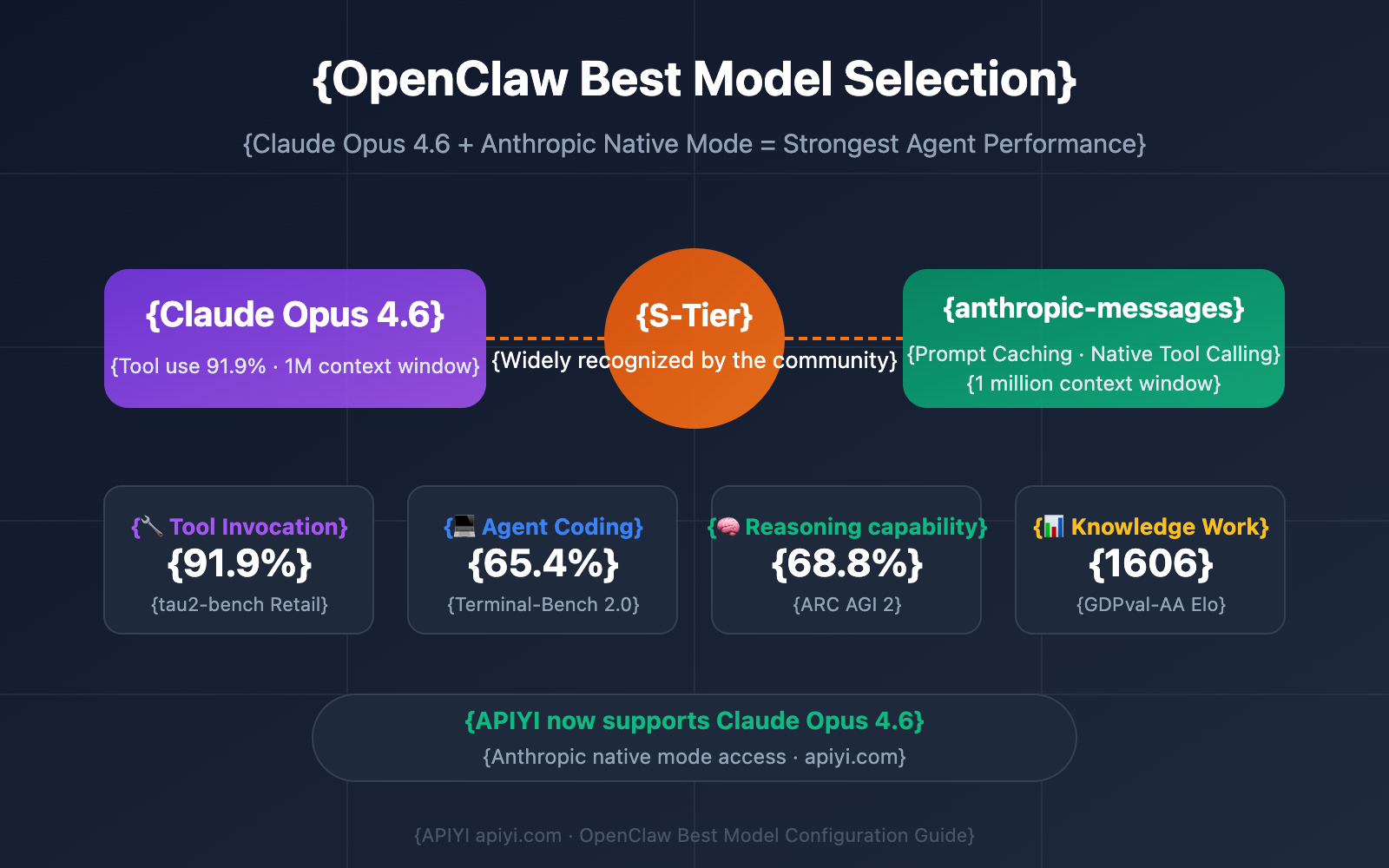
This capability is powered by the underlying model, Claude Opus 4.6, which excels at complex reasoning and analysis. When you engage Claude Code in a research task, you're leveraging its ability to:
- Hold a long, coherent chain of thought across multiple interactions (aided by features like the
/dreamcommand for memory consolidation, released in March 2026). - Access and reason with its vast internal knowledge without needing live web search for established concepts.
- Break down amorphous problems into testable hypotheses, much like a human researcher.
This follows Anthropic's broader push into agentic systems, where Claude Code and the multi-agent Claude Agent framework are designed for sustained, complex task execution.
How To Apply It — Your Research Workflow in the Terminal
Don't just ask for code. Frame a research session. Start by defining the problem space in a CLAUDE.md file or directly in a prompt:
# Research Goal: Analogies for Quantum Decoherence in Noisy Systems

**Background:** Quantum information is lost in noisy intermediate-scale quantum (NISQ) devices. Classical analogies (e.g., a record scratching, a radio losing signal) are often used.

**Task:** Act as a research assistant. Propose 3 novel, physically-grounded analogies for decoherence that could help engineers visualize error correction. For each:
1. Describe the analogy.
2. Map its components to the quantum system (qubit, environment, entanglement).
3. Suggest one testable insight this analogy provides.

We will then critique the analogies and draft a visual explanation.
Then, use Claude Code iteratively:
- Initial Brainstorm:
claude code "--task" "Review the CLAUDE.md and generate the first analysis." - Deepen the Analysis: Follow up with specific prompts to challenge assumptions:
claude code "--task" "For analogy 2, what's the weakest point in the mapping? Propose a refinement." - Synthesize Output: Direct Claude to format findings:
claude code "--task" "Compile the final three analogies into a concise Markdown table with columns: Analogy, Mapping, Key Insight."
Use the --compact flag on follow-ups to reduce token usage on long conversations. This workflow transforms Claude Code from a code writer into a brainstorming partner for architecture design, algorithm selection, or understanding legacy systems—directly where you work.