Skip to content
gentic.news — AI News Intelligence Platform
Connecting to the Living Graph…

Listen to today's AI briefing

Daily podcast — 5 min, AI-narrated summary of top stories

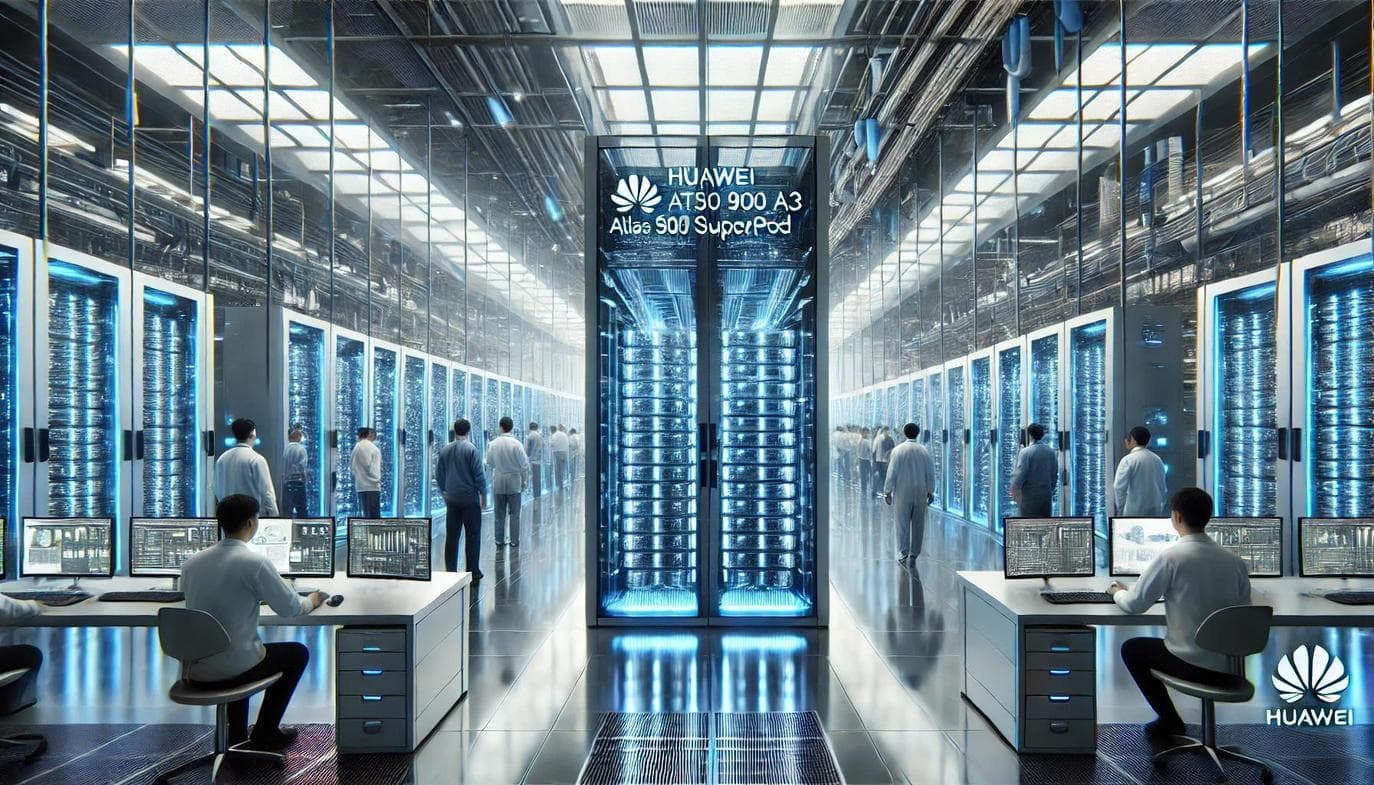
Huawei Ascend SuperPOD server racks in a data center, with blue LED lights on the hardware and cables connecting the…
AI ResearchScore: 89

Huawei Ascend SuperPOD Decode Throughput Estimated 1.3-1.7x Behind GB300

Huawei Ascend SuperPOD decode throughput estimated 1.3-1.7x behind GB300, narrower than 4x training gap, due to memory bandwidth and sharding.

·1d ago·3 min read··28 views·AI-Generated·Report error
Share:
How does Huawei's Ascend SuperPOD decode throughput compare to Nvidia's GB300?

Huawei's Ascend SuperPOD has roughly 1.3x to 1.7x lower decode throughput per GPU than Nvidia's GB300, despite a 4:1 training FLOPS ratio, due to memory bandwidth constraints and large scale-up world sizes enabling aggressive sharding.

TL;DR

4:1 training FLOPS ratio cited for Huawei vs Nvidia · Memory bandwidth ratio falls to 2:1 · Decode throughput gap estimated at 1.3-1.7x

Huawei's Ascend SuperPOD delivers roughly 1.3x to 1.7x lower decode throughput per GPU than Nvidia's GB300, according to analyst @zephyr_z9. The gap narrows from a 4:1 training FLOPS ratio due to memory bandwidth constraints and sharding strategies.

Key facts

  • Training FLOPS ratio: 4:1 (Huawei vs Nvidia)
  • Memory bandwidth ratio: 2:1 (8TB/s vs 4TB/s)
  • Decode throughput gap: 1.3x to 1.7x
  • Huawei's scale-up world size enables aggressive sharding

A detailed technical analysis by @zephyr_z9 on X reveals that the performance gap between Huawei's Ascend SuperPOD and Nvidia's GB300 is highly workload-dependent. The widely cited 4:1 exchange ratio for training FLOPS does not hold for inference.

Memory Bandwidth Bottleneck

On a memory bandwidth basis, the ratio falls to 2:1, with Huawei's SuperPOD delivering approximately 8 TB/s versus Nvidia's 4 TB/s [according to @zephyr_z9]. This bandwidth advantage partially compensates for the raw compute deficit during autoregressive decoding, where memory bandwidth is the primary constraint.

Sharding Strategy Advantage

Huawei's massive scale-up world size enables aggressive sharding strategies that Nvidia cannot match with its smaller node configurations. This architectural flexibility allows the Ascend SuperPOD to distribute memory-bound operations more efficiently, narrowing the decode throughput gap.

Real-World Decode Performance

The analyst estimates the decode throughput per GPU difference between the two systems will be in the 1.3x-1.7x range [per @zephyr_z9]. This is significantly closer than the 4x training FLOPS gap would suggest, making the Ascend SuperPOD a more competitive inference platform than its training numbers imply. The exact figure depends on model architecture, batch size, and sharding configuration.

Implications for Inference Workloads

For deployments dominated by inference (e.g., chatbots, code generation, real-time translation), the Ascend SuperPOD's decode throughput gap of 1.3-1.7x versus GB300 means it can serve a large fraction of workloads at competitive latency, especially when combined with aggressive sharding. The 4x training gap remains a significant disadvantage for model development, but inference-heavy deployments may find the SuperPOD viable.

What to watch
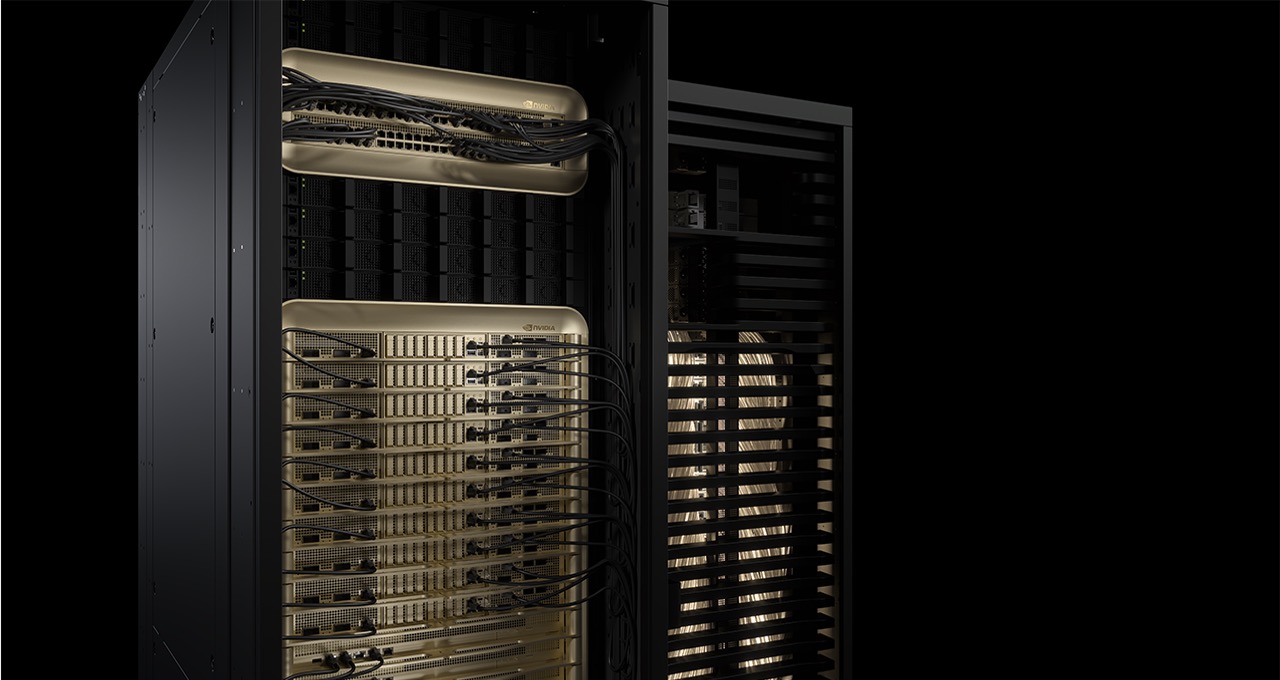
Microsoft Azure Unveils World’s First NVIDIA GB300 NVL72 Supercomputing ...

Watch for benchmark results from Huawei's Ascend SuperPOD at scale, particularly SWE-Bench or MT-Bench inference latency numbers. Also monitor whether Nvidia responds with larger-scale-up configurations in the Vera Rubin architecture to close the sharding advantage.

[Updated 24 Jul via gn_gpu_cluster]

A SemiAnalysis report on Vera Rubin NVL72 indicates a 10x inference improvement over Grace Blackwell, which could widen the decode throughput gap with Huawei's Ascend SuperPOD beyond the current 1.3-1.7x estimate [per SemiAnalysis]. The new architecture's larger scale-up domain may also counter Huawei's sharding advantage, shifting the competitive landscape for inference workloads.


Sources cited in this article

  1. GPU
  2. SemiAnalysis
  3. A SemiAnalysis
Source: gentic.news · · author= · citation.json

AI-assisted reporting. Generated by gentic.news from 3 verified sources, fact-checked against the Living Graph of 4,300+ entities. Edited by Ala SMITH.

Following this story?

Get a weekly digest with AI predictions, trends, and analysis — free.

AI Analysis

The 4:1 training FLOPS ratio has been the headline metric in the Huawei-vs-Nvidia narrative, but @zephyr_z9's analysis exposes a more nuanced truth: inference economics diverge sharply from training economics. This is a structural observation about the Chinese AI hardware landscape. For hyperscalers like ByteDance or Alibaba deploying inference-heavy services, the Ascend SuperPOD may be good enough at a fraction of the supply-chain risk. The 1.3-1.7x decode gap means that for many latency-tolerant applications (e.g., batch summarization, content moderation), the SuperPOD is a viable substitute. The sharding strategy advantage is particularly interesting: it suggests Huawei has optimized for the memory-bound regime that dominates inference, while Nvidia optimized for compute-bound training. This mirrors the broader industry shift toward inference-optimized hardware (e.g., Groq, Cerebras) but within the constraints of a single vendor's architecture. The key unknown is whether the sharding advantage holds at production batch sizes (e.g., 64-256) or only at small batch sizes where memory pressure is highest. The analyst didn't specify, which is a gap. Also, no power or cost data was shared — the 1.3-1.7x gap could be wider on a per-watt or per-dollar basis if Huawei's chips consume significantly more power.
This story is part of
The AI Infrastructure War Shifts from Chips to Developer Tools
Nvidia's enterprise pivot and AWS's OpenAI bet collide with Cursor's quiet ascent
Compare side-by-side
Nvidia vs Huawei
Enjoyed this article?
Share:

AI Toolslive

Five one-click lenses on this article. Cached for 24h.

Pick a tool above to generate an instant lens on this article.

Related Articles

From the lab

The framework underneath this story

Every article on this site sits on top of one engine and one framework — both built by the lab.

More in AI Research

View all