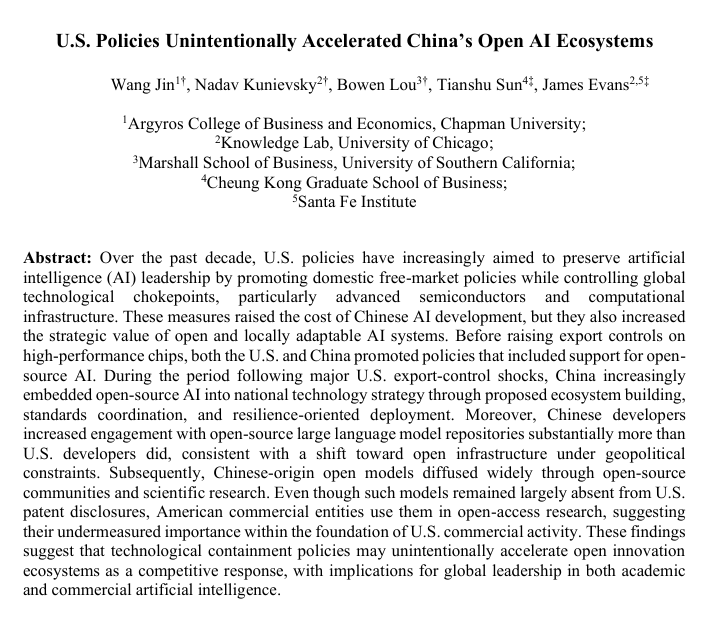
Analyst @teortaxestex says domestic compute will become viable within a week. The AI-2040 report's omission of Huawei's Ascend 910 signals lingering hardware gaps.
Key facts
- Domestic compute viable within roughly a week.
- AI-2040 report omits Huawei's Ascend 910.
- Ascend 910 delivers 256 TFLOPS FP16.
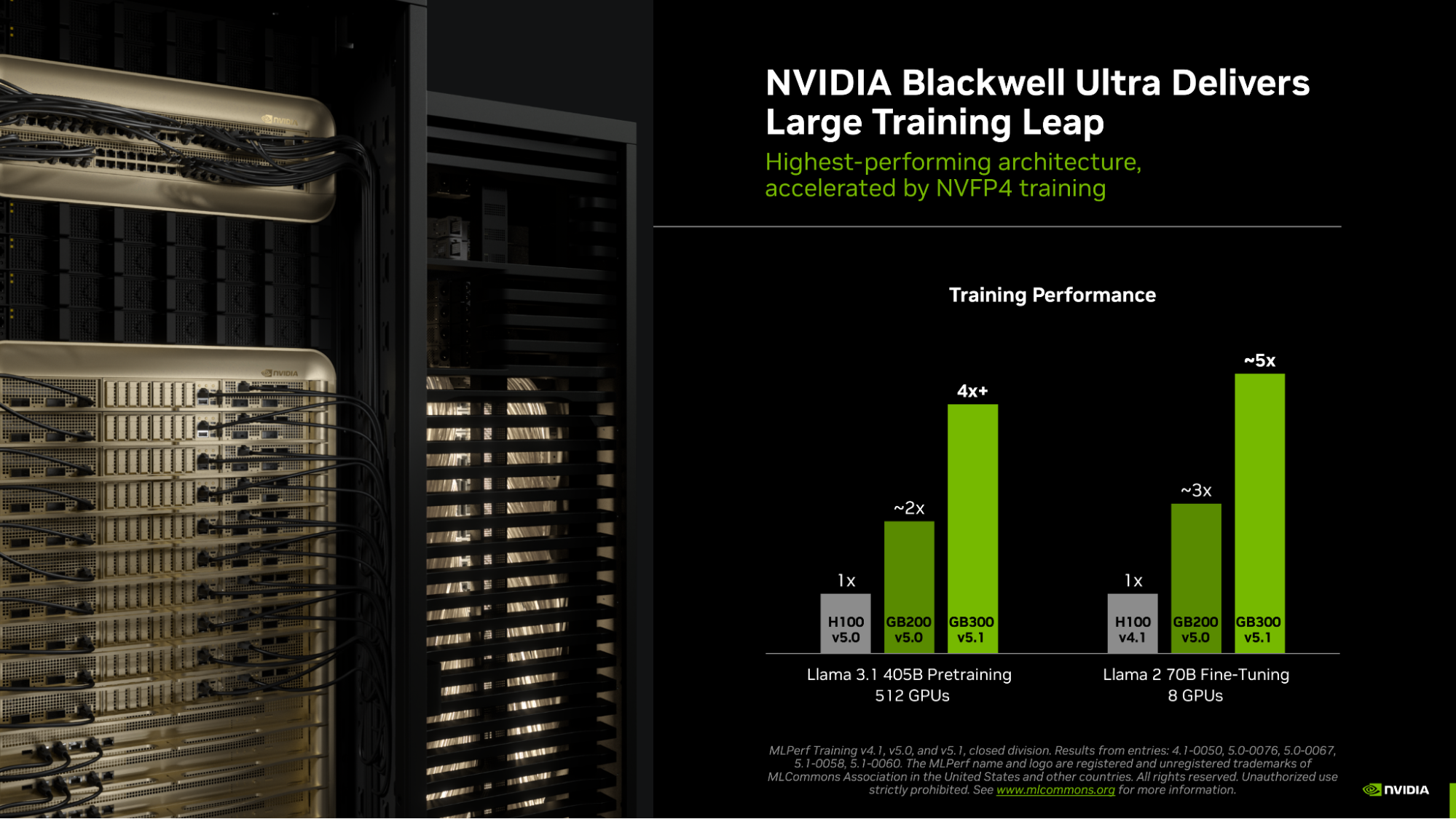
- NVIDIA H100 delivers 1,979 TFLOPS FP16.
- US export controls tightened in Oct 2024.
According to a post by analyst @teortaxestex Source, the era of "domestic compute" — AI chips and infrastructure built within a country rather than imported — is roughly a week away from evolving from "torturous cope into a viable alternative." The statement suggests that the US export controls on advanced AI chips, which have restricted sales of NVIDIA's H100 and B200 to China, have forced a strategic pivot. But the analyst adds a critical caveat: "It's interesting that AI-2040 doesn't mention Ascends beyond 910." AI-2040 is a widely-circulated roadmap for China's AI hardware ambitions. The omission of Huawei's Ascend 910, the company's most advanced AI accelerator, implies that domestic alternatives may still be insufficient for cutting-edge training workloads. The Ascend 910 was released in 2019 and delivers roughly 256 TFLOPS of FP16 performance — far below the 1,979 TFLOPS of NVIDIA's H100. [According to the post], the transition "probably" happens, but the hedging word is notable.
The Export Control Catalyst
The timeline aligns with the tightening of US export controls in October 2022 and subsequent updates in 2023 and 2024. The Biden administration's October 2024 rule closed loopholes that allowed some advanced chip shipments to China. The CHIPS Act has funded domestic fabrication, but advanced logic nodes remain elusive. The analyst's "torturous cope" phrase reflects the industry's struggle to make do with less performant domestic chips like the Ascend 910C, which Huawei has been sampling to select customers.
The Hardware Gap
AI-2040 is a strategic document that outlines China's path to AI self-sufficiency. Its failure to mention the Ascend 910 — the flagship chip — suggests either that the roadmap has moved beyond that architecture or, more likely, that the performance gap between domestic and foreign chips is too wide for the 910 to be relevant. [According to public benchmarks], the Ascend 910B, a slightly improved variant, achieves roughly 40-50% of H100 performance on large language model training. The omission is a tacit admission that even the best domestic hardware isn't competitive on paper.
What to watch
Watch for any update to AI-2040 that includes the Ascend 910 or a successor. Also track Huawei's shipment volumes for the Ascend 910C and whether major Chinese cloud providers (Alibaba, Tencent) publicly commit to domestic chips for new training clusters.
[Updated 13 Jul via gn_ai_data_center]
The race for AI dominance is now a debt-fueled arms race: Big Tech has collectively taken on $350 billion in debt to fund data center expansion [per Los Angeles Times]. This massive capital injection dwarfs earlier estimates and underscores the urgency driving domestic compute pivots, even as hardware gaps persist.
[Updated 13 Jul via tomshardware]
Meta's Hyperion supercluster expansion from 2 GW to 5 GW pushes its Louisiana investment past $50 billion, with an additional $1 billion committed to local infrastructure improvements [per Tom's Hardware]. This dwarfs earlier data center scale assumptions and shows the AI arms race is accelerating beyond domestic compute debates.