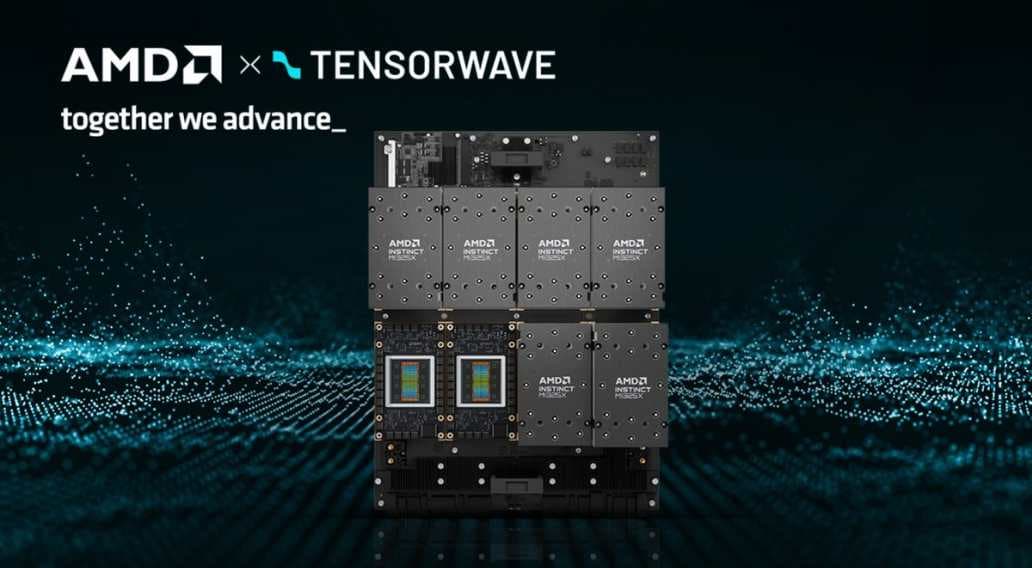
TensorWave raised $350 million in a Series B round to expand North American GPU clusters. The capital targets AMD-powered infrastructure to compete with Nvidia-dominated cloud providers.
Key facts
- $350 million Series B round for TensorWave.
- Funding targets North American GPU cluster buildout.
- AMD-powered clusters aim to compete with Nvidia.
- Lead investor and valuation not disclosed.
- GPU supply crunch for Nvidia H100 continues.
TensorWave has secured $350 million in Series B funding, the company announced According to Telecompaper, with plans to build out GPU clusters across North America. The company did not disclose the lead investor or valuation in the announcement.
AMD-Powered Clusters Target Nvidia's Grip
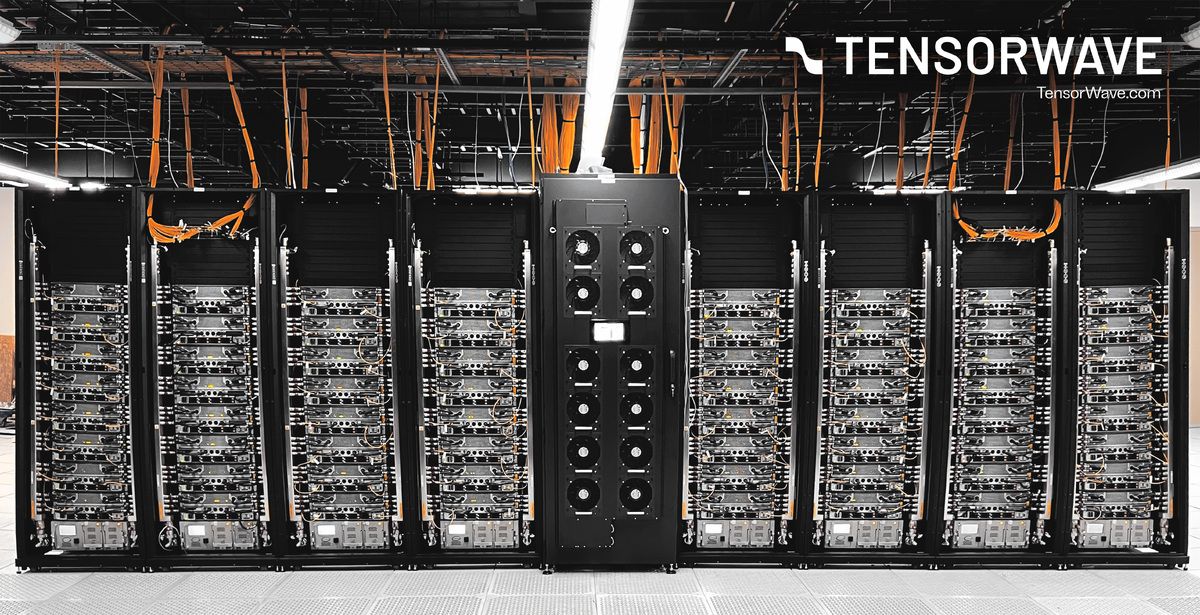
TensorWave has positioned itself as a provider of AMD-based GPU infrastructure, a contrarian bet in a market where Nvidia holds over 80% of AI accelerator shipments. The $350 million round will fund data-center buildouts using AMD Instinct GPUs, which offer competitive performance on certain workloads like inference and have lower power draw than Nvidia's H100. The company claims its clusters can undercut Nvidia-based competitors on cost, though it has not published specific pricing or benchmark comparisons.
The round comes amid a GPU supply crunch for Nvidia H100 clusters, with lead times stretching into 2027 for some hyperscaler orders. AMD has been aggressively courting cloud providers, launching the MI300X in late 2025 and securing design wins at CoreWeave and Lambda. TensorWave's funding signals that the AMD ecosystem is gaining traction beyond the hyperscalers, though the company remains a small player relative to Google Cloud or AWS.
Competitive Landscape and Strategic Implications
TensorWave competes with a growing field of GPU-as-a-service providers, including CoreWeave, Lambda, and RunPod. CoreWeave raised $1.1 billion in 2025 and operates over 100,000 GPUs; Lambda has raised $500 million. TensorWave's $350 million round, while substantial, places it behind these rivals in scale. The company's reliance on AMD hardware is a differentiator but also a risk: AMD's software stack, ROCm, still lags Nvidia's CUDA in developer adoption and ecosystem maturity, though recent improvements have narrowed the gap.
The funding also reflects broader investor appetite for alternative AI compute infrastructure. As Nvidia's dominance strains supply, venture capital is flowing into companies that can offer non-Nvidia options. TensorWave's bet on AMD could pay off if software compatibility improves and enterprise customers seek cost savings, but the company must prove it can deliver reliable performance at scale.
What to watch
Watch for TensorWave's first public benchmark comparing AMD Instinct MI300X cluster performance and pricing against Nvidia H100 offerings. Also, monitor whether the company discloses lead investors in a follow-up filing, which would signal which venture firms are betting on non-Nvidia compute.
Source: news.google.com
[Updated 12 Jun via dcd_news]
KKR launched Helix Digital Infrastructure, committing $10 billion to hyperscale data center projects led by former AWS CEO Adam Selipsky [per DataCenterDynamics]. The move intensifies competition for capital and power as TensorWave and others race to build non-Nvidia GPU clusters. KKR's massive commitment underscores the surging investor appetite for alternative AI compute infrastructure.