What Happened

A note from JPMorgan, shared by analyst @mweinbach, argues that the CPU is no longer a legacy component in AI infrastructure. As AI workloads shift from training to inference and then toward agentic and multi-agent AI, the CPU's role expands materially.
Intel and Arm both point to the same direction: the ratio of GPUs to CPUs in AI clusters, currently heavily GPU-skewed at roughly 7-8 GPUs per CPU during training, could drop to 3-4 GPUs per CPU for inference. For agentic workloads, the ratio may even flip toward CPU-heavy deployments.
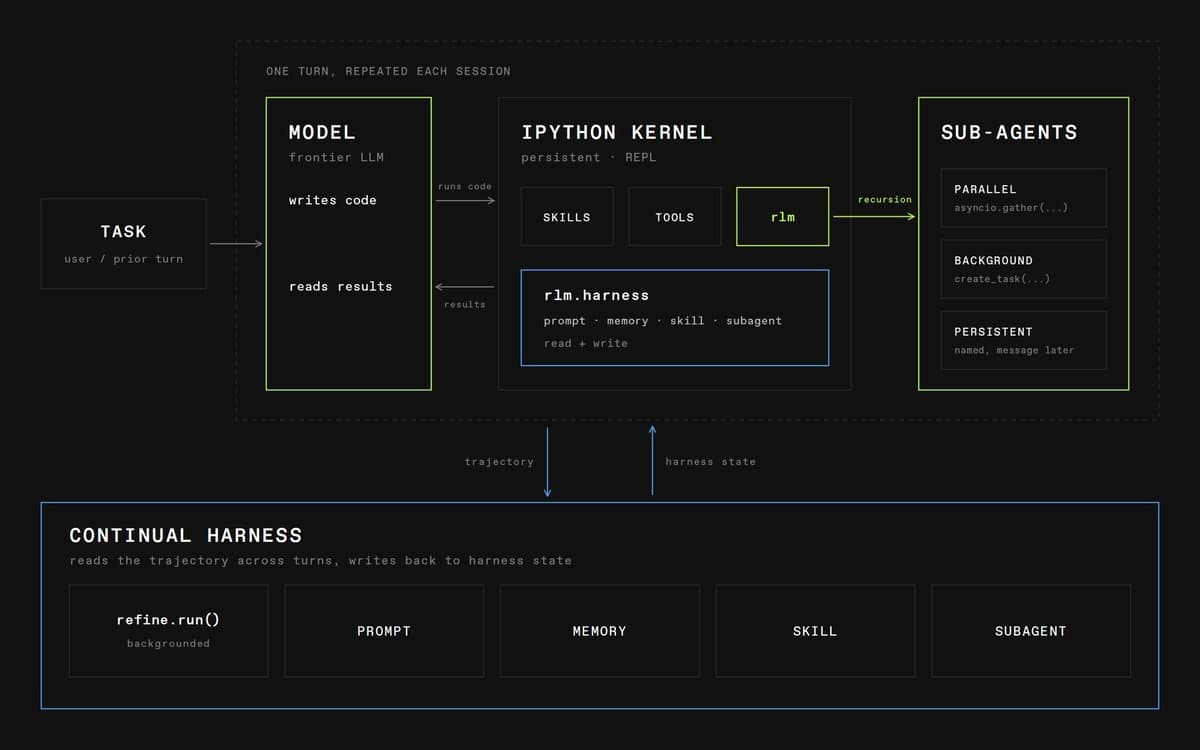
The reason: agents create far more orchestration, scheduling, data movement, control plane, container management, and tool-execution work. These are CPU-bound infrastructure tasks, not accelerator tasks.
Arm framed this more aggressively, projecting a 15x+ increase in tokens per human as agents run continuously, CPU cores per GW rising from ~30M today to ~120M in agentic AI data centers, and a long-term AI data center CPU TAM potentially reaching $100B.
Key Numbers
GPU:CPU ratio (training) 7-8:1 — GPU:CPU ratio (inference) — 3-4:1 GPU:CPU ratio (agentic) — CPU-heavy CPU cores per GW ~30M ~120M AI data center CPU TAM — $100B+ Tokens per human baseline 15x+ increaseWhy This Matters
JPMorgan's thesis is that the AI server debate has been too narrowly focused on GPUs and accelerators. The next bottleneck may not just be GPU supply — it could be the full compute stack around the GPU: CPUs, memory, I/O, networking, interconnect, optics, and systems integration.
The firm sees this as especially positive for Dell and HPE, given their exposure to both traditional compute and AI compute at Tier 2 cloud customers. It also supports the broader hardware/networking supply chain, including higher I/O and interconnect demand for names such as Arista, Cisco, Amphenol, Credo, Coherent, and Lumentum.
What This Means in Practice
For AI infrastructure planners, this means that future data center buildouts should not over-rotate on GPU procurement at the expense of CPU capacity. Agentic AI systems — which chain multiple LLM calls, run tool-execution loops, and manage state across agents — will stress CPU resources in ways that pure training or inference clusters do not.
The implication for cloud providers: expect to see more balanced server configurations in 2025-2026, with CPU-to-GPU ratios shifting from the current 1:8 norm toward 1:2 or even 1:1 for agent-heavy workloads.
gentic.news Analysis
This thesis aligns with a broader pattern we've been tracking: the AI infrastructure narrative is broadening beyond GPU scarcity. In our coverage of the hyperscaler CapEx reports earlier this year, we noted that Microsoft, Google, and Amazon were all increasing spend on "non-accelerator compute" — a category that includes CPUs, memory, and networking — at rates exceeding GPU spending growth.
JPMorgan's framing is particularly interesting because it comes from a financial analyst, not a vendor. When Intel and Arm both publicly push a CPU-centric narrative, there's obvious self-interest. But when a major bank independently validates that thesis with TAM projections, it carries more weight.
The $100B CPU TAM figure from Arm is aggressive — it implies that CPU infrastructure in AI data centers could rival or exceed current GPU spending levels. For context, NVIDIA's data center revenue was roughly $80B in its fiscal 2025. A $100B CPU TAM would represent a massive rebalancing of the AI hardware market.
One caveat: these projections depend on agentic AI workloads actually materializing at scale. If agent adoption remains niche, the CPU demand surge may be more modest. But the direction of travel is clear — AI workloads are becoming more complex, and that complexity falls on CPUs, not just GPUs.
Frequently Asked Questions
What is agentic AI and why does it need more CPUs?
Agentic AI refers to AI systems that can autonomously perform multi-step tasks, often involving tool use, code execution, and coordination between multiple AI agents. These workloads generate significant orchestration and scheduling overhead that is CPU-bound, unlike the matrix math of training and inference which runs on GPUs.
How does the GPU-to-CPU ratio change for different AI workloads?
For training, the ratio is roughly 7-8 GPUs per CPU. For inference, Intel suggests this could move to 3-4 GPUs per CPU. For agentic workloads, the ratio may flip entirely to CPU-heavy deployments, meaning more CPUs than GPUs in the server.
Which companies benefit from this CPU shift?
JPMorgan highlights Dell and HPE as direct beneficiaries due to their exposure to traditional compute and AI compute at Tier 2 cloud customers. The broader hardware supply chain — including networking companies like Arista and Cisco, and interconnect makers like Amphenol, Credo, Coherent, and Lumentum — also stands to gain from higher CPU demand driving more I/O and interconnect needs.
Is this thesis already being validated by hyperscalers?
Hyperscalers have been increasing spend on non-accelerator compute at rates exceeding GPU spending growth, according to recent CapEx reports from Microsoft, Google, and Amazon. This suggests the CPU-centric view is already being reflected in procurement decisions, even if it hasn't yet been widely discussed in AI infrastructure discourse.
[Updated 30 Apr via tomshardware]
Meta has signed a multibillion-dollar, multi-year deal with AWS to deploy tens of millions of Graviton5 CPU cores across AWS data centers [per Tom's Hardware]. This real-world commitment underscores the CPU demand surge JPMorgan projects for agentic AI, as Meta likely prepares for inference and orchestration-heavy workloads that stress CPUs over GPUs.