Key Takeaways
- MarketScale reports Kohl's and ShipBob adopting generative AI for retail operations as ecommerce passes $4 trillion globally.
- This marks a concrete enterprise shift toward AI-powered logistics and merchandising.
What Happened
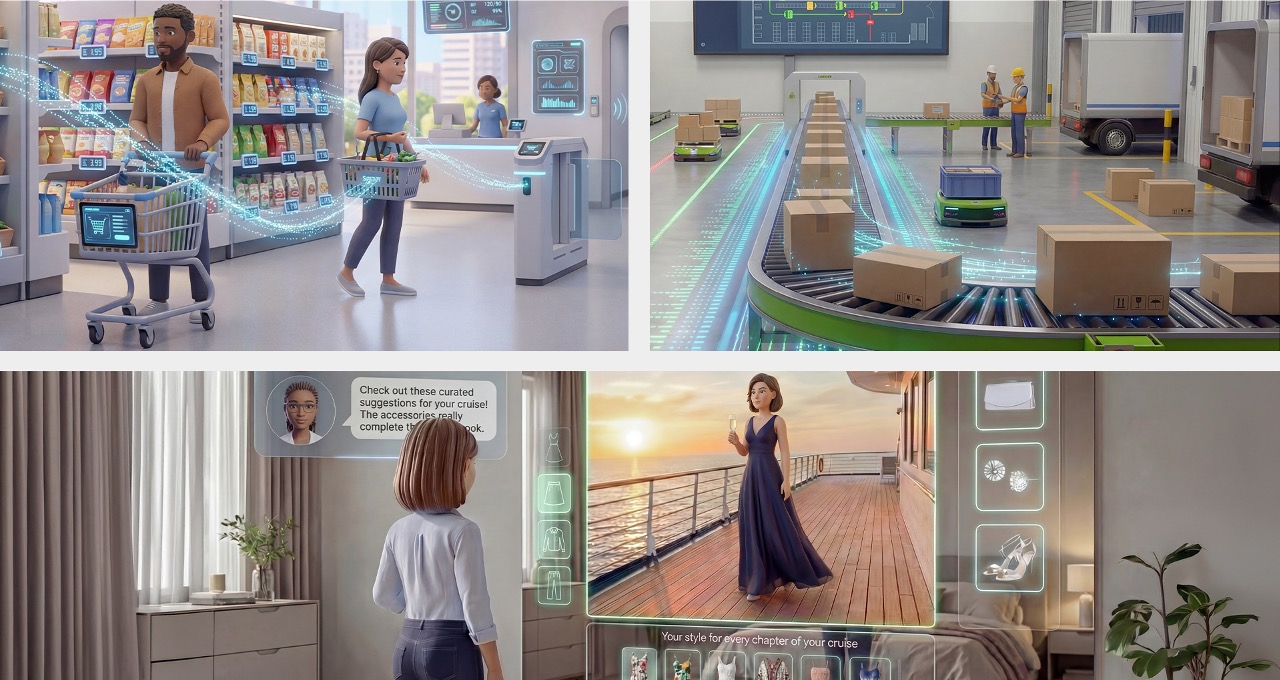
Kohl's and ShipBob have brought generative AI into retail operations, according to a MarketScale report. This deployment arrives as global ecommerce surpasses $4 trillion, underscoring the scale at which retailers must now operate. The news signals a definitive move from pilot programs to production-grade AI adoption among major retail players.
While the report does not detail the specific use cases at Kohl's or ShipBob, the implications are clear: generative AI is no longer a novelty in retail — it is becoming an operational necessity.
The Broader Context: Ecommerce at $4 Trillion
The $4 trillion milestone for global ecommerce is not just a number. It represents a structural shift in how consumers buy and how retailers must compete. At this scale, manual processes for merchandising, customer service, and supply chain management become bottlenecks. Generative AI offers a path to automate and optimize these functions.
For Kohl's, a traditional department store chain, the adoption of generative AI likely targets:
- Personalized product recommendations across digital and physical channels
- Dynamic pricing and promotions based on real-time demand signals
- Automated customer service via conversational agents
- Inventory optimization using predictive demand forecasting
For ShipBob, a third-party logistics (3PL) provider, generative AI applications probably focus on:
- Warehouse operations — optimizing pick paths and labor allocation
- Freight and carrier selection based on cost and delivery speed
- Customer communication — automated status updates and exception handling
- Demand planning for merchant clients
Why This Matters for Retail & Luxury
For luxury and premium retailers, the Kohl's and ShipBob news is a bellwether. If mass-market players are deploying generative AI in operations, the competitive pressure on luxury houses intensifies. Customers now expect the same speed and personalization from a $2,000 handbag purchase as they do from a $50 sweater.
Key implications for luxury retail:
Clienteling at scale: Generative AI can analyze purchase history and preferences to suggest complementary items — replicating the in-store personal shopper experience digitally.
Supply chain transparency: Luxury customers increasingly demand provenance and sustainability data. Generative AI can help compile and communicate this information efficiently.
Content generation: From product descriptions to marketing copy, generative AI can produce on-brand content across markets and languages, reducing time-to-market for campaigns.
Returns management: The luxury sector faces high return rates on ecommerce. AI-driven size and fit recommendations can reduce this friction.
Business Impact
While specific ROI figures from Kohl's and ShipBob are not disclosed in the source, the strategic direction is unambiguous. Retailers deploying generative AI in operations are positioning for:
- Lower operating costs through automation of routine tasks
- Higher conversion rates via more relevant customer interactions
- Faster decision-making with AI-assisted analytics
The $4 trillion ecommerce milestone amplifies these benefits. At this scale, even a 1% improvement in operational efficiency translates to billions in savings across the industry.
Implementation Approach
Retailers considering similar deployments should note the following:
Infrastructure: Generative AI requires significant compute and data infrastructure. Cloud platforms like Google Cloud (which competes with AWS and Azure for enterprise AI workloads) offer pre-built services such as Vertex AI that can accelerate deployment.
Data readiness: The quality of AI outputs depends on data quality. Retailers must invest in data cleaning, labeling, and governance before deploying models.
Integration: Generative AI tools must integrate with existing ERP, CRM, and supply chain systems to deliver value. This is often the most complex part of implementation.
Talent: Successful deployment requires a blend of data science, software engineering, and domain expertise. Retailers may need to upskill existing teams or hire new talent.
Governance & Risk Assessment
Generative AI in retail operations carries several risks that leadership must address:
- Hallucination risk: AI models can generate plausible but incorrect information. In customer-facing applications, this could damage brand trust.
- Data privacy: Retailers hold sensitive customer data. AI systems must comply with GDPR, CCPA, and other regulations.
- Bias: Models trained on historical data may perpetuate biases in pricing, recommendations, or hiring.
- Vendor lock-in: Relying on a single cloud provider's AI stack can reduce flexibility and negotiating power.
Maturity assessment: Enterprise generative AI is still early-stage. Most deployments are narrow, focused on specific tasks rather than end-to-end transformation. Retailers should start with high-value, low-risk use cases and scale gradually.
Bottom Line
Kohl's and ShipBob's adoption of generative AI is a practical signal: the technology has crossed from experimentation to operational deployment in retail. As ecommerce passes $4 trillion, the competitive imperative to adopt AI-driven operations will only intensify. Retailers that delay risk falling behind on cost, speed, and customer experience.
Source: news.google.com