The LLM waterfall pattern cascades requests across OpenAI, Anthropic, and Google providers on 429 errors. It transforms rate limits from workflow killers into manageable operational parameters.
Key facts
- 429 errors are guaranteed for any non-trivial LLM usage.
- Retries on 429 can get API keys flagged or blocked.
- Circuit breaker disables functionality for that provider entirely.
- Waterfall cascades across Claude-3.5-Sonnet, GPT-4o, Gemini 1.5 Pro.
- Proactive quota tracking uses x-ratelimit-remaining-requests headers.
For production AI applications, 429 Too Many Requests errors are not hypothetical — they are guaranteed for any non-trivial usage According to The LLM Waterfall Pattern. The naive retry pattern, which simply retries after a delay, is disastrous for rate limits: retrying immediately against the same endpoint can get your API key flagged or temporarily blocked. Even exponential backoff leaves you stuck in a single lane at a congested toll booth.
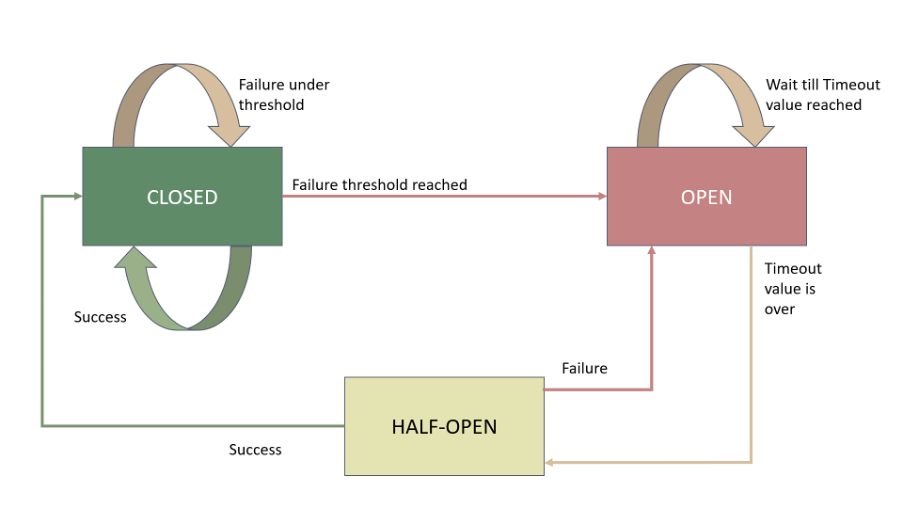
The circuit breaker pattern, which opens when failures exceed a threshold (e.g., 50% of requests in a 10-second window), prevents resource exhaustion but disables functionality for that provider entirely. Its primary goal is fault isolation and fast failure, not intelligent routing.
The LLM waterfall pattern solves this by implementing a prioritized, cascading sequence of attempts across pre-configured providers. You define an ordered list — for example, Claude-3.5-Sonnet, GPT-4o, Gemini 1.5 Pro — and the system sends the request to the highest-priority provider. If that attempt fails with a 429 or transient 500 error, it automatically falls through to the next provider in the waterfall. This achieves true provider failover with minimal latency impact.
Proactive Management: Beyond Reactive Failover
An advanced waterfall doesn't just react to 429 errors. By integrating with rate limit headers (e.g., x-ratelimit-remaining-requests), the system can make pre-emptive decisions. If you have 10 RPM remaining with Provider A, you can route the next 10 requests there before proactively shifting to Provider B. This transforms the waterfall from a simple failover chain into a dynamic load balancer for inference, balancing across providers based on cost, latency, and remaining quota.
The most robust architecture combines both patterns: a circuit breaker to protect each individual pipe in the waterfall from being flooded with retries during a genuine provider outage, and the waterfall logic itself to manage routing and failover based on rate limits and latency. This is the hallmark of a production-grade, zero-downtime AI system built for scale.
What to watch
Watch for major LLM providers (OpenAI, Anthropic, Google) to release native multi-provider SDK features or client-side failover libraries in 2026, reducing the need for third-party waterfall implementations. Also monitor adoption of rate-limit header standardization across vendors.
Source: dev.to