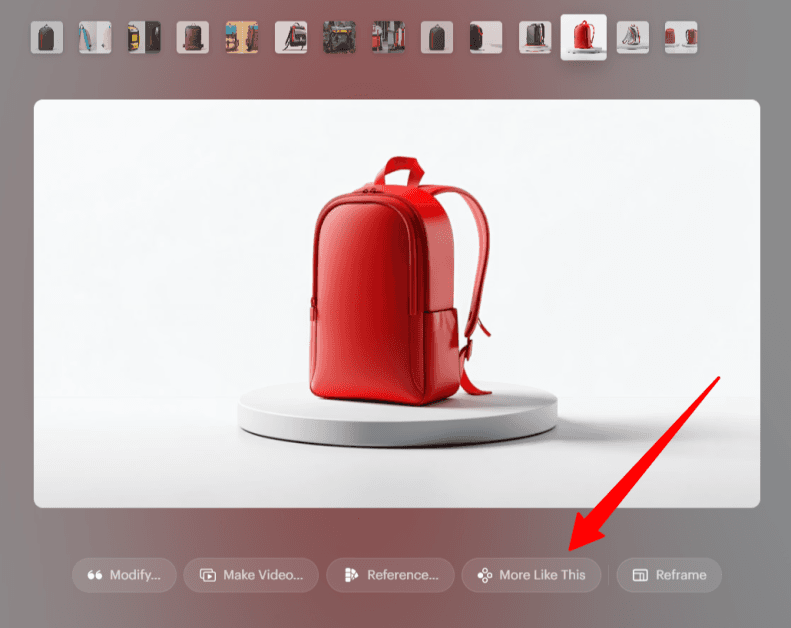
Luma AI has publicly released Uni-1, its first model that unifies image understanding and generation within a single autoregressive transformer architecture. The model is now available for free testing on the Luma Labs platform, with an API launch imminent. According to Luma AI's internal human preference evaluations, Uni-1 has taken the top Elo rating in the overall, style/editing, and reference-based image generation categories.
What's New: A Unified Architecture for Reasoning and Generation
Uni-1 represents a shift from the dominant two-stage or hybrid pipelines common in image AI. Instead of using separate models for understanding a prompt and then generating an image, Uni-1 processes both text and images through a single, end-to-end autoregressive transformer. This architecture is similar to the approach used by Google's Nano Banana Pro and OpenAI's GPT Image 1.5, where content is generated token-by-token in a sequence, rather than through the iterative denoising process of diffusion models.
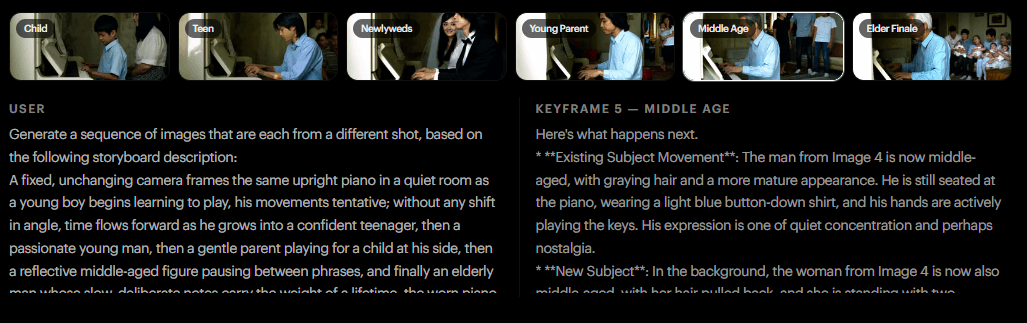
The core claimed advantage of this unified design is integrated reasoning. Luma AI states the model can break down complex instructions, plan scenes, and reason through prompts before and during the image generation process. This is intended to lead to more accurate prompt adherence.
Key Results: Performance and Pricing
Luma AI's release is accompanied by specific claims on performance and cost, positioning it directly against the current market leader.
Human Preference Rankings (Luma AI's Elo Ratings):
- 1st Place: Overall, Style/Editing, Reference-Based Generation
- 2nd Place: Pure Text-to-Image (behind Google's Nano Banana)
Pricing (at 2K resolution):
- Luma AI Uni-1: ~$0.09 per image
- Google Nano Banana 2: $0.101 per image
- Google Nano Banana Pro: $0.134 per image
It's important to note that Google's Nano Banana 2 offers cheaper tiers at lower resolutions ($0.045 for 0.5K, $0.067 for 1K), a pricing flexibility Uni-1's current API pricing does not appear to match. The $0.09 price for Uni-1 is an average and can vary based on the number of reference images provided in a request.
Technical Details and Capabilities
Built on an autoregressive transformer, Uni-1 treats image generation as a sequence prediction problem. Text and image data share the same tokenization and processing pipeline. Beyond basic text-to-image generation, Luma AI highlights several specific capabilities:
- Multi-Image Composition: Can merge several input photos into a new, coherent composition.
- Iterative Refinement: Can refine subjects across multiple conversational turns while maintaining context.
- Style Transfer: Can convert images into over 76 different art styles.
- Multi-Modal Input: Accepts sketches and visual instructions as input alongside text.
- Attribute Transfer: Can transfer identities, poses, and compositions from reference photos to new images.
How It Compares: A Challenger Emerges
The launch positions Uni-1 as a direct competitor in the high-end, reasoning-focused segment of the image model market, currently led by Google's Nano Banana series. The benchmark claims and pricing suggest Luma AI's strategy is to offer comparable or superior quality at a lower cost for high-resolution (2K) outputs.

Early, informal testing reported by the source indicates Uni-1 handled a complex logic-based benchmark prompt "on par with Nano Banana Pro, possibly even better," and noticeably outperformed Midjourney v8 on the same task. A noted caveat is that this test used a Luma image generation agent, and results may differ slightly from the raw API.
What to Watch: Limitations and the Road Ahead
The model's performance claims are based on Luma AI's own human preference evaluations (Elo ratings). Independent, third-party benchmarking on standardized datasets (like those used for models such as DALL-E 3 or Stable Diffusion 3) will be critical for the technical community to validate these rankings.
Furthermore, while the unified architecture promises better reasoning, its practical advantages over sophisticated cascaded systems (like a separate LLM for planning driving a diffusion model) in real-world, diverse applications remain to be thoroughly proven. The API's upcoming public availability will be the true test of its reliability, latency, and scalability compared to established offerings from Google and OpenAI.
gentic.news Analysis
Luma AI's Uni-1 launch is significant not for being "revolutionary" in architecture—autoregressive transformers for images are an established path—but for its commercial positioning. It's a deliberate, aggressive move to undercut the perceived market leader on price while claiming parity or superiority on key quality metrics. This is a classic challenger strategy: identify the premium incumbent (Google Nano Banana Pro), match its core technical approach, and compete on cost-effectiveness. The $0.09 price point for 2K images is a clear signal aimed at developers and businesses calculating per-image inference costs at scale.

Technically, the emphasis on "unified" understanding and generation is the right long-term bet, reducing pipeline complexity and potential error propagation. However, the real test for Uni-1 will be its performance on compositional reasoning and spatial understanding benchmarks, areas where even the best models still fail. If its integrated reasoning delivers measurably better results on prompts requiring complex object relationships or implicit instructions, it could shift developer preference beyond just price.
This launch also highlights the ongoing consolidation of the image model landscape around a few architectural paradigms. The battle is no longer between diffusion and GANs, but between different implementations of transformer-based sequential prediction. The competitive differentiators are now training data scale, reasoning capability, and—increasingly—inference economics. Luma AI is betting it can win on the last two.
Frequently Asked Questions
What is Luma AI's Uni-1?
Uni-1 is a unified artificial intelligence model developed by Luma AI that performs both image understanding and image generation within a single autoregressive transformer architecture. It is designed to reason through prompts and plan image scenes as it generates them.
How much does it cost to generate an image with Uni-1?
According to Luma AI, generating a 2K resolution image through the upcoming Uni-1 API will cost approximately $0.09 on average. This price can vary depending on the number of reference images used in the generation request.
How does Uni-1 compare to Google's Nano Banana?
Based on Luma AI's internal human preference (Elo) testing, Uni-1 ranks first overall and in categories like style/editing and reference-based generation. For pure text-to-image, it ranks second behind Google's Nano Banana. On price for a 2K image, Uni-1 is cheaper ($0.09) than both Nano Banana 2 ($0.101) and Nano Banana Pro ($0.134).
Can I try Luma AI Uni-1 for free?
Yes. As of its launch, Uni-1 is available to test for free on the Luma Labs website. This allows users to experiment with its capabilities before the paid API access becomes available.