MCP cuts token costs by 75% per a Cyclr benchmark, but a batch job across 500 tools takes 25 minutes via MCP versus 50 seconds via REST. The protocol, backed by Anthropic, Block, and OpenAI under the Linux Foundation, trades raw speed for dynamic tool discovery.
Key facts
- MCP cuts token costs by 75% per Cyclr benchmark
- Batch job: 25 min via MCP vs 50s via REST
- Over 40% of agentic AI projects may be cancelled by 2027
- Enterprise agent use to grow from 5% to 40% by 2026
- MCP backed by Anthropic, Block, OpenAI under Linux Foundation
Key Takeaways
- MCP cuts token costs by 75% but adds 30x latency versus REST.
- The protocol, backed by Anthropic and OpenAI, trades speed for dynamic tool discovery.
The Real Cost Breakdown: MCP vs REST
The choice between MCP and REST API is not about which protocol is better — it's about who is calling your system. A human developer writing fixed code, or a model that needs to reason about the next step [According to the dev.to analysis].
Research from Tallyfy says over 40% of agentic AI projects may be cancelled by 2027 because of high costs and unclear business value. Enterprise use of task-specific agents is expected to grow from under 5% in 2025 to 40% by 2026, per the same source. That gap often comes from early architecture choices, including whether MCP was even needed.
A study from Toolradar makes the difference clear. A batch job checking prices across 500 tools takes about 50 seconds with a direct API call, but nearly 25 minutes with MCP. The reason is simple: MCP adds a reasoning step to every call, while APIs skip it.
What MCP Actually Changes
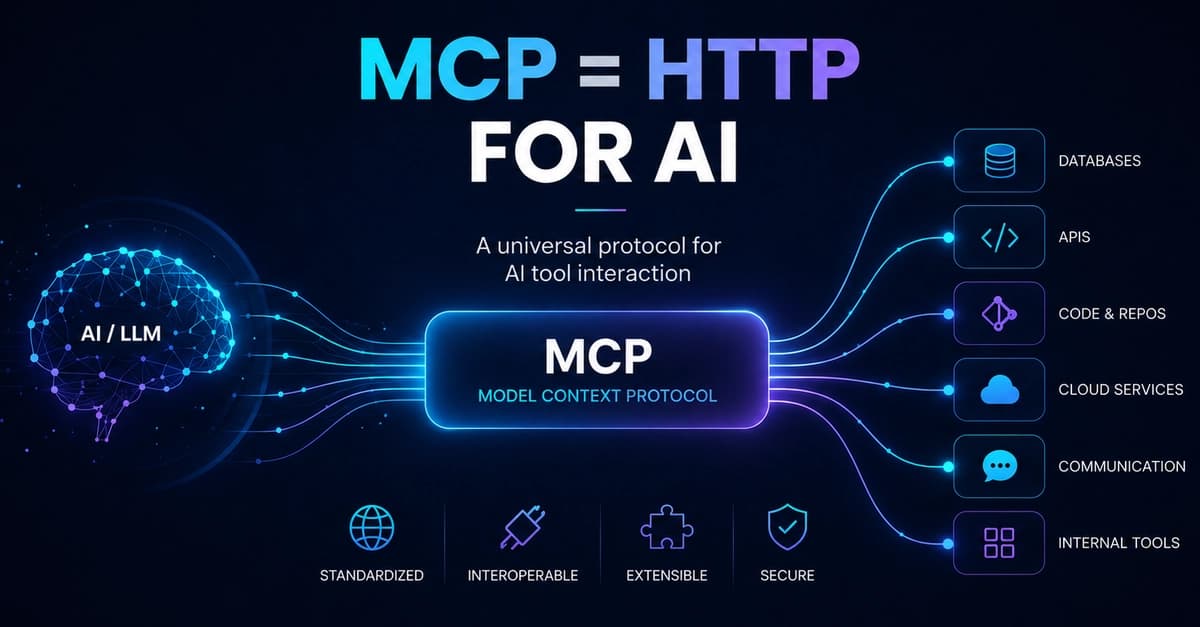
A traditional API integration is something a developer writes once — you know the exact endpoint and payload, and your code calls it the same way every time. MCP changes that approach: instead of hardcoding which endpoint to call, an MCP server describes what it can do, and the AI model reads that description and decides which tool to use based on the live conversation.

Anthropic introduced MCP in late 2024, and it later moved under the Agentic AI Foundation at the Linux Foundation, backed by Anthropic, Block, and OpenAI. This shows MCP is becoming a real standard, not just a passing trend.
REST APIs serve code that already knows what it wants. MCP serves a model that has to figure out what it wants first. That difference is not cosmetic — it changes how much you pay per interaction and how long each interaction takes.
Latency Comparison: Benchmarks Show 30x Gap
Latency is where the gap between MCP and API becomes obvious. MCP trades speed for flexibility — real benchmarks show it is slower than direct APIs, but the value lies in reasoning and discovery, not raw performance [Per the dev.to analysis].
MCP does not replace APIs — it standardizes how AI systems discover and use them. That's the core reason MCP is becoming the standard integration layer for AI, according to the source. Not because it's flashy, but because it removes the most expensive, repetitive work from your team's plate.
When to Use MCP vs REST
The decision comes down to one question: does a model need to decide what to call, or does your code already know? Use MCP when an AI agent needs to discover tools on its own, or when the same integration must work for different customers without writing custom code for each one. Choose traditional API integration when the workflow is fixed — it works best for scheduled batch jobs or predictable tasks.
MCP won't save you from bad APIs, broken auth, poor observability, flaky tools, or versioning chaos. It standardizes access — it does not guarantee quality. But even with that caveat, MCP still reduces fragmentation, which is the core problem it's meant to solve.
What to watch
Watch for the next MCP specification release from the Agentic AI Foundation at the Linux Foundation, expected in Q2 2026, which may address the latency gap. Also monitor adoption rates in enterprise IDEs like Cursor and VS Code — if MCP server counts cross 10,000, the protocol becomes de facto infrastructure.
Source: dev.to
[Updated 08 Jul via devto_claudecode]
Prompt caching can slash costs further: a developer running Claude Code around the clock cut monthly token spend ~60% without reducing agent capability [per dev.to]. The key was reordering context so stable prefixes hit Anthropic's cache — cached tokens cost ~10% of normal input tokens, while cache writes cost ~25% more. Moving volatile elements like timestamps to the end turned a near-0% cache hit rate into roughly 80%, dramatically lowering per-turn costs.
[Updated 09 Jul via gn_mcp_protocol]
Reuters has launched an MCP server to deliver trusted news directly into enterprise AI workflows, marking the first major media adoption of the protocol [per Reuters]. The server provides real-time, structured news data to AI agents, enabling automated fact-checking, market analysis, and research without manual API integration. This enterprise use case aligns with MCP's strength in dynamic tool discovery over raw speed, and signals growing institutional confidence in the protocol as a standard layer for AI integrations.