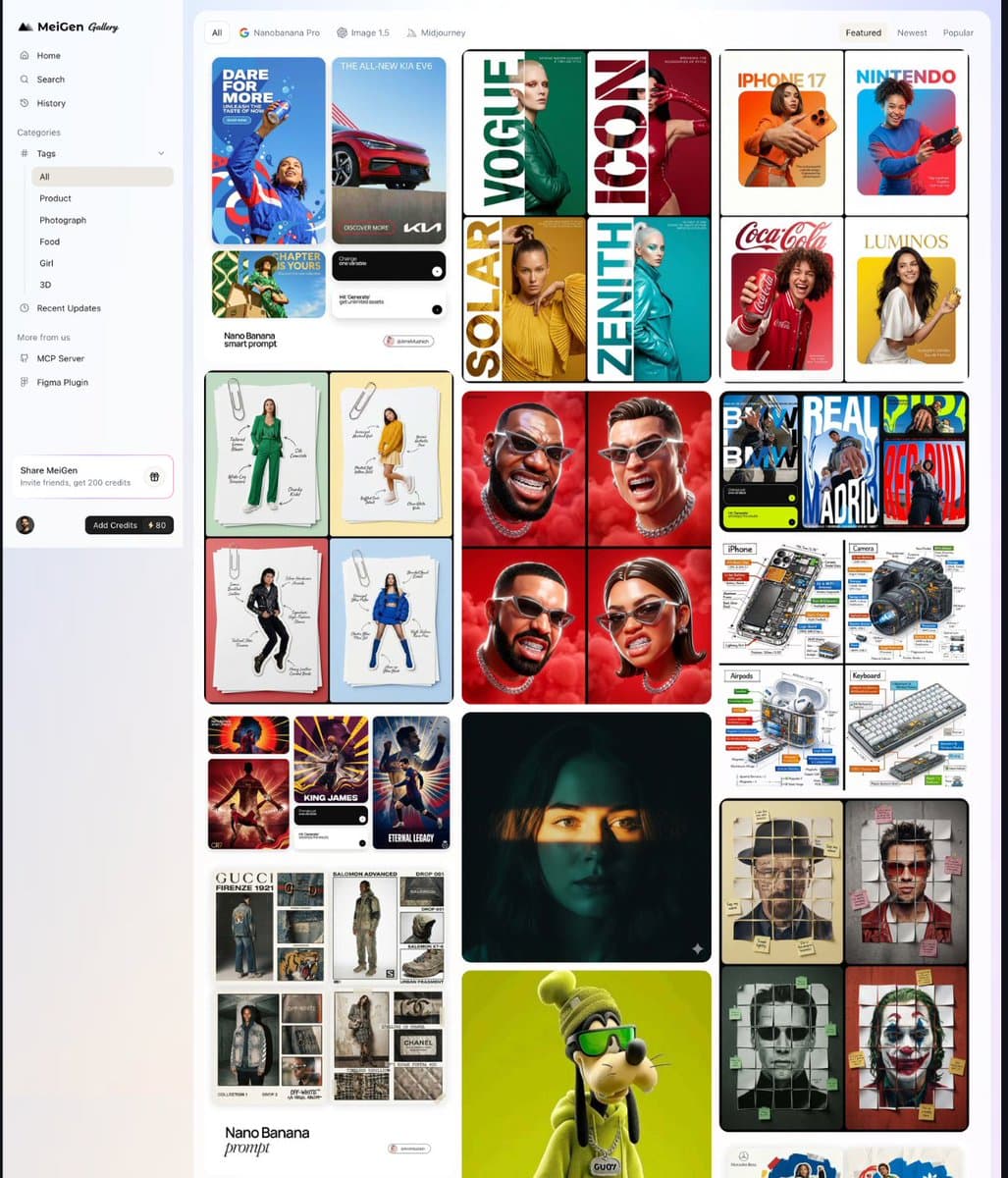
In the rapidly evolving world of AI-generated art, creators face a constant challenge: discovering, organizing, and retrieving effective prompts. While platforms like Midjourney, Stable Diffusion, and DALL-E have democratized image generation, the art of crafting the perfect prompt remains both crucial and time-consuming. Now, a new open-source tool called MeiGen promises to revolutionize how artists discover and utilize AI image prompts by automating the curation process.
The Prompt Discovery Problem
For AI image creators, social media platforms—particularly X (formerly Twitter)—have become essential resources for discovering new techniques, styles, and prompt formulations. Artists regularly share their most successful creations along with the exact prompts used, creating a valuable knowledge base for the community. However, this decentralized approach presents significant challenges.
"No more bookmarking 50 tweets. No more losing that prompt you saw 3 days ago," notes the original announcement from developer @hasantoxr. This succinctly captures the frustration many creators experience. Valuable prompts get buried in feeds, bookmarks become unmanageable, and there's no systematic way to track which prompts produce which results across different AI models.
How MeiGen Works
MeiGen addresses this problem through automated scraping and curation. The tool systematically collects what it identifies as "the hottest prompt posts from X every week" and organizes them in a single, accessible location. While the exact technical implementation isn't detailed in the initial announcement, such systems typically employ:
- Content identification algorithms that recognize AI-generated art and associated prompts
- Engagement metrics to determine which posts are "trending" or "hot" within the community
- Categorization systems that might group prompts by style, subject matter, or AI model
- Open-source architecture allowing community contributions and transparency
The weekly cadence ensures creators receive fresh, relevant content while avoiding the overwhelming firehose of real-time social media feeds.
The Open-Source Advantage
MeiGen's commitment to being "100% free" and "100% Open Source" represents more than just cost savings. In the AI art community, where concerns about transparency and algorithmic bias persist, open-source tools provide several advantages:
- Community-driven improvement: Developers and users can contribute to the tool's evolution
- Transparency: Users can verify how prompts are selected and curated
- Customization: Advanced users can modify the tool for specific needs or integrate it into existing workflows
- Sustainability: Open-source projects often outlive proprietary alternatives through community support
This approach aligns with broader trends in the AI art community, which has shown strong preference for transparent, collaborative tools over black-box commercial solutions.
Implications for AI Art Creation
MeiGen's emergence signals several important developments in the AI art ecosystem:
Democratization of Advanced Techniques: By making trending prompts easily accessible, MeiGen helps level the playing field between experienced prompt engineers and newcomers. Complex techniques that might have taken months to discover independently become immediately available.
Accelerated Style Evolution: When successful styles and approaches spread rapidly through tools like MeiGen, the entire field evolves more quickly. This could lead to faster development of new artistic movements within AI-generated art.
Preservation of Knowledge: Unlike ephemeral social media posts, curated collections create a persistent record of effective prompting strategies, serving as a valuable resource for both current and future creators.
Quality Benchmarking: As prompts become more standardized and accessible, it becomes easier to compare different AI models' performance on identical prompts, providing clearer guidance about each system's strengths and weaknesses.
Potential Challenges and Considerations
While MeiGen offers clear benefits, several considerations merit attention:
Attribution and Credit: The tool must ensure original creators receive proper credit for their prompts, maintaining the collaborative spirit of the AI art community.
Quality vs. Popularity: Algorithms that prioritize "hottest" posts might favor visually striking results over technically instructive prompts, potentially skewing the collection toward certain styles.
Platform Dependency: Relying on X as a source creates vulnerability to platform policy changes or technical issues.
Ethical Prompting: The curation system should ideally filter out prompts designed to generate harmful, biased, or copyrighted content.
The Future of Prompt Engineering
Tools like MeiGen represent the natural evolution of prompt engineering from an arcane art to a more systematic discipline. As AI image generation becomes increasingly sophisticated, the infrastructure supporting it—including prompt discovery, testing, and sharing—will become equally important.
Looking forward, we might see:
- Specialized prompt databases for different artistic styles or commercial applications
- Integration with image generation platforms for seamless prompt testing
- Advanced filtering allowing creators to search prompts by specific parameters
- Community rating systems to identify the most effective prompts beyond simple popularity metrics
Conclusion
MeiGen arrives at a pivotal moment in AI art's development, addressing a genuine pain point for creators while embodying the open, collaborative ethos that has characterized much of the field's growth. By transforming prompt discovery from a chaotic scavenger hunt into a systematic process, the tool has potential to accelerate creativity, improve results, and strengthen community knowledge sharing.
As with any tool in the rapidly evolving AI landscape, its ultimate impact will depend on continued development, community adoption, and responsible implementation. But for creators tired of losing that perfect prompt they saw three days ago, MeiGen offers a promising solution that reflects the increasing sophistication of the entire AI art ecosystem.
Source: Original announcement via X (@hasantoxr)